Central Laboratory, Guangxi Health Commission Key Laboratory of Glucose and Lipid Metabolism Disorders, The Second Affiliated Hospital of Guilin Medical University, Guilin, Guangxi, 541199, PR China.
Department of Pharmacy, Guangxi Health Commission Key Laboratory of Glucose and Lipid Metabolism Disorders, The Second Affiliated Hospital of Guilin Medical University, Guilin, Guangxi, 541199, PR China.
Hereditas. 2022 Sep 27;159(1):37. doi: 10.1186/s41065-022-00251-y.
C-C chemokine receptor 5 (CCR5) has recently been recognized as an underlying therapeutic target for various malignancies. However, the association of CCR5 with prognosis in the head and neck squamous cell carcinoma (HNSC) patients and tumor-infiltrating lymphocytes (TILs) is unclear.
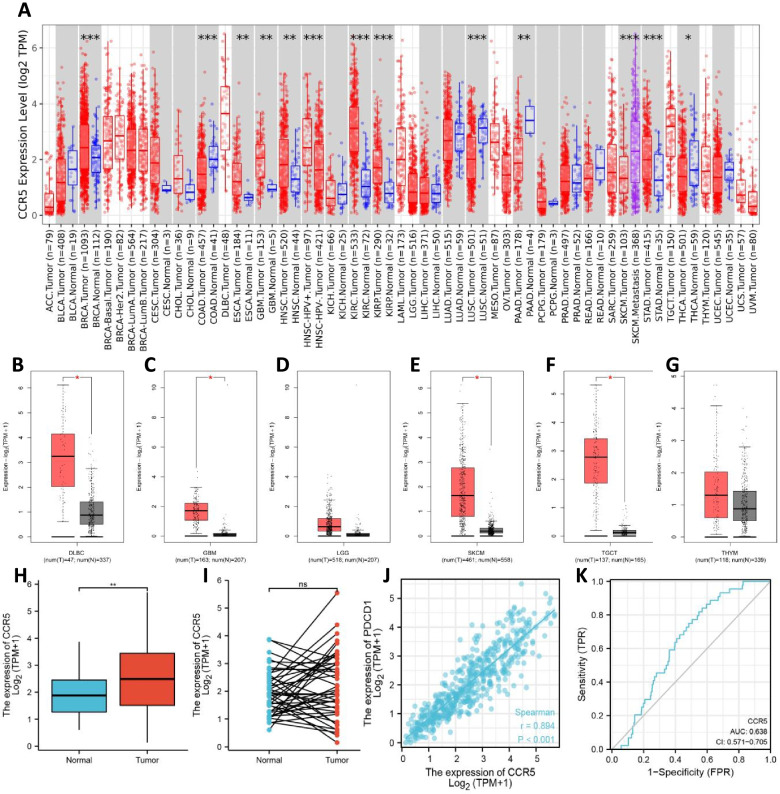
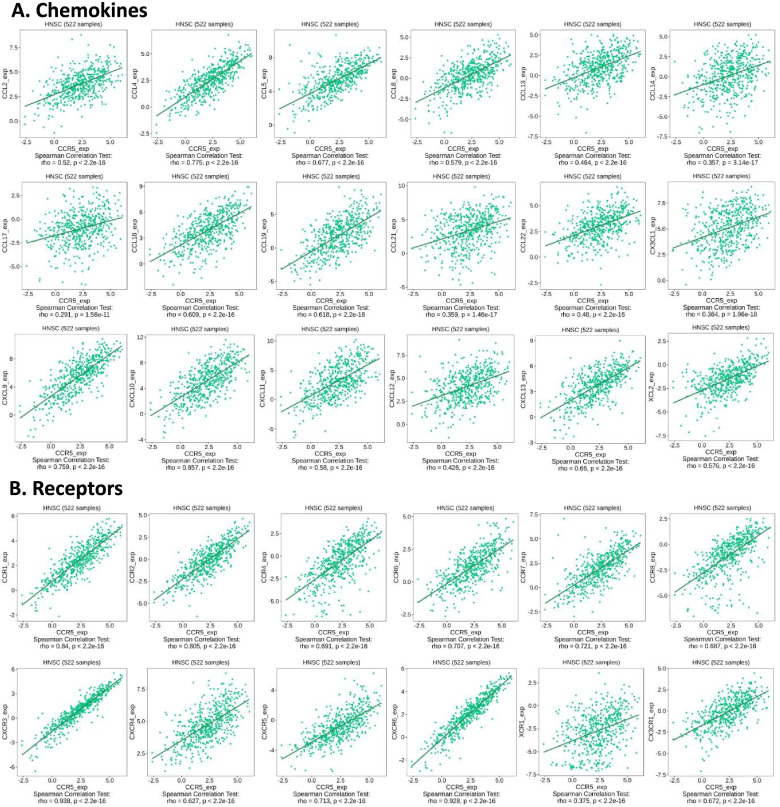
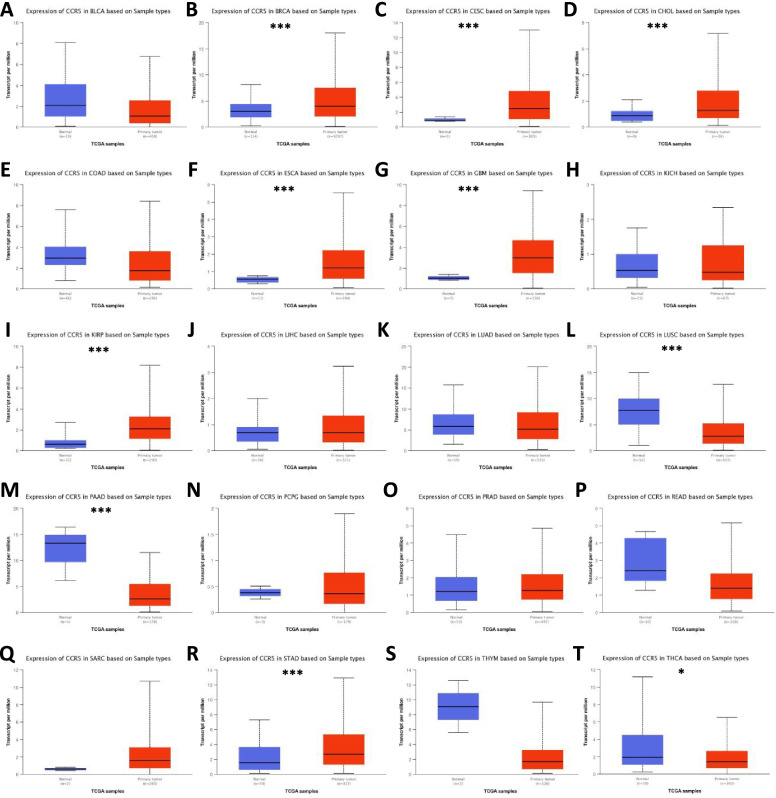
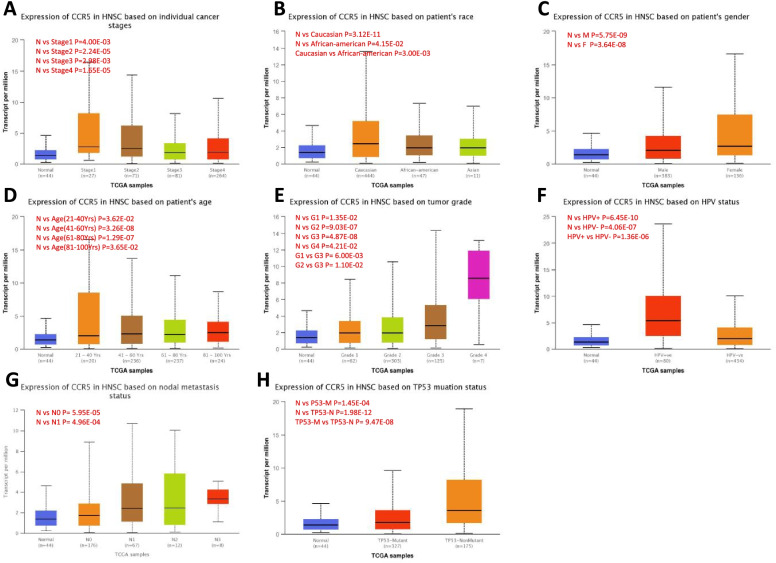
In the current experiment, methods such as the Tumor Immune Estimation Resource Analysis (TIMER), Gene Expression Profiling Interactive Analysis (GEPIA), UALCAN, and Kaplan-Meier plotter Analysis were used to comprehensively evaluate the expression of CCR5 in human various malignancies and the clinical prognosis in HNSC patients. Subsequently, we used the TIMER database and the TISIDB platform to investigate the correlation between CCR5 expression levels and immune cell infiltration in the HNSC tumor microenvironment. Furthermore, immunomodulatory and chemokine profiling were performed using the TISIDB platform to analyse the correlation between CCR5 expression levels and immunomodulation in HNSC patients.
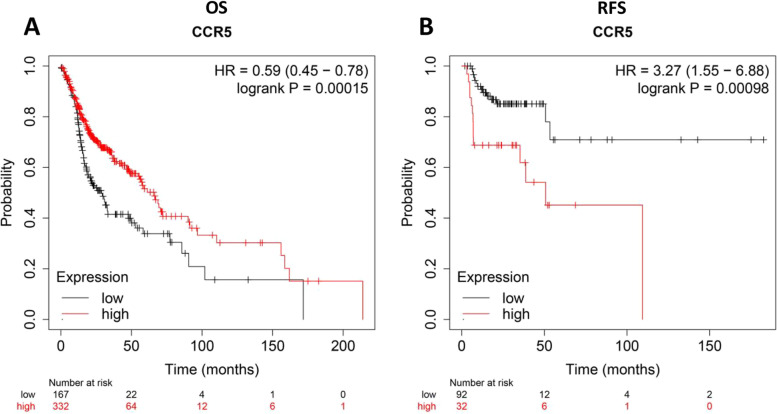
We found that CCR5 expression in HNSC tumor tissues was significantly upregulated than in normal tissues. In HNSC, patients with high CCR5 expression levels had worse overall survival (OS, HR = 0.59, p = 0.00015) and worse recurrence-free survival (RFS, HR = 3.27, p = 0.00098). Upregulation of CCR5 expression is closely associated with immunomodulators, chemokines, and infiltrating levels of CD4+ T cells, neutrophils, macrophages, and myeloid dendritic cells. Furthermore, upregulated CCR5 was significantly associated with different immune markers in the immune cell subsets of HNSC.
High expression of CCR5 plays an important prognostic role in HNSC patients and may serve as a prognostic biomarker correlated with immune infiltration, and further studies are still needed to investigate therapeutic targeting HNSC patients in the future.
C-C 趋化因子受体 5(CCR5)最近被认为是各种恶性肿瘤的潜在治疗靶点。然而,CCR5 与头颈部鳞状细胞癌(HNSC)患者和肿瘤浸润淋巴细胞(TIL)的预后之间的关系尚不清楚。
在本实验中,使用了肿瘤免疫估计资源分析(TIMER)、基因表达谱交互分析(GEPIA)、UALCAN 和 Kaplan-Meier 绘图器分析等方法,全面评估了 CCR5 在人类各种恶性肿瘤中的表达以及 HNSC 患者的临床预后。随后,我们使用 TIMER 数据库和 TISIDB 平台来研究 CCR5 表达水平与 HNSC 肿瘤微环境中免疫细胞浸润的相关性。此外,使用 TISIDB 平台进行免疫调节和趋化因子分析,以分析 HNSC 患者中 CCR5 表达水平与免疫调节的相关性。
我们发现 HNSC 肿瘤组织中的 CCR5 表达明显上调。在 HNSC 中,CCR5 高表达的患者总生存期(OS,HR=0.59,p=0.00015)和无复发生存期(RFS,HR=3.27,p=0.00098)更差。CCR5 表达上调与免疫调节剂、趋化因子以及 CD4+T 细胞、中性粒细胞、巨噬细胞和髓样树突状细胞的浸润水平密切相关。此外,上调的 CCR5 与 HNSC 免疫细胞亚群中的不同免疫标志物显著相关。
CCR5 的高表达在 HNSC 患者中具有重要的预后作用,可能作为与免疫浸润相关的预后标志物,未来仍需要进一步研究以探讨针对 HNSC 患者的治疗靶点。