Department of Health Information Technology, School of Allied Medical Sciences, Mazandaran University of Medical Sciences, Mazandaran, Iran.
Department of Health Information Technology, School of Paramedical, Ilam University of Medical Sciences, Ilam, Iran.
BMC Health Serv Res. 2022 Sep 27;22(1):1207. doi: 10.1186/s12913-022-08576-0.
Corrosive ingestion is still a major health problem, and its outcomes are often unpredicted. The implementation of a registry system for poisoning with corrosive substances may improve the quality of patient care and might be useful to manage this type of poisoning and its complications. Therefore, our study aimed to establish a minimum data set (MDS) for corrosive ingestion.
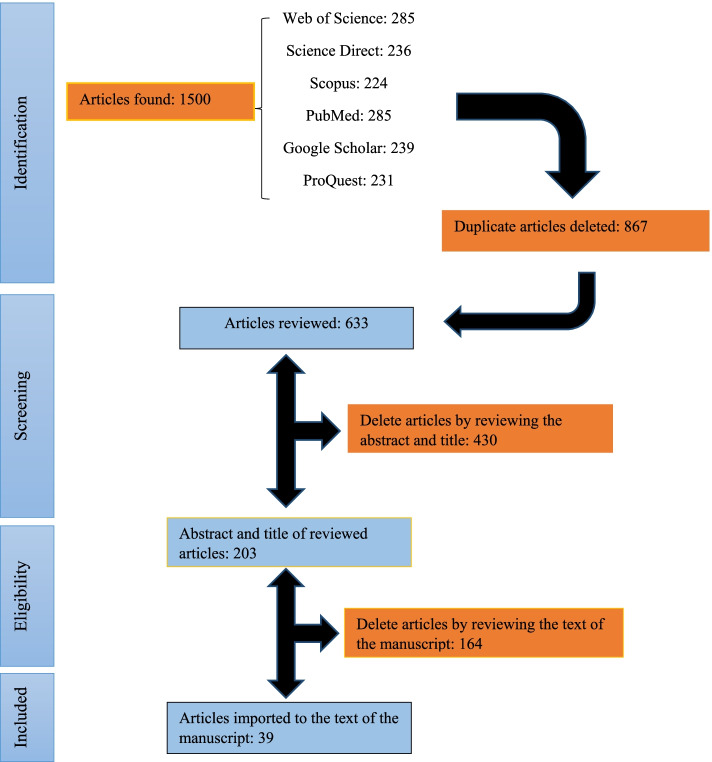
This was an applied study performed in 2022. First, a literature review was conducted to identify the potential data items to be included in the corrosive ingestion MDS. Then, a two-round Delphi survey was performed to attain an agreement among experts regarding the MDS content, and an additional Delphi step was used for confirming the final MDS by calculating the individual item content validity index (CVI) and content validity ratio (CVR) and by using other statistical tests.
After the literature review, 285 data items were collected and sent to a two-round Delphi survey in the form of a questionnaire. In total, 75 experts participated in the Delphi stage, CVI, kappa, and CVR calculation. Finally, the MDS of the corrosive ingestion registry system was identified in two administrative and clinical sections with 21 and 152 data items, respectively.
The development of an MDS, as the first and most important step towards developing the corrosive ingestion registry, can become a standard basis for data collection, reporting, and analysis of corrosive ingestion. We hope this MDS will facilitate epidemiological surveys and assist policymakers by providing higher quality data capture to guide clinical practice and improve patient-centered outcomes.
腐蚀性摄入仍然是一个主要的健康问题,其结果往往难以预测。实施腐蚀性物质中毒登记系统可能会提高患者护理质量,并有助于管理此类中毒及其并发症。因此,我们的研究旨在建立腐蚀性摄入的最小数据集 (MDS)。
这是 2022 年进行的一项应用研究。首先,进行文献回顾以确定潜在的数据项,这些数据项将被纳入腐蚀性摄入 MDS 中。然后,进行两轮 Delphi 调查以达成专家对 MDS 内容的共识,并通过计算单个项目内容有效性指数 (CVI) 和内容有效性比 (CVR) 以及使用其他统计检验,使用额外的 Delphi 步骤来确认最终的 MDS。
文献回顾后,共收集了 285 个数据项,并以问卷的形式发送给两轮 Delphi 调查。共有 75 名专家参与了 Delphi 阶段,进行了 CVI、kappa 和 CVR 计算。最终,确定了腐蚀性摄入登记系统的 MDS,分为行政和临床两个部分,分别有 21 个和 152 个数据项。
作为开发腐蚀性摄入登记系统的第一步和最重要的步骤,MDS 的开发可以成为腐蚀性摄入数据收集、报告和分析的标准基础。我们希望这个 MDS 将有助于进行流行病学调查,并通过提供更高质量的数据采集来指导临床实践和改善以患者为中心的结果,为政策制定者提供帮助。