Matheus Alessandra Saldanha de Mattos, da Matta Maria de Fátima Bevilacqua, Clemente Eliete Leão Silva, Rodrigues Maria de Lourdes Guimarães, Valença Débora Cristina Torres, Drummond Karla Rezende Guerra, Gomes Marília Brito
Diabetes Unit, State University of Rio de Janeiro, Boulevard 28 de Setembro, n. 77-Vila Isabel, Rio de Janeiro, 20551-030, Brazil.
Clinical and Experimental Physiopathology of Hypertension Unit, State University of Rio de Janeiro, Rio de Janeiro, Brazil.
Diabetol Metab Syndr. 2022 Sep 27;14(1):141. doi: 10.1186/s13098-022-00912-y.
This study aimed to evaluate whether soluble vascular cytoadhesive molecule-1 (sVCAM-1), intracellular cytoadhesive molecule-1 (sICAM-1), and endothelial function as assessed by EndoPat outweighed traditional risk factors for the presence of diabetic retinopathy (DR) in patients with type 1 diabetes (T1D).
Patients aged ≥ 12 years completed a clinical-epidemiological questionnaire. Fasting venous blood samples were obtained (lipid profile, glycemic control, and C-reactive protein levels). Vascular reactivity was assessed via peripheral arterial tonometry performed by supplying the reactive hyperemia index (RHI) through the EndoPAT device. sVCAM-1 and sICAM-1 levels were measured using multiplex assays.
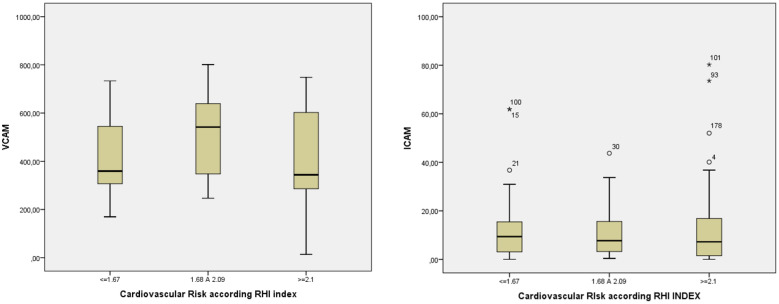
Data were obtained from 187 patients (51.3% female), aged 32 ± 13 years with a disease duration of 14 (6-15) years and mean hemoglobin A1c (HbA1c) of 9.1% ± 2.1%. After adjustments were made, age, HbA1c, arterial blood pressure, and use of drugs that could interfere with endothelial function were found to be associated with DR. No association was noted with sVCAM-1 and sICAM-1 levels and RHI.
In our sample, sVCAM-1, sICAM and EndoPAT did not outweigh the traditional DR risk factors, such as age, high HbA1c, arterial blood pressure, and use of drugs that could interfere with endothelial function and are significantly associated with DR. Further prospective studies should evaluate if markers of endothelial dysfunction could predict diabetes-related micro and macrovascular complications in T1D.
本研究旨在评估可溶性血管细胞粘附分子-1(sVCAM-1)、细胞内细胞粘附分子-1(sICAM-1)以及通过EndoPat评估的内皮功能是否比1型糖尿病(T1D)患者糖尿病视网膜病变(DR)存在的传统危险因素更具影响力。
年龄≥12岁的患者完成了一份临床流行病学调查问卷。采集空腹静脉血样本(血脂谱、血糖控制情况和C反应蛋白水平)。通过EndoPat设备提供反应性充血指数(RHI),采用外周动脉张力测定法评估血管反应性。使用多重分析法测量sVCAM-1和sICAM-1水平。
数据来自187名患者(51.3%为女性),年龄32±13岁,病程14(6 - 15)年,平均糖化血红蛋白(HbA1c)为9.1%±2.1%。调整后发现,年龄、HbA1c、动脉血压以及使用可能干扰内皮功能的药物与DR相关。未发现sVCAM-1和sICAM-1水平及RHI与之相关。
在我们的样本中,sVCAM-1、sICAM和EndoPat并未超过传统的DR危险因素,如年龄、高HbA1c、动脉血压以及使用可能干扰内皮功能且与DR显著相关的药物。进一步的前瞻性研究应评估内皮功能障碍标志物是否能预测T1D中与糖尿病相关的微血管和大血管并发症。