
临床内镜检查中的人工智能:视频组学领域的见解
Artificial intelligence in clinical endoscopy: Insights in the field of videomics.
作者信息
Paderno Alberto, Gennarini Francesca, Sordi Alessandra, Montenegro Claudia, Lancini Davide, Villani Francesca Pia, Moccia Sara, Piazza Cesare
机构信息
Unit of Otorhinolaryngology-Head and Neck Surgery, ASST Spedali Civili of Brescia, Brescia, Italy.
Department of Medical and Surgical Specialties, Radiological Sciences, and Public Health, School of Medicine, University of Brescia, Brescia, Italy.
出版信息
Front Surg. 2022 Sep 12;9:933297. doi: 10.3389/fsurg.2022.933297. eCollection 2022.
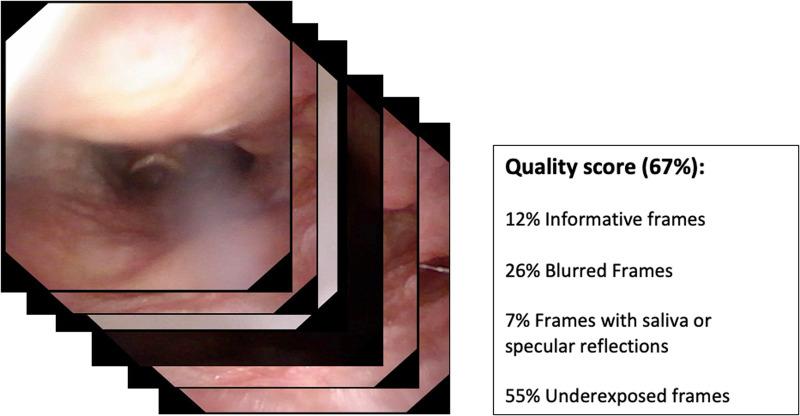
Artificial intelligence is being increasingly seen as a useful tool in medicine. Specifically, these technologies have the objective to extract insights from complex datasets that cannot easily be analyzed by conventional statistical methods. While promising results have been obtained for various -omics datasets, radiological images, and histopathologic slides, analysis of videoendoscopic frames still represents a major challenge. In this context, videomics represents a burgeoning field wherein several methods of computer vision are systematically used to organize unstructured data from frames obtained during diagnostic videoendoscopy. Recent studies have focused on five broad tasks with increasing complexity: quality assessment of endoscopic images, classification of pathologic and nonpathologic frames, detection of lesions inside frames, segmentation of pathologic lesions, and in-depth characterization of neoplastic lesions. Herein, we present a broad overview of the field, with a focus on conceptual key points and future perspectives.
人工智能在医学领域正日益被视为一种有用的工具。具体而言,这些技术旨在从复杂的数据集中提取见解,而这些数据集难以通过传统统计方法进行分析。虽然在各种组学数据集、放射影像和组织病理切片方面取得了很有前景的结果,但视频内镜图像的分析仍然是一项重大挑战。在此背景下,视频组学是一个新兴领域,其中系统地使用了多种计算机视觉方法来整理诊断性视频内镜检查过程中获得的图像中的非结构化数据。最近的研究集中在五个复杂性不断增加的广泛任务上:内镜图像的质量评估、病理性和非病理性图像的分类、图像内病变的检测、病理性病变的分割以及肿瘤性病变的深入特征描述。在此,我们对该领域进行广泛概述,重点关注概念要点和未来前景。



 Zotero 插件