Kaku Chengzi I, Starr Tyler N, Zhou Panpan, Dugan Haley L, Khalifé Paul, Song Ge, Champney Elizabeth R, Mielcarz Daniel W, Geoghegan James C, Burton Dennis R, Raiees Andrabi, Bloom Jesse D, Walker Laura M
Adimab, LLC, Lebanon, NH 03766, USA.
Department of Immunology and Microbiology, The Scripps Research Institute, La Jolla, CA 92037, USA.
bioRxiv. 2022 Sep 22:2022.09.21.508922. doi: 10.1101/2022.09.21.508922.
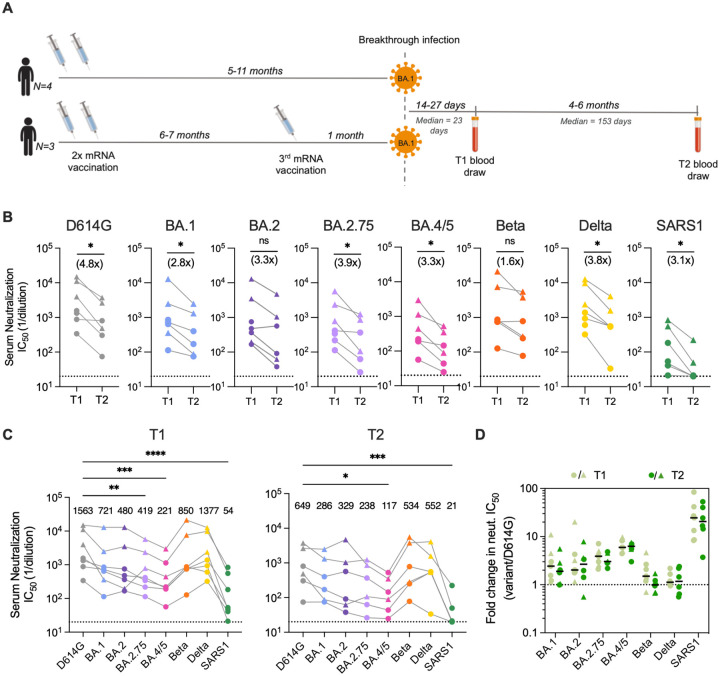
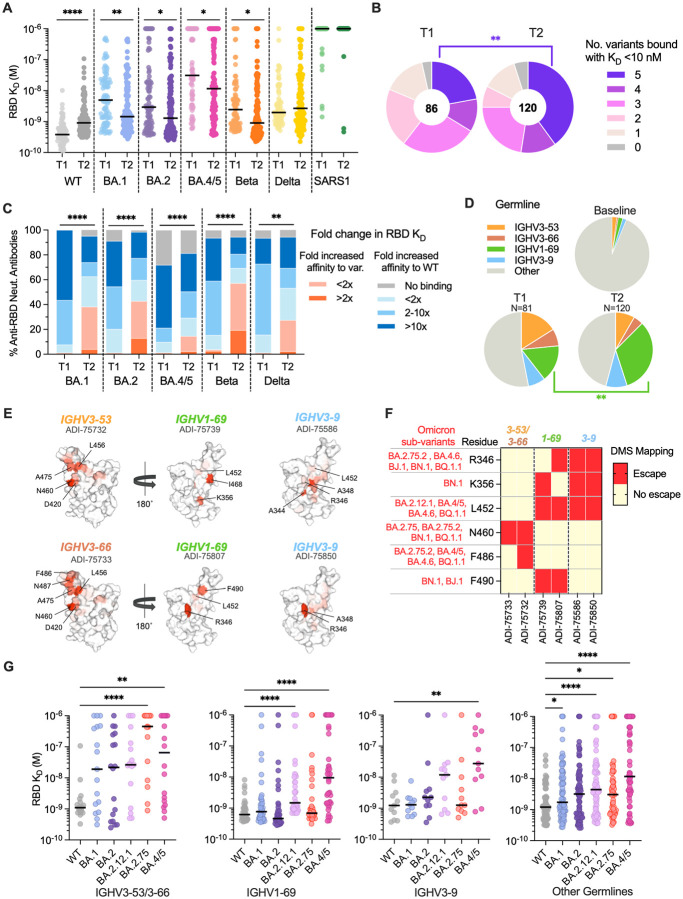
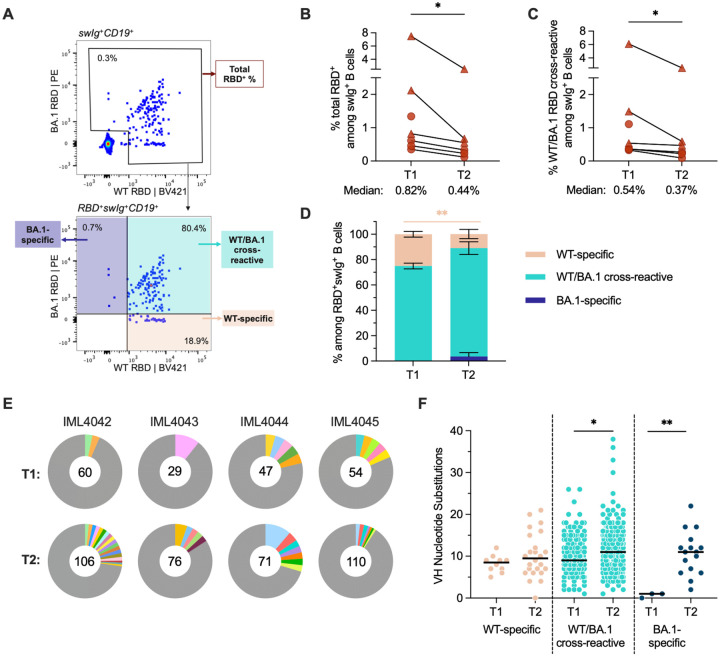
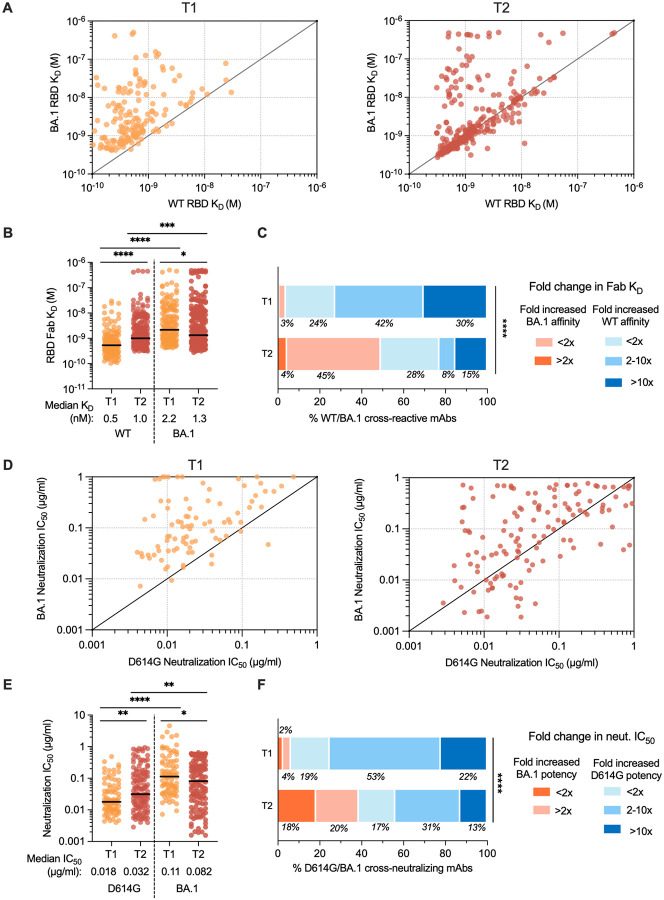
Understanding the evolution of antibody immunity following heterologous SAR-CoV-2 breakthrough infection will inform the development of next-generation vaccines. Here, we tracked SARS-CoV-2 receptor binding domain (RBD)-specific antibody responses up to six months following Omicron BA.1 breakthrough infection in mRNA-vaccinated individuals. Cross-reactive serum neutralizing antibody and memory B cell (MBC) responses declined by two- to four-fold through the study period. Breakthrough infection elicited minimal de novo Omicron-specific B cell responses but drove affinity maturation of pre-existing cross-reactive MBCs toward BA.1. Public clones dominated the neutralizing antibody response at both early and late time points, and their escape mutation profiles predicted newly emergent Omicron sublineages. The results demonstrate that heterologous SARS-CoV-2 variant exposure drives the evolution of B cell memory and suggest that convergent neutralizing antibody responses continue to shape viral evolution.
了解新冠病毒(SARS-CoV-2)异源突破性感染后抗体免疫的演变情况,将为下一代疫苗的研发提供信息。在此,我们追踪了接种mRNA疫苗的个体在感染奥密克戎BA.1后长达六个月的新冠病毒受体结合域(RBD)特异性抗体反应。在整个研究期间,交叉反应性血清中和抗体和记忆B细胞(MBC)反应下降了两到四倍。突破性感染引发的从头开始的奥密克戎特异性B细胞反应极少,但促使预先存在的交叉反应性MBC向BA.1亲和力成熟。在早期和晚期时间点,公共克隆均主导中和抗体反应,并且它们的逃逸突变谱预测了新出现的奥密克戎亚系。结果表明,异源SARS-CoV-2变体暴露推动了B细胞记忆的演变,并表明趋同的中和抗体反应继续塑造病毒进化。