Department of Biosciences, Durham University, South Road Science Site, Durham, United Kingdom; Department of Biological Structure, University of Washington, Seattle, Washington, USA.
Department of Biological Structure, University of Washington, Seattle, Washington, USA.
J Biol Chem. 2022 Nov;298(11):102537. doi: 10.1016/j.jbc.2022.102537. Epub 2022 Sep 27.
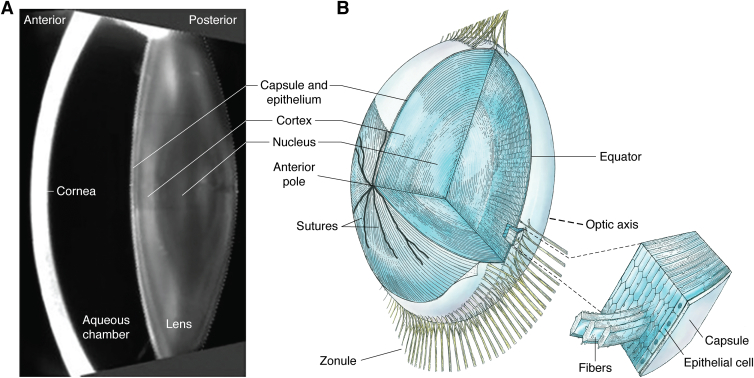
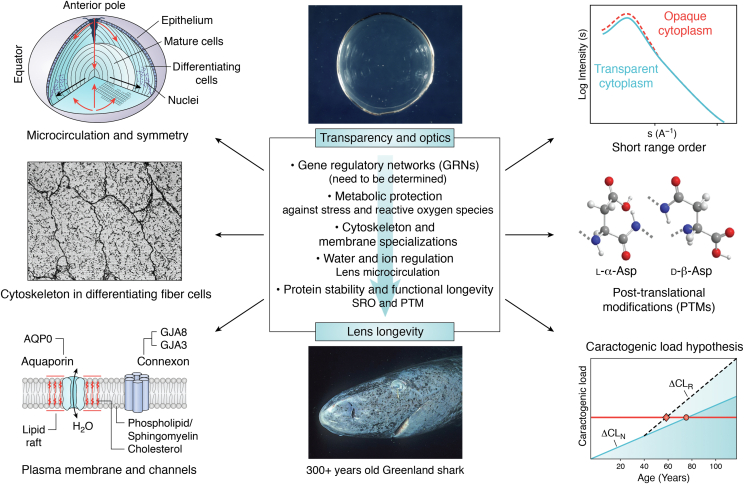
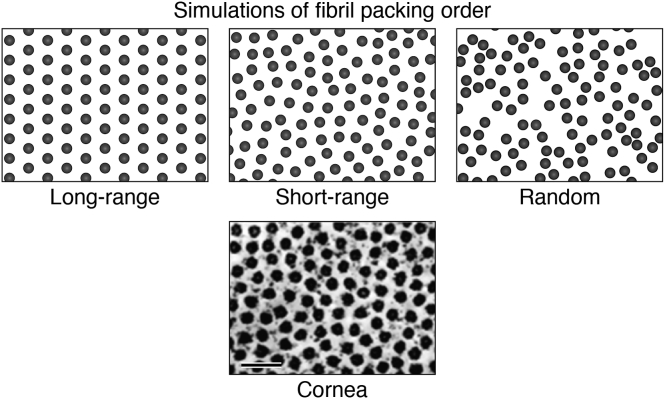
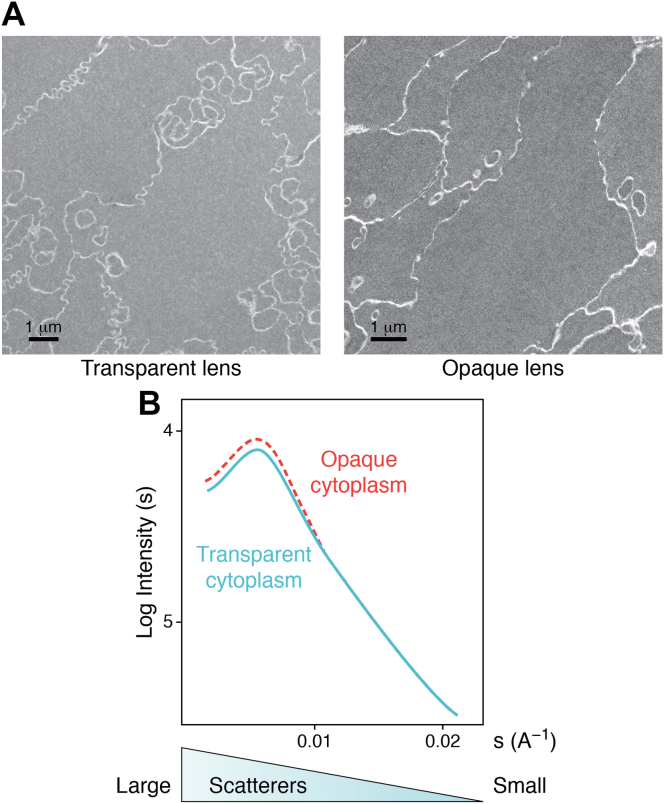
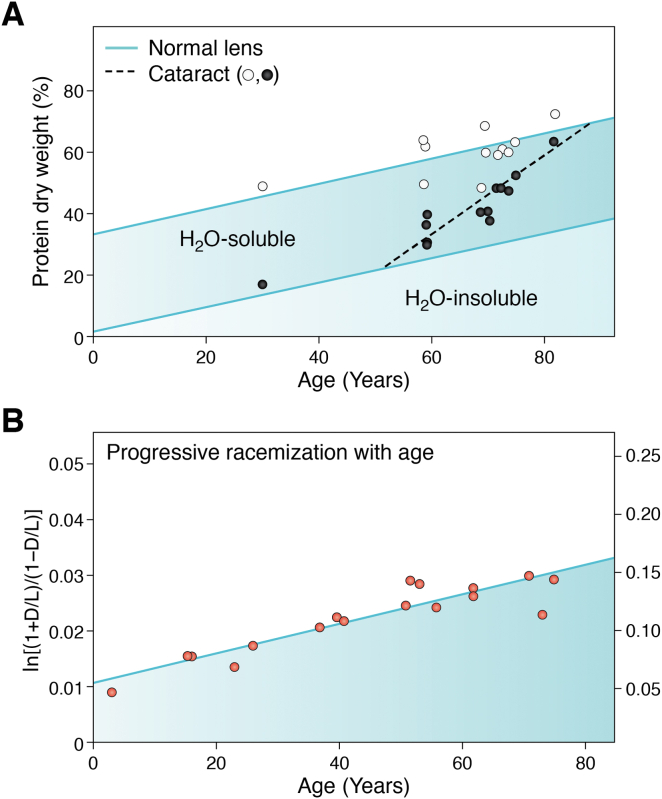
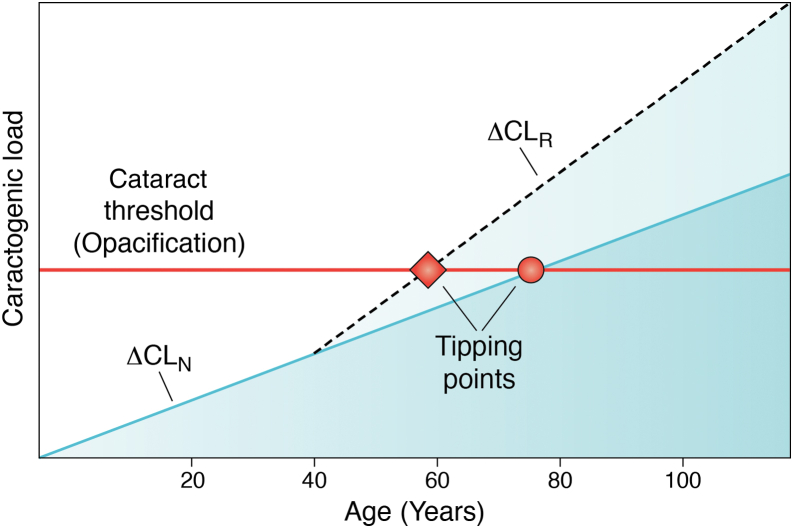
In the human eye, a transparent cornea and lens combine to form the "refracton" to focus images on the retina. This requires the refracton to have a high refractive index "n," mediated largely by extracellular collagen fibrils in the corneal stroma and the highly concentrated crystallin proteins in the cytoplasm of the lens fiber cells. Transparency is a result of short-range order in the spatial arrangement of corneal collagen fibrils and lens crystallins, generated in part by post-translational modifications (PTMs). However, while corneal collagen is remodeled continuously and replaced, lens crystallins are very long-lived and are not replaced and so accumulate PTMs over a lifetime. Eventually, a tipping point is reached when protein aggregation results in increased light scatter, inevitably leading to the iconic protein condensation-based disease, age-related cataract (ARC). Cataracts account for 50% of vision impairment worldwide, affecting far more people than other well-known protein aggregation-based diseases. However, because accumulation of crystallin PTMs begins before birth and long before ARC presents, we postulate that the lens protein PTMs contribute to a "cataractogenic load" that not only increases with age but also has protective effects on optical function by stabilizing lens crystallins until a tipping point is reached. In this review, we highlight decades of experimental findings that support the potential for PTMs to be protective during normal development. We hypothesize that ARC is preventable by protecting the biochemical and biophysical properties of lens proteins needed to maintain transparency, refraction, and optical function.
在人眼中,透明的角膜和晶状体结合形成“折射”,将图像聚焦在视网膜上。这要求折射具有高折射率“n”,主要由角膜基质中的细胞外胶原纤维和晶状体纤维细胞细胞质中高度浓缩的晶状蛋白介导。透明度是由于角膜胶原纤维和晶状体晶状蛋白的短程有序排列产生的,部分是由翻译后修饰(PTM)产生的。然而,虽然角膜胶原不断重塑和替换,但晶状体晶状蛋白的寿命非常长,不会被替换,因此在一生中会积累 PTM。最终,当蛋白质聚集导致光散射增加时,就达到了一个临界点,不可避免地导致标志性的蛋白质凝聚相关疾病,年龄相关性白内障(ARC)。白内障占全球视力障碍的 50%,影响的人数远远超过其他著名的蛋白质聚集相关疾病。然而,由于晶状体蛋白 PTM 的积累始于出生前,并且远在 ARC 出现之前就开始了,我们假设晶状体蛋白 PTM 会导致“白内障负荷”增加,不仅会随着年龄的增长而增加,而且还会通过稳定晶状体晶状蛋白来保护光学功能,直到达到临界点。在这篇综述中,我们强调了几十年来的实验发现,这些发现支持 PTM 在正常发育过程中具有保护作用的潜力。我们假设通过保护维持透明度、折射和光学功能所需的晶状体蛋白的生化和物理特性,可以预防 ARC。