School of Mechanical Engineering, Pusan National University, 2, Busandaehak-ro 63 beon-gil, Geumjeong-gu, Busan, 46241, Republic of Korea.
Smart Manufacturing Technology R&D Group, Korea Institute of Industrial Technology, 320 Techno sunhwan-ro, Yuga-eup, Dalseong-gun, Daegu, 42994, Republic of Korea.
Sci Rep. 2022 Sep 29;12(1):16281. doi: 10.1038/s41598-022-20352-y.
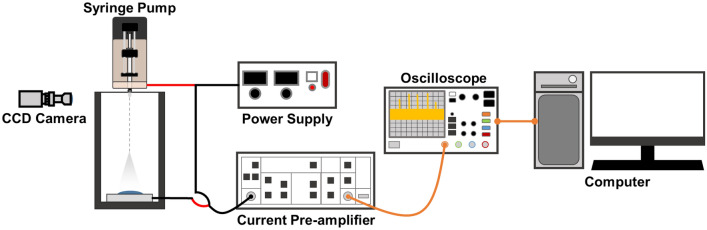
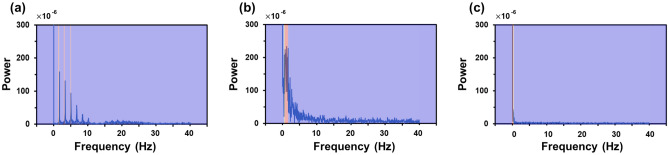
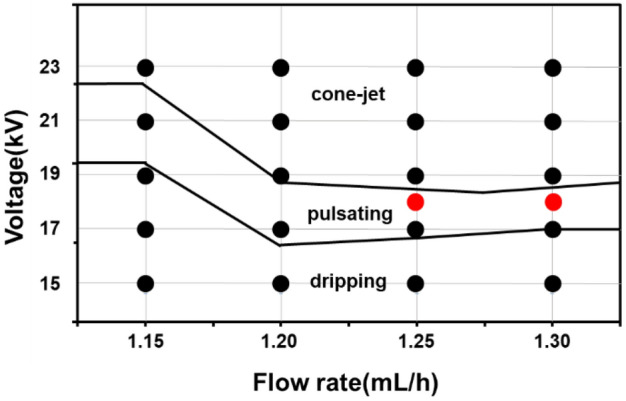
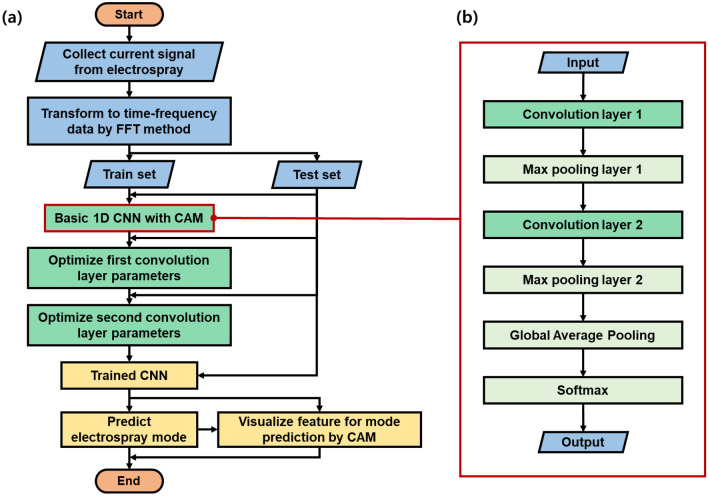
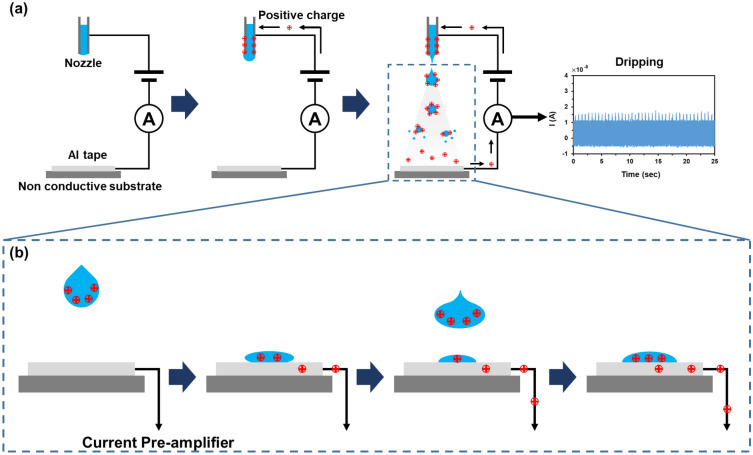
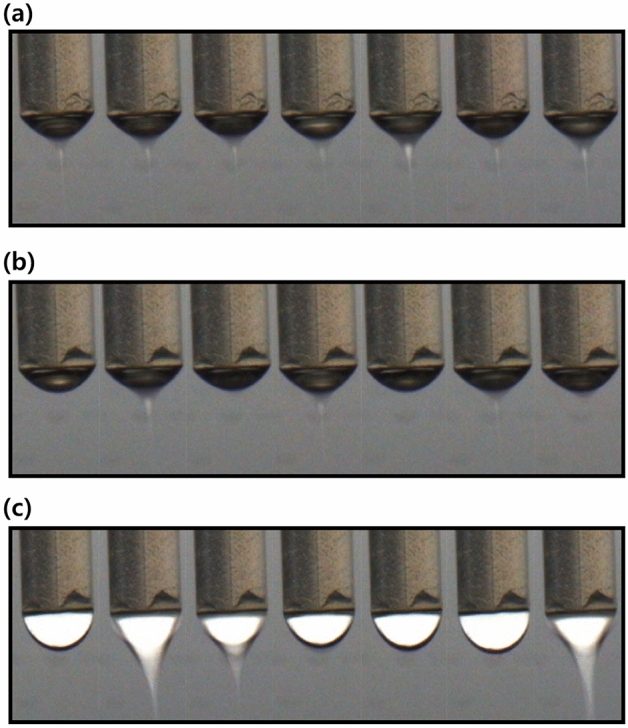
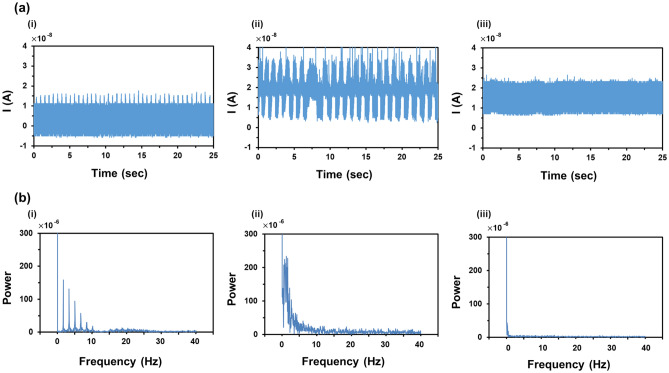
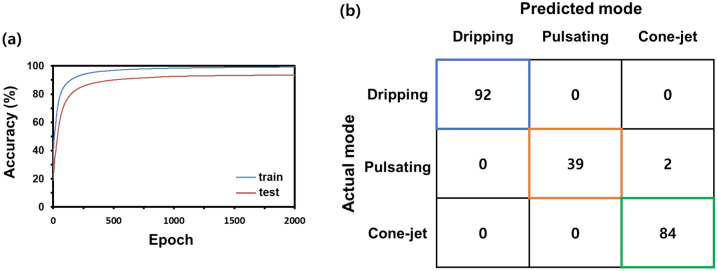
The electrospray process has been extensively applied in various fields, including energy, display, sensor, and biomedical engineering owing to its ability to generate of functional micro/nanoparticles. Although the mode of the electrospray process has a significant impact on the quality of micro/nano particles, observing and discriminating the mode of electrospray during the process has not received adequate attention. This study develops a simple automated method to discriminate the mode of the electrospray process based on the current signal using a deep convolutional neural network (CNN) and class activation map (CAM). The solution flow rate and applied voltage are selected as experimental variables, and the electrospray process is classified into three modes: dripping, pulsating, and cone-jet. The current signal through the collector is measured to detect the deposition of electrospray droplets on the collector. The 1D CNN model is trained using frequency data converted from the current data. The model exhibits excellent performance with an accuracy of 96.30%. Adoption of the CAM configuration enables the model to provide a discriminative cue for each mode and elucidate the decision-making process of the CNN model.
电喷雾工艺因其能够生成功能性的微/纳米颗粒,已广泛应用于能源、显示、传感器和生物医学工程等领域。尽管电喷雾工艺的模式对微/纳米颗粒的质量有重大影响,但在该过程中观察和区分电喷雾的模式并没有得到足够的重视。本研究开发了一种简单的自动化方法,使用深度卷积神经网络(CNN)和类激活图(CAM),基于电流信号来区分电喷雾工艺的模式。选择溶液流速和外加电压作为实验变量,将电喷雾工艺分为三种模式:滴状、脉动和射流。通过收集器测量电流信号,以检测电喷雾液滴在收集器上的沉积。使用从电流数据转换而来的频率数据对 1D CNN 模型进行训练。该模型的准确率达到 96.30%,具有出色的性能。采用 CAM 配置使模型能够为每种模式提供有区别的线索,并阐明 CNN 模型的决策过程。