Department of Process Development, Drug Substance Technologies, Amgen Inc., 360 Binney Street, Cambridge, Massachusetts02142, United States.
Acc Chem Res. 2022 Oct 18;55(20):2892-2903. doi: 10.1021/acs.accounts.2c00479. Epub 2022 Sep 30.
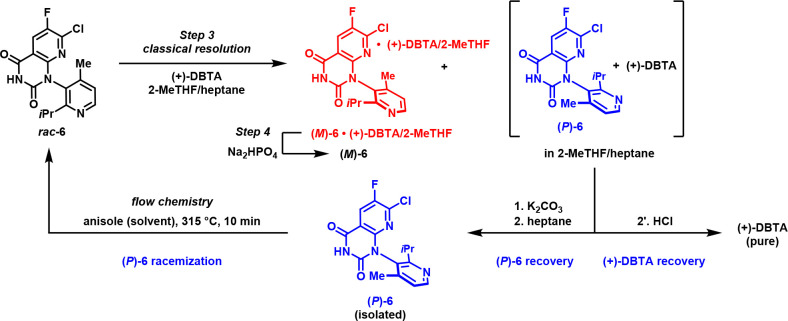
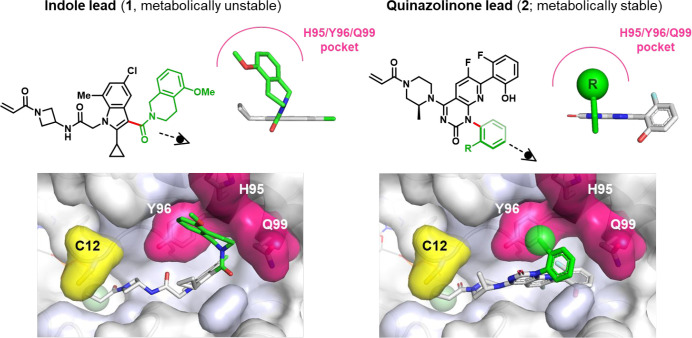
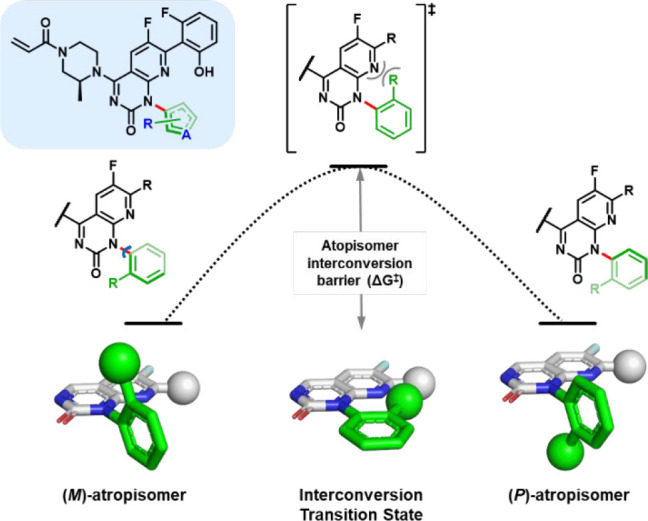
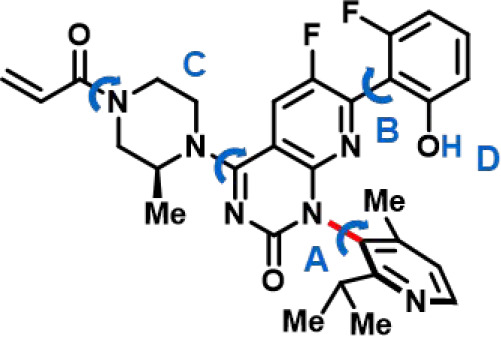
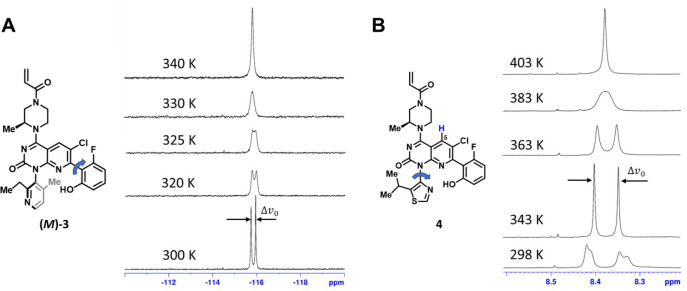
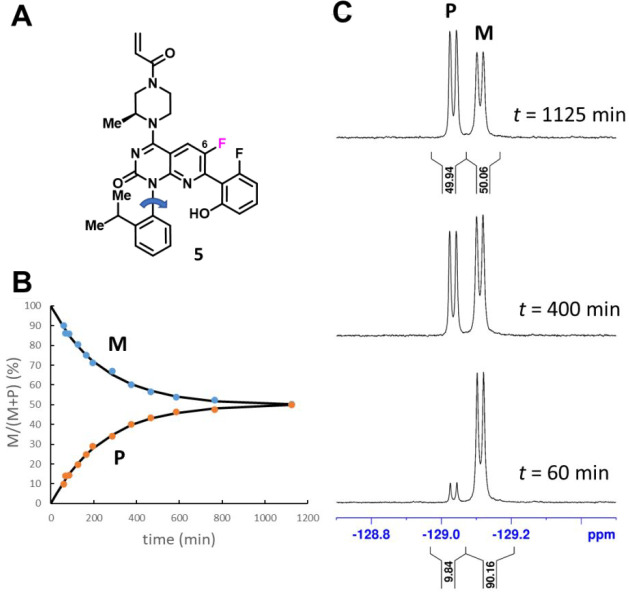
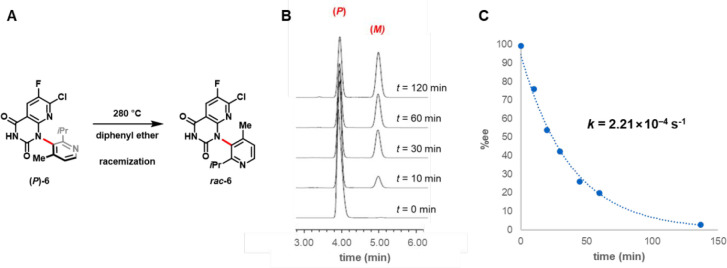
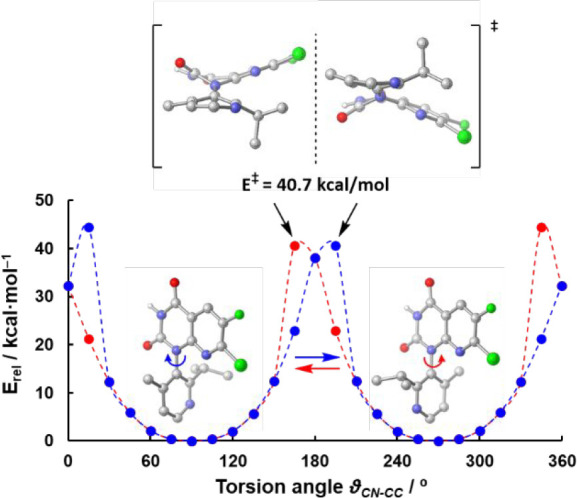
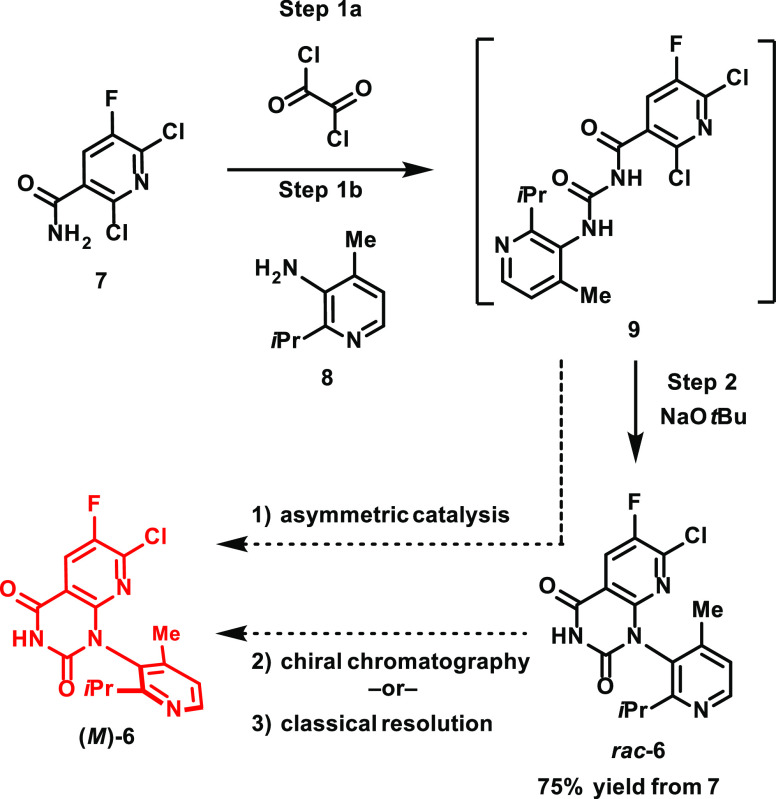
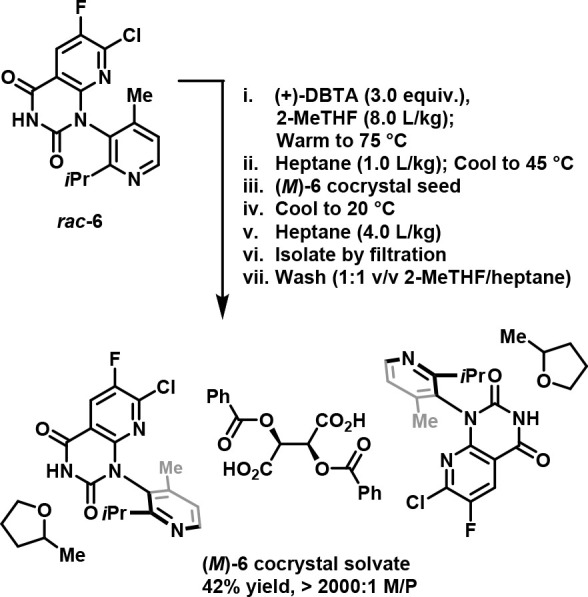
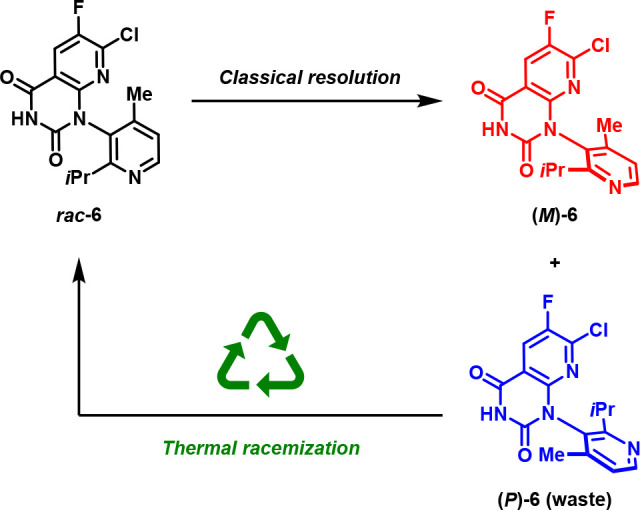
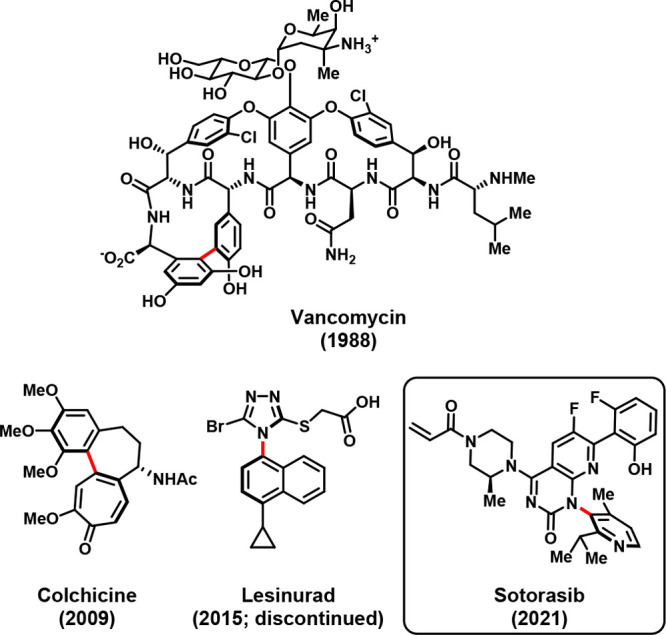
Nearly a century after its first description, configurationally stable axial chirality remains a rare feature in marketed drugs. In the development of the KRAS inhibitor sotorasib (LUMAKRAS/LUMYKRAS), an axially chiral biaryl moiety proved a critical structural element in engaging a "cryptic" protein binding pocket and enhancing inhibitor potency. Restricted rotation about this axis of chirality gave rise to configurationally stable atropisomers that demonstrated a 10-fold difference in potency. The decision to develop sotorasib as a single-atropisomer drug gave rise to a range of analytical and synthetic challenges, whose resolution we review here.Assessing the configurational stability of differentially substituted biaryl units in early inhibitor candidates represented the first challenge to be overcome, as differing atropisomer stability profiles called for differing development strategies (e.g., as rapidly equilibrating rotamers vs as single atropisomers). We relied on a range of NMR, HPLC, and computational methods to assess atropisomer stability. Here, we describe the various variable-temperature NMR, time-course NMR, and chiral HPLC approaches used to assess the configurational stability of axially chiral bonds displaying a range of rotational barriers.As optimal engagement of the "cryptic" pocket of KRAS was ultimately achieved with a configurationally stable atropisomeric linkage, the second challenge to be overcome entailed preparing the preferred ()-atropisomer of sotorasib on industrial scale. This synthetic challenge centered on the large-scale synthesis of an atropisomerically pure building block comprising the central azaquinazolinone and pyridine rings of sotorasib. We examined a range of strategies to prepare this compound as a single atropisomer: asymmetric catalysis, chiral chromatographic purification, and classical resolution. Although chiral liquid and simulated moving bed chromatography provided expedient access to initial multikilo supplies of this key intermediate, a classical resolution process was ultimately developed that proved significantly more efficient on metric-ton scale. To avoid discarding half of the material from this resolution, this process was subsequently refined to enable thermal recycling of the undesired atropisomer, providing an even more efficient commercial process that proved both robust and green.While the preparation of sotorasib as a single atropisomer significantly increased both the analytical and synthetic complexity of its development, the axially chiral biaryl linkage that gave rise to the atropisomerism of sotorasib proved a key design element in optimizing sotorasib's binding to KRAS. It is hoped that this review will help in outlining the range of analytical techniques and synthetic strategies that can be brought to bear in addressing the challenges posed by such axially chiral compounds and that this account may provide helpful guidelines for future efforts aimed at the development of such single atropisomer, axially chiral pharmaceutical agents.
近一个世纪以来,首个描述轴向手性的描述以来,构象稳定的轴向手性在市场销售的药物中仍然是一种罕见的特征。在 KRAS 抑制剂索托拉西布(sotorasib,LUMAKRAS/LUMYKRAS)的开发过程中,轴向手性联苯部分证明是一种关键的结构元素,用于结合“隐匿”的蛋白结合口袋并增强抑制剂的效力。围绕该手性轴的旋转受限产生了构象稳定的对映异构体,其效力差异高达 10 倍。决定将索托拉西布开发为单一对映异构体药物,引发了一系列分析和合成挑战,我们在此回顾了这些挑战的解决方案。评估早期抑制剂候选物中不同取代联苯单元的构象稳定性是需要克服的第一个挑战,因为不同的对映异构体稳定性曲线需要不同的开发策略(例如,作为快速平衡的旋转异构体与作为单一对映异构体)。我们依靠一系列 NMR、HPLC 和计算方法来评估对映异构体的稳定性。在这里,我们描述了用于评估显示出一系列旋转势垒的轴向手性键的构象稳定性的各种变温 NMR、时程 NMR 和手性 HPLC 方法。随着最终通过构象稳定的对映异构体键实现对 KRAS 的“隐匿”口袋的最佳结合,需要克服的第二个挑战是在工业规模上制备索托拉西布的优选()-对映异构体。这种合成挑战集中在大规模合成包含索托拉西布中心氮杂喹唑啉酮和吡啶环的对映异构体纯构建块上。我们研究了一系列策略来制备这种化合物作为单一对映异构体:不对称催化、手性色谱纯化和经典拆分。尽管手性液相和模拟移动床色谱法提供了快速获得这种关键中间体的多公斤供应的方法,但最终开发了一种经典的拆分方法,在公吨规模上证明更有效。为了避免从该拆分中丢弃一半的物料,随后对该过程进行了改进,以实现对不需要的对映异构体的热回收,提供了一种更有效的商业过程,该过程既稳健又环保。虽然将索托拉西布制备为单一对映异构体显著增加了其开发的分析和合成复杂性,但导致索托拉西布对映异构化的轴向手性联苯键仍然是优化索托拉西布与 KRAS 结合的关键设计元素。希望本综述有助于概述可用于解决此类轴向手性化合物带来的挑战的一系列分析技术和合成策略,并为未来旨在开发此类单一对映异构体、轴向手性药物的努力提供有帮助的指导方针。