Department of Neurology, Beijing Tiantan Hospital, Capital Medical University, Beijing, China.
China National Clinical Research Center for Neurological Diseases, Beijing Tiantan Hospital, Capital Medical University, Beijing, China.
Neurocrit Care. 2023 Apr;38(2):414-421. doi: 10.1007/s12028-022-01603-2. Epub 2022 Sep 30.
Cytotoxic edema (CE) is an important form of perihematomal edema (PHE), which is a surrogate marker of secondary injury after intracerebral hemorrhage (ICH). However, knowledge about CE after ICH is insufficient. Whether CE has adverse effects on clinical outcomes of patients with ICH remains unknown. Therefore, we aimed to investigate the temporal pattern of CE and its association with clinical outcomes in patients with ICH.
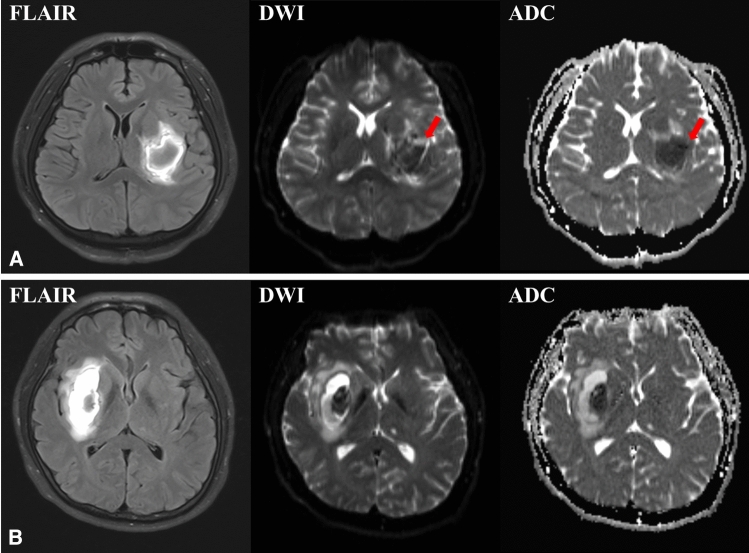
Data were derived from a randomized controlled study (comparing the deproteinized calf blood extract with placebo in patients with ICH). Intervention in this original study did not show any impact on hematoma and PHE volume, presence of CE, or clinical outcomes. We conducted our analysis in 20 patients who underwent magnetic resonance imaging with diffusion-weighted imaging (DWI) and apparent diffusion coefficient (ADC) images at day 3 and within 7-12 days after symptom onset. CE was defined as an elevated DWI b1000 signal and an ADC value reduced by > 10% compared with the mirror area of interest in the perihematomal region. The modified Rankin Scale (mRS), National Institutes of Health Stroke Scale (NIHSS), and Barthel Index (BI) were performed face to face at 30-day and 90-day follow-ups after ICH onset to assess the clinical outcomes of the patients.
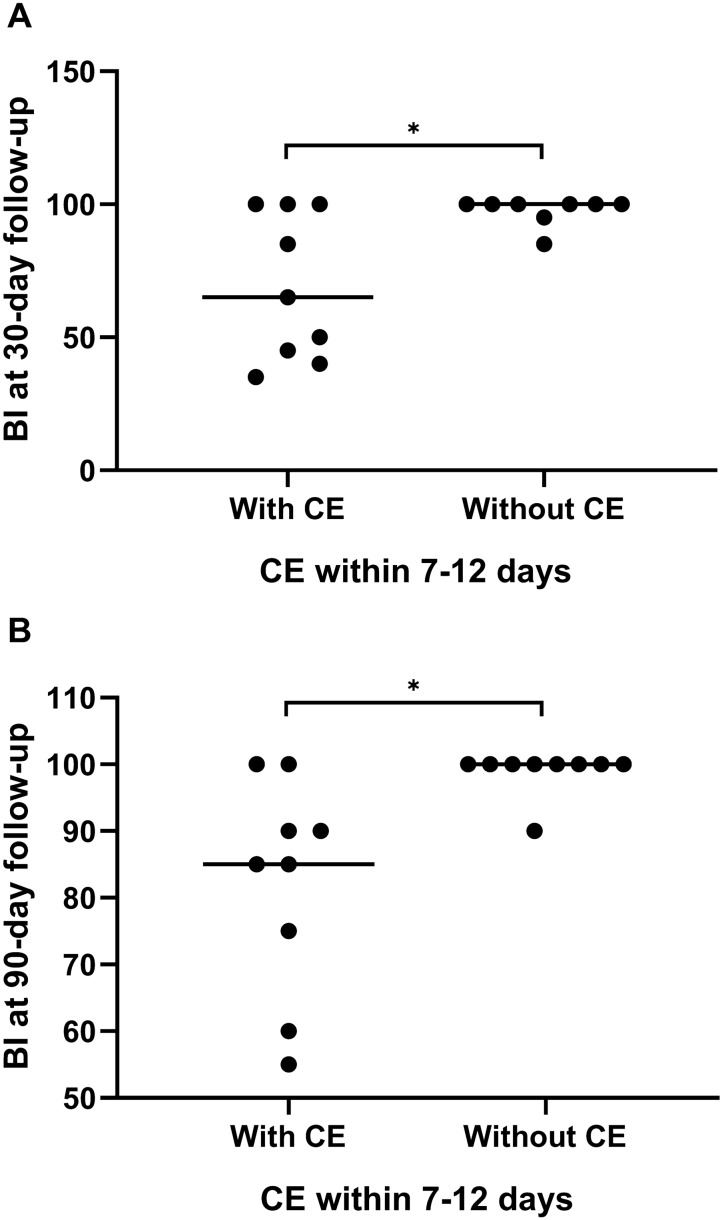
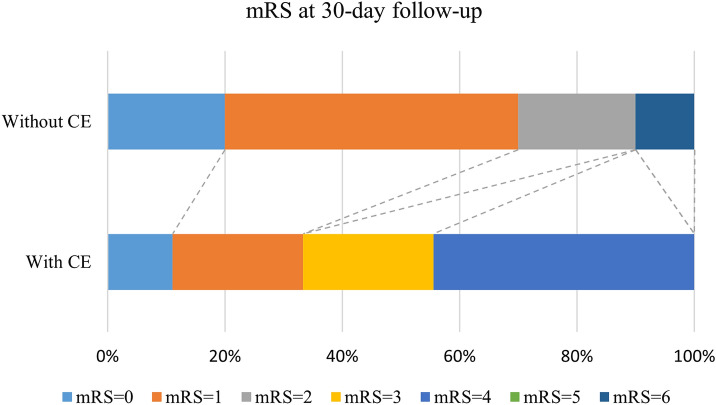
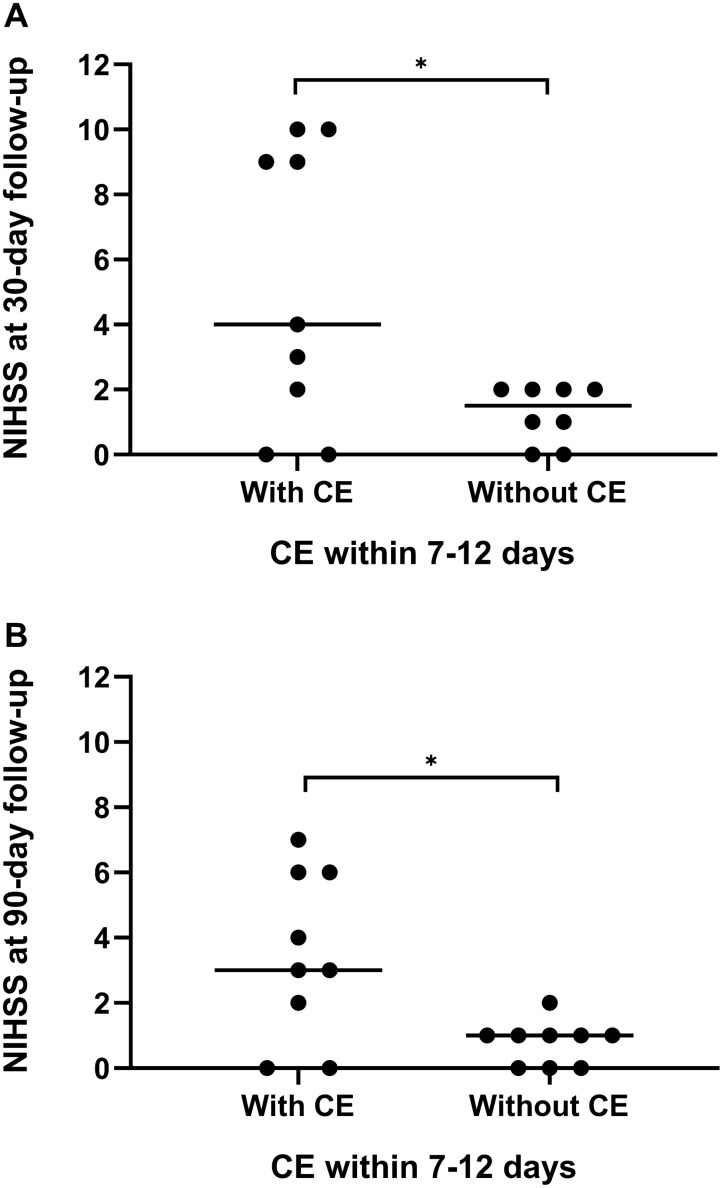
CE was detected in nearly two thirds of patients with ICH in our study and seemed to be reversible. CE within 7-12 days, rather than at day 3 after symptom onset, was associated with poor clinical outcome (mRS 3-6) at the 30-day follow-up (P = 0.020). In addition, compared with those without CE, patients with CE within 7-12 days had more severe neurological impairment measured by NIHSS score (P = 0.024) and worse daily life quality measured by BI (P = 0.004) at both the 30- and 90-day follow-ups.
CE appears in the acute phase of ICH and might be reversible. CE within 7-12 days post ICH was related to poor outcomes, which provides a novel therapeutic target for ICH intervention.
细胞毒性水肿(CE)是血肿周围水肿(PHE)的重要形式,是脑出血(ICH)后继发性损伤的替代标志物。然而,人们对脑出血后 CE 的认识还不够充分。CE 是否对 ICH 患者的临床预后有不良影响尚不清楚。因此,我们旨在研究脑出血患者 CE 的时间模式及其与临床预后的关系。
数据来自一项随机对照研究(比较脱蛋白小牛血提取物与安慰剂在 ICH 患者中的作用)。该原始研究中的干预措施并未显示对血肿和 PHE 体积、CE 的存在或临床结局有任何影响。我们对发病后 3 天内和 7-12 天内进行磁共振成像(DWI)和表观扩散系数(ADC)图像检查的 20 例患者进行了分析。CE 定义为血肿周围区域的 ADC 值降低超过 10%,同时 DWI b1000 信号升高。改良 Rankin 量表(mRS)、国立卫生研究院卒中量表(NIHSS)和巴氏指数(BI)在 ICH 发病后 30 天和 90 天进行面对面评估,以评估患者的临床结局。
在我们的研究中,近三分之二的脑出血患者出现了 CE,且似乎是可逆的。与发病后 3 天相比,发病后 7-12 天的 CE 与 30 天随访时的不良临床结局(mRS 3-6)相关(P=0.020)。此外,与无 CE 患者相比,发病后 7-12 天有 CE 的患者在 30 天和 90 天随访时的 NIHSS 评分更高(P=0.024),BI 评分更低(P=0.004),提示神经功能缺损更严重,日常生活质量更差。
CE 出现在脑出血的急性期,可能是可逆的。ICH 后 7-12 天的 CE 与不良结局有关,为 ICH 干预提供了一个新的治疗靶点。