Department of Surgical Oncology, The First Affiliated Hospital, School of Medicine, Zhejiang University, Hangzhou, 310003, China.
Clinical Research Center, The First Affiliated Hospital, School of Medicine, Zhejiang University, Hangzhou, 310003, China.
J Transl Med. 2022 Sep 30;20(1):439. doi: 10.1186/s12967-022-03650-x.
Globally, gastric cancer is the third most common cancer and the third leading cause of cancer death. Proximal and distal gastric cancers have distinct clinical and biological behaviors. The microbial composition and metabolic differences in proximal and distal gastric cancers have not been fully studied and discussed.
In this study, the gastric microbiome of 13 proximal gastric cancer tissues, 16 distal gastric cancer tissues, and their matched non-tumor tissues were characterized using 16S rRNA amplicon sequencing. Additionally, 10 proximal gastric cancer tissues, 11 distal gastric cancer tissues, and their matched non-tumor tissues were assessed by untargeted metabolomics.
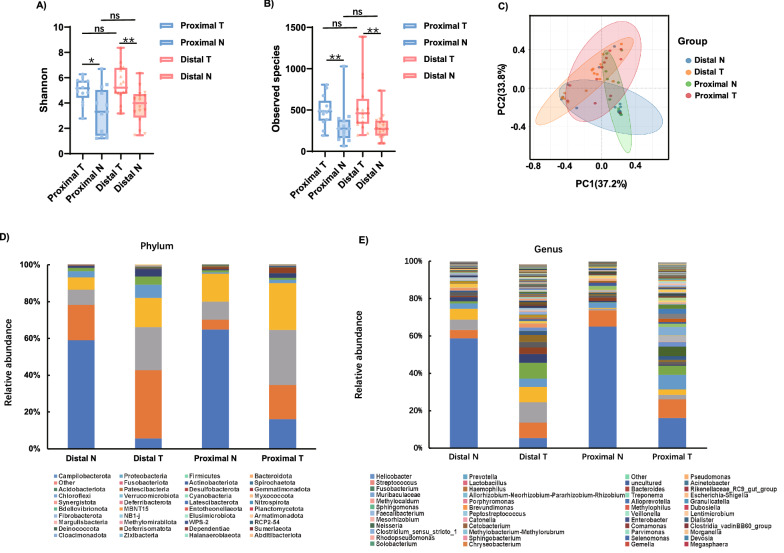
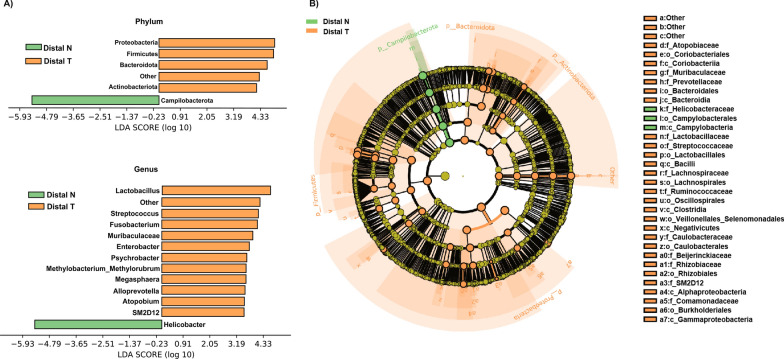
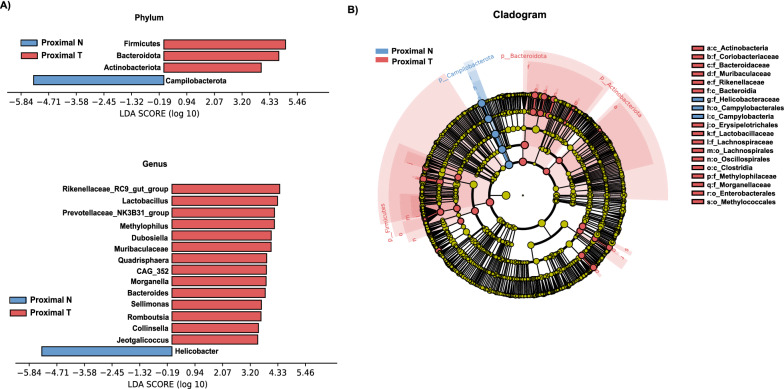
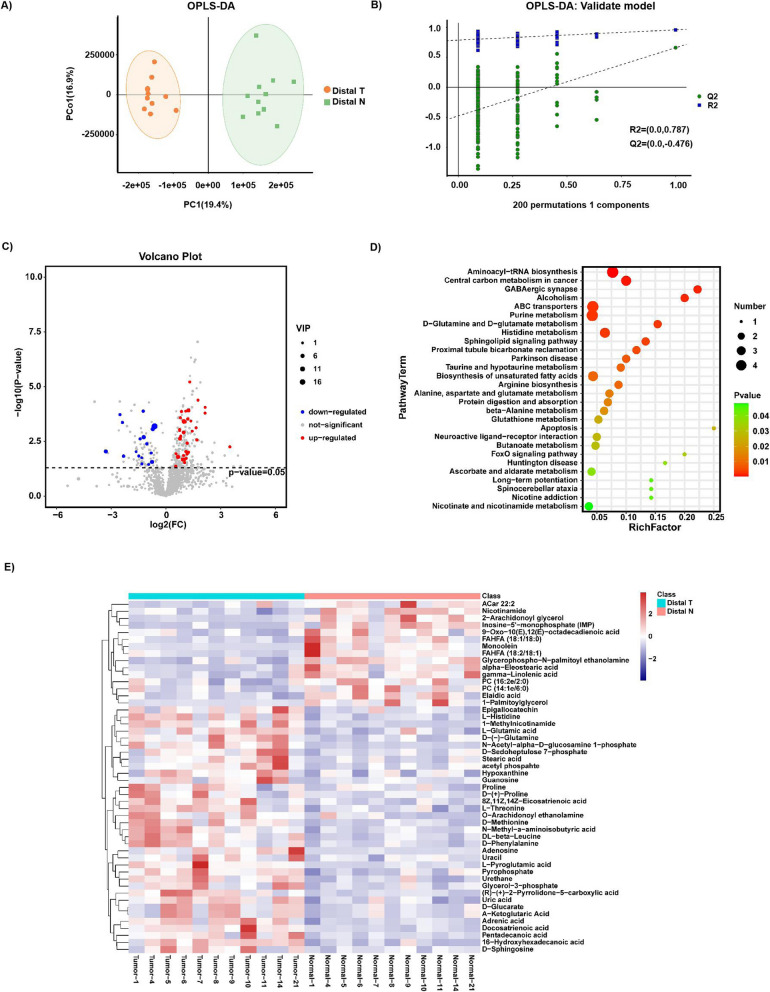
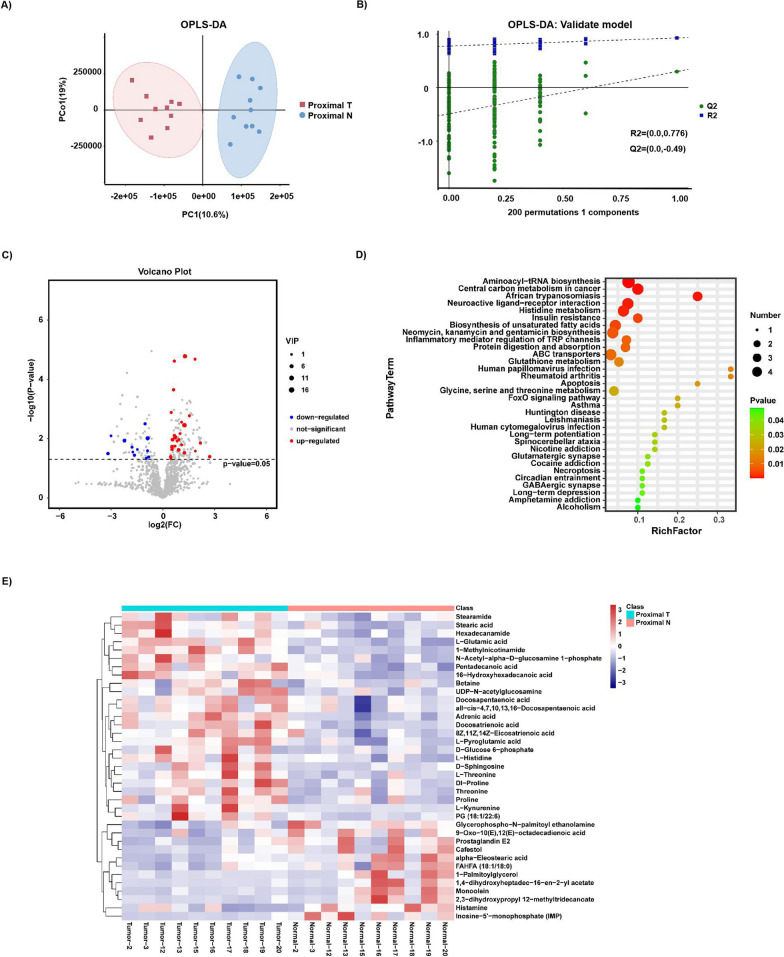
There was no significant difference in microbial diversity and richness between the proximal and distal gastric cancer tissues. At the genus level, the abundance of Rikenellaceae_RC9_gut_group, Porphyromonas, Catonella, Proteus, Oribacterium, and Moraxella were significantly increased in Proximal T, whereas that of Methylobacterium_Methylorubrum was significantly increased in Distal T. The untargeted metabolomics analysis revealed 30 discriminative metabolites between Distal T and Distal N. In contrast, there were only 4 discriminative metabolites between Proximal T and Proximal N. In distal gastric cancer, different metabolites were scattered through multiple pathway, including the sphingolipid signaling pathway, arginine biosynthesis, protein digestion and absorption, alanine, aspartate and, glutamate metabolism, etc.In proximal gastric cancer, differential microbial metabolites were mainly related to hormone metabolism.
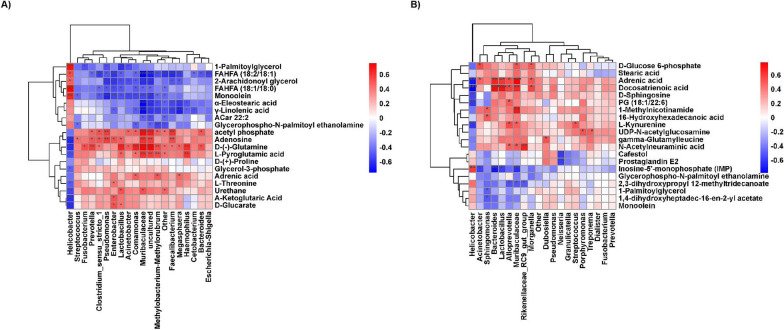
Methylobacterium-Methylorubrum was significantly increased in Distal T, positively correlated with cancer-promoting metabolites, and negatively correlated with cancer-inhibiting metabolites. Rikenellaceae_RC_gut_group was significantly increased in Proximal T and positively correlated with cancer-promoting metabolites. Further studies regarding the functions of the above-mentioned microorganisms and metabolites were warranted as the results may reveal the different mechanisms underlying the occurrence and development of proximal and distal gastric cancers and provide a basis for future treatments.
First, the differences in microbial composition and metabolites between the proximal and distal gastric cancers were described; then, the correlation between microbiota and metabolites was preliminarily discussed. These microbes and metabolites deserve further investigations as they may reveal the different mechanisms involved in the occurrence and development of proximal and distal gastric cancers and provide a basis for future treatments.
在全球范围内,胃癌是第三大常见癌症,也是癌症死亡的第三大主要原因。近端和远端胃癌具有明显不同的临床和生物学行为。近端和远端胃癌的微生物组成和代谢差异尚未得到充分研究和讨论。
本研究采用 16S rRNA 扩增子测序技术,对 13 例近端胃癌组织、16 例远端胃癌组织及其配对非肿瘤组织的胃微生物组进行了特征描述。此外,还通过非靶向代谢组学方法评估了 10 例近端胃癌组织、11 例远端胃癌组织及其配对非肿瘤组织。
近端和远端胃癌组织的微生物多样性和丰富度无显著差异。在属水平上,Proximal T 中 Rikenellaceae_RC9_gut_group、Porphyromonas、Catonella、Proteus、Oribacterium 和 Moraxella 的丰度显著增加,而 Distal T 中 Methylobacterium_Methylorubrum 的丰度显著增加。非靶向代谢组学分析显示,Distal T 与 Distal N 之间有 30 种有区别的代谢物。相比之下,Proximal T 与 Proximal N 之间仅有 4 种有区别的代谢物。在远端胃癌中,不同的代谢物分布在多个途径中,包括鞘脂信号通路、精氨酸生物合成、蛋白质消化吸收、丙氨酸、天冬氨酸和谷氨酸代谢等。在近端胃癌中,差异微生物代谢物主要与激素代谢有关。
Distal T 中 Methylobacterium_Methylorubrum 显著增加,与促进癌症的代谢物呈正相关,与抑制癌症的代谢物呈负相关。Proximal T 中 Rikenellaceae_RC_gut_group 显著增加,与促进癌症的代谢物呈正相关。需要进一步研究上述微生物和代谢物的功能,因为这些结果可能揭示近端和远端胃癌发生发展的不同机制,并为未来的治疗提供依据。
首先描述了近端和远端胃癌之间微生物组成和代谢物的差异,然后初步探讨了微生物群和代谢物之间的相关性。这些微生物和代谢物值得进一步研究,因为它们可能揭示了近端和远端胃癌发生发展的不同机制,并为未来的治疗提供了依据。