Jiangxi Otorhinolaryngology Head and Neck Surgery Institute, Department of Otorhinolaryngology Head and Neck Surgery, The First Affiliated Hospital of Nanchang University, Nanchang, Jiangxi, China.
Department of Surgical Oncology, The First Affiliated Hospital, School of Medicine, Zhejiang University, Hangzhou, Zhejiang, China.
Cell Death Dis. 2021 Nov 24;12(12):1104. doi: 10.1038/s41419-021-04396-y.
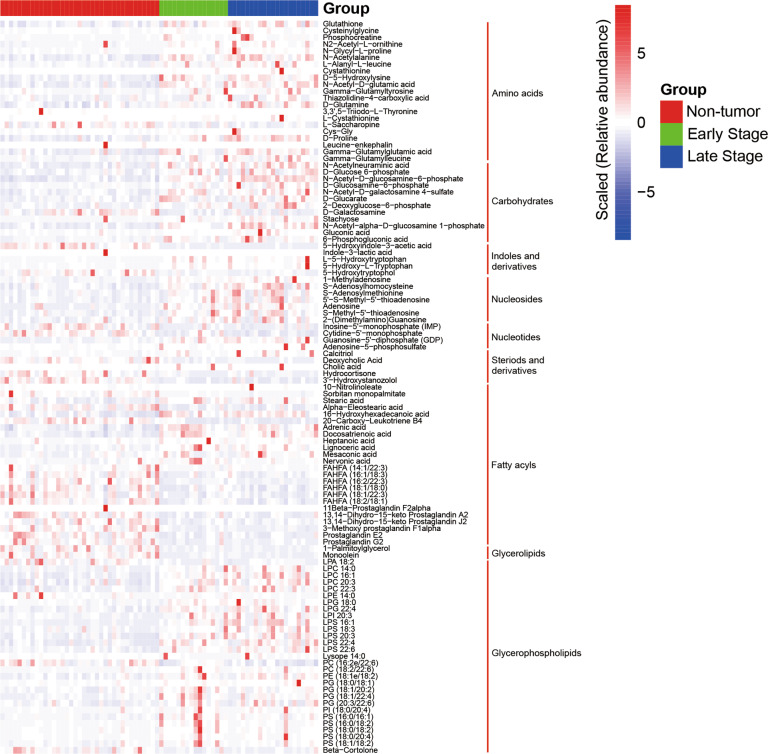
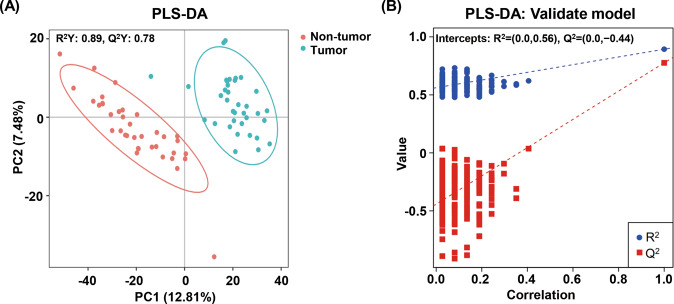
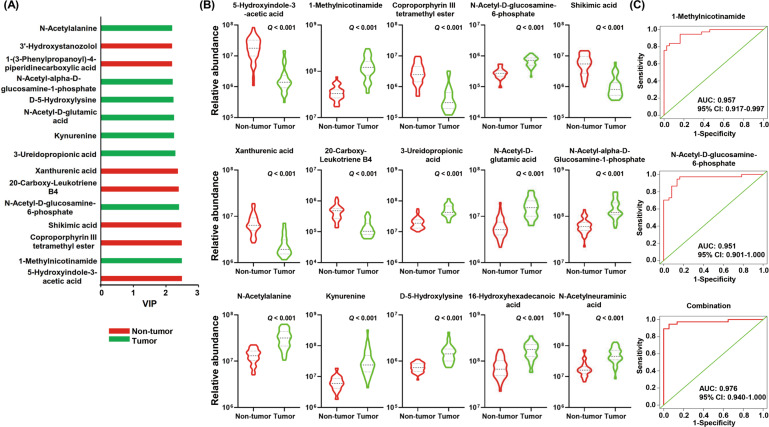
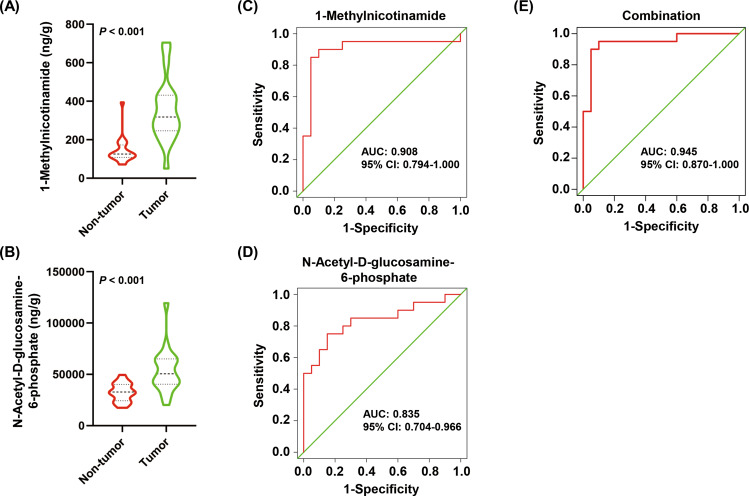
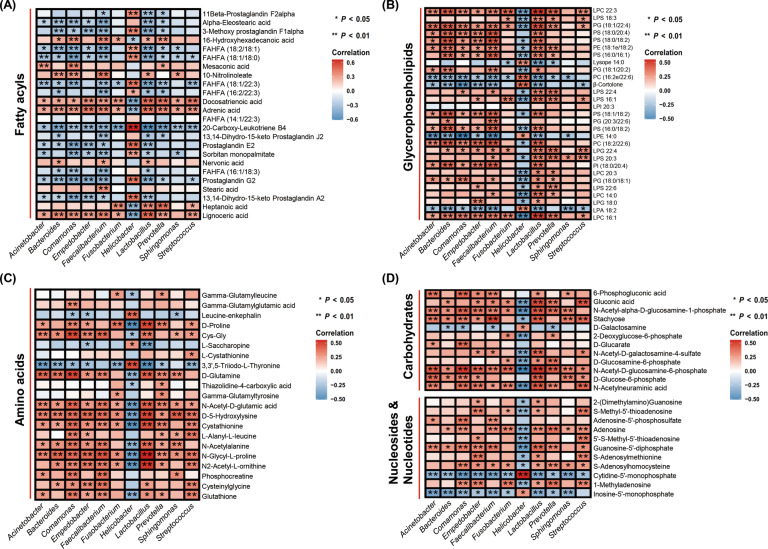
The development and progression of gastric cancer (GC) is greatly influenced by gastric microbiota and their metabolites. Here, we characterized the gastric microbiome and metabolome profiles of 37 GC tumor tissues and matched non-tumor tissues using 16s rRNA gene sequencing and ultrahigh performance liquid chromatography tandem mass spectrometry, respectively. Microbial diversity and richness were higher in GC tumor tissues than in non-tumor tissues. The abundance of Helicobacter was increased in non-tumor tissues, while the abundance of Lactobacillus, Streptococcus, Bacteroides, Prevotella, and 6 additional genera was increased in the tumor tissues. The untargeted metabolome analysis revealed 150 discriminative metabolites, among which the relative abundance of the amino acids, carbohydrates and carbohydrate conjugates, glycerophospholipids, and nucleosides was higher in tumor tissues compared to non-tumor tissues. The targeted metabolome analysis further demonstrated that the combination of 1-methylnicotinamide and N-acetyl-D-glucosamine-6-phosphate could serve as a robust biomarker for distinction between GC tumors and non-tumor tissues. Correlation analysis revealed that Helicobacter and Lactobacillus were negatively and positively correlated with the majority of differential metabolites in the classes of amino acids, carbohydrates, nucleosides, nucleotides, and glycerophospholipids, respectively, suggesting that Helicobacter and Lactobacillus might play a role in degradation and synthesis of the majority of differential metabolites in these classes, respectively. Acinetobacter, Comamonas, Faecalibacterium, Sphingomonas, and Streptococcus were also significantly correlated with many differential amino acids, carbohydrates, nucleosides, nucleotides, and glycerophospholipids. In conclusion, the differences in metabolome profiles between GC tumor and matched non-tumor tissues may be partly due to the collective activities of Helicobacter, Lactobacillus, and other bacteria, which eventually affects GC carcinogenesis and progression.
胃癌(GC)的发生和发展受胃微生物群及其代谢产物的影响较大。在这里,我们使用 16s rRNA 基因测序和超高效液相色谱串联质谱法分别对 37 个 GC 肿瘤组织和匹配的非肿瘤组织进行了胃微生物组和代谢组特征分析。GC 肿瘤组织中的微生物多样性和丰富度高于非肿瘤组织。非肿瘤组织中 Helicobacter 的丰度增加,而肿瘤组织中 Lactobacillus、Streptococcus、Bacteroides、Prevotella 和其他 6 个属的丰度增加。非靶向代谢组分析显示 150 种有区别的代谢物,其中肿瘤组织中氨基酸、碳水化合物及其糖缀合物、甘油磷脂和核苷的相对丰度高于非肿瘤组织。靶向代谢组分析进一步表明,1-甲基烟酰胺和 N-乙酰-D-葡萄糖胺-6-磷酸的组合可作为区分 GC 肿瘤与非肿瘤组织的有力生物标志物。相关性分析表明,Helicobacter 和 Lactobacillus 分别与氨基酸、碳水化合物、核苷、核苷酸和甘油磷脂等类别的大多数差异代谢物呈负相关和正相关,这表明 Helicobacter 和 Lactobacillus 可能分别在这些类别的大多数差异代谢物的降解和合成中发挥作用。Acinetobacter、Comamonas、Faecalibacterium、Sphingomonas 和 Streptococcus 也与许多差异氨基酸、碳水化合物、核苷、核苷酸和甘油磷脂显著相关。总之,GC 肿瘤组织与匹配的非肿瘤组织之间代谢组谱的差异可能部分归因于 Helicobacter、Lactobacillus 和其他细菌的集体活动,这些活动最终影响 GC 的致癌作用和进展。