Laboratory of Nematology, Wageningen University & Research, 6708PB, Wageningen, The Netherlands.
Plant J. 2022 Nov;112(4):1070-1083. doi: 10.1111/tpj.15996. Epub 2022 Oct 21.
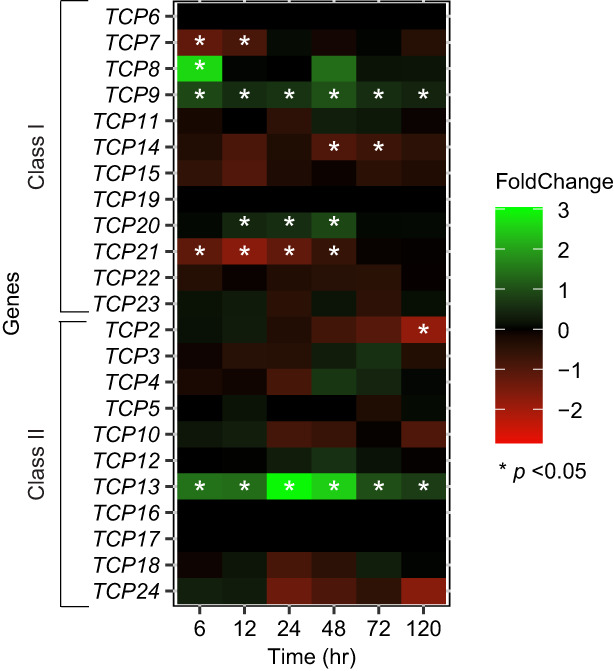
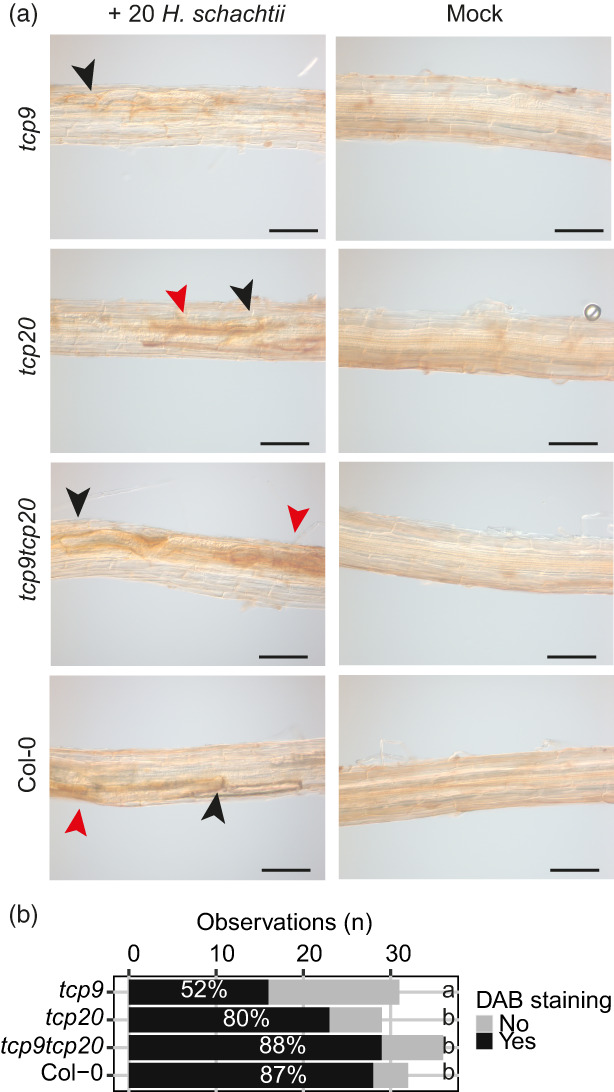
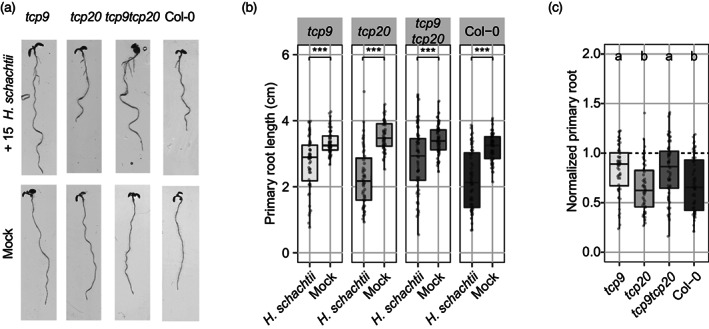
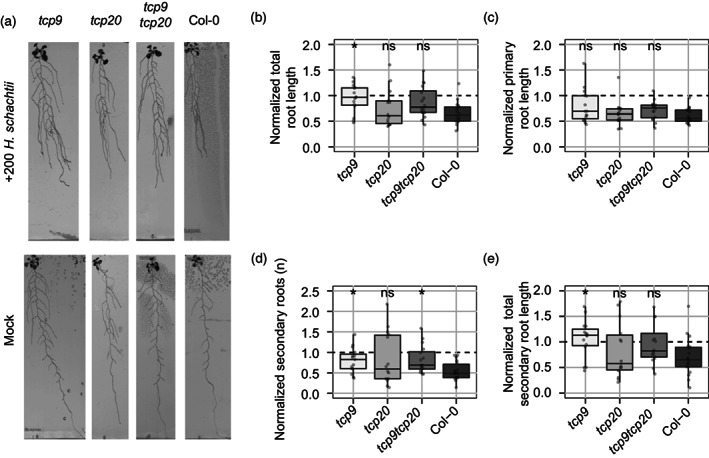
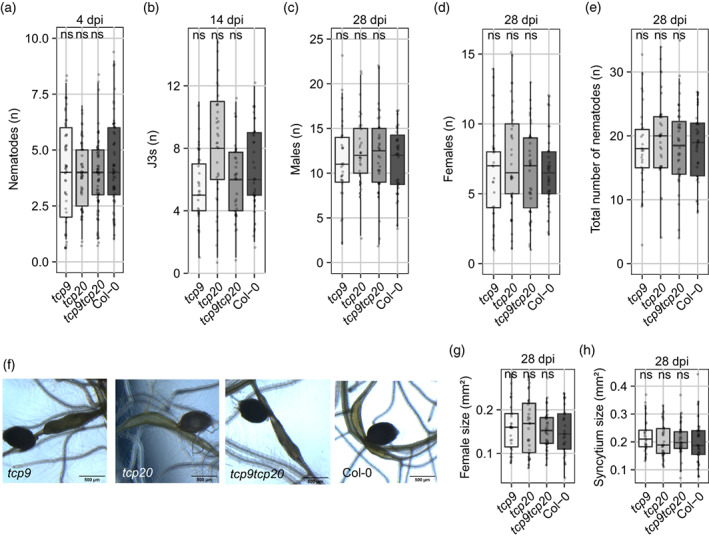
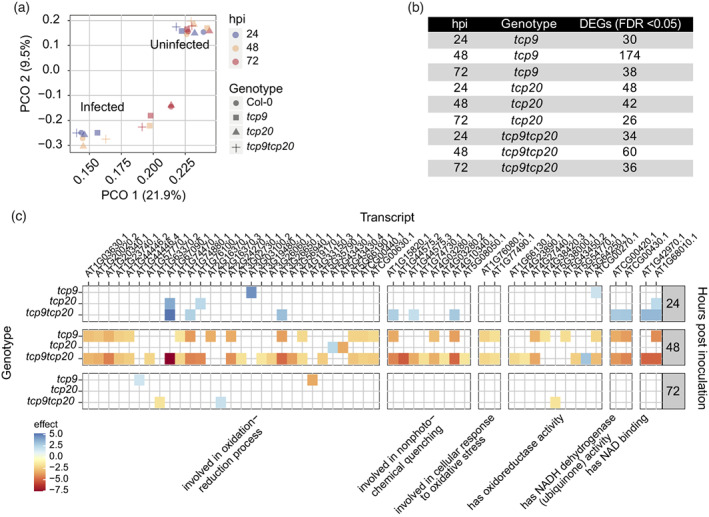
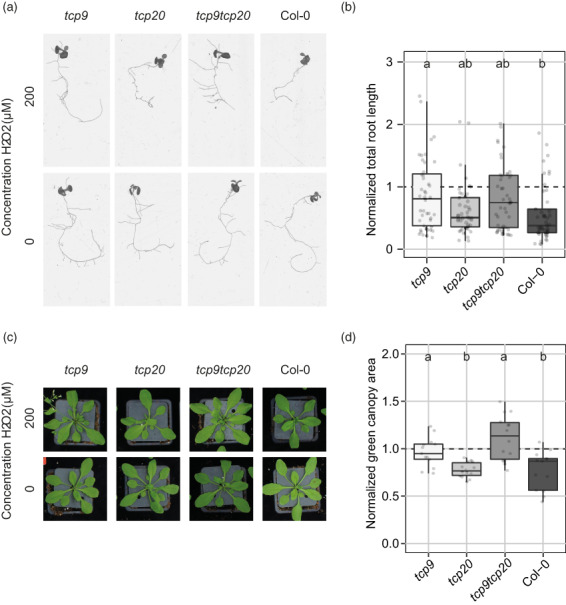
Infections by root-feeding nematodes have profound effects on root system architecture and consequently shoot growth of host plants. Plants harbor intraspecific variation in their growth responses to belowground biotic stresses by nematodes, but the underlying mechanisms are not well understood. Here, we show that the transcription factor TEOSINTE BRANCHED/CYCLOIDEA/PROLIFERATING CELL FACTOR-9 (TCP9) modulates root system architectural plasticity in Arabidopsis thaliana in response to infections by the endoparasitic cyst nematode Heterodera schachtii. Young seedlings of tcp9 knock-out mutants display a significantly weaker primary root growth inhibition response to cyst nematodes than wild-type Arabidopsis. In older plants, tcp9 reduces the impact of nematode infections on the emergence and growth of secondary roots. Importantly, the altered growth responses by tcp9 are most likely not caused by less biotic stress on the root system, because TCP9 does not affect the number of infections, nematode development, and size of the nematode-induced feeding structures. RNA-sequencing of nematode-infected roots of the tcp9 mutants revealed differential regulation of enzymes involved in reactive oxygen species (ROS) homeostasis and responses to oxidative stress. We also found that root and shoot growth of tcp9 mutants is less sensitive to exogenous hydrogen peroxide and that ROS accumulation in nematode infection sites in these mutants is reduced. Altogether, these observations demonstrate that TCP9 modulates the root system architectural plasticity to nematode infections via ROS-mediated processes. Our study further points at a novel regulatory mechanism contributing to the tolerance of plants to root-feeding nematodes by mitigating the impact of belowground biotic stresses.
根系取食线虫的感染对宿主植物的根系结构和地上部生长有深远的影响。植物对根际生物胁迫的生长反应存在种内变异,但相关机制尚不清楚。在这里,我们表明,转录因子 TEOSINTE BRANCHED/CYCLOIDEA/PROLIFERATING CELL FACTOR-9(TCP9)调节拟南芥根系结构的可塑性,以响应内寄生的胞囊线虫 Heterodera schachtii 的感染。tcp9 敲除突变体的幼苗对胞囊线虫的初级根生长抑制反应明显弱于野生型拟南芥。在较老的植株中,tcp9 减少了线虫感染对次生根出现和生长的影响。重要的是,tcp9 改变的生长反应不太可能是由于根系上的生物胁迫减少,因为 TCP9 不影响感染的数量、线虫的发育和线虫诱导的取食结构的大小。对 tcp9 突变体感染线虫的根系进行 RNA 测序显示,参与活性氧(ROS)稳态和对氧化应激反应的酶的差异调节。我们还发现,tcp9 突变体的根和地上部生长对外源过氧化氢的敏感性较低,并且这些突变体中线虫感染部位的 ROS 积累减少。总的来说,这些观察结果表明,TCP9 通过 ROS 介导的过程调节根系结构对线虫感染的可塑性。我们的研究进一步指出了一种新的调节机制,通过减轻地下生物胁迫的影响,有助于植物对根系取食线虫的耐受性。