Rutter Jack W, Dekker Linda, Owen Kimberley A, Barnes Chris P
Department of Cell & Developmental Biology, University College London, London, United Kingdom.
Department of Genetics, Evolution & Environment, University College London, London, United Kingdom.
Front Bioeng Biotechnol. 2022 Sep 16;10:1000873. doi: 10.3389/fbioe.2022.1000873. eCollection 2022.
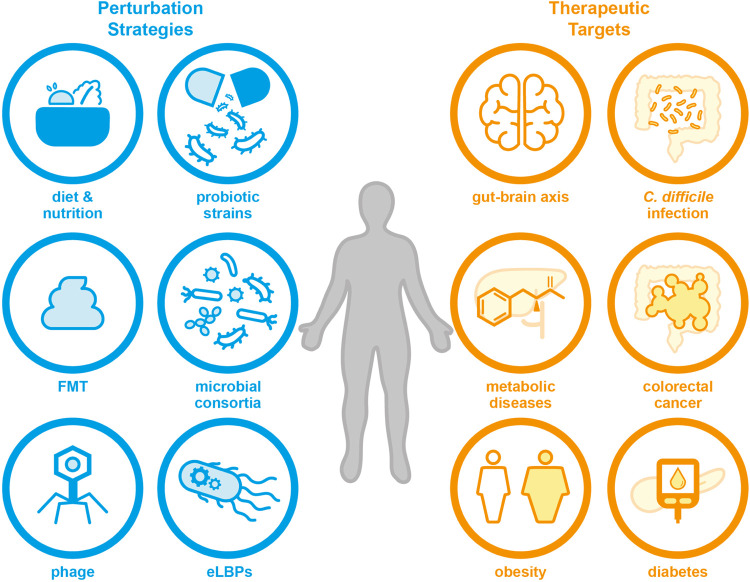
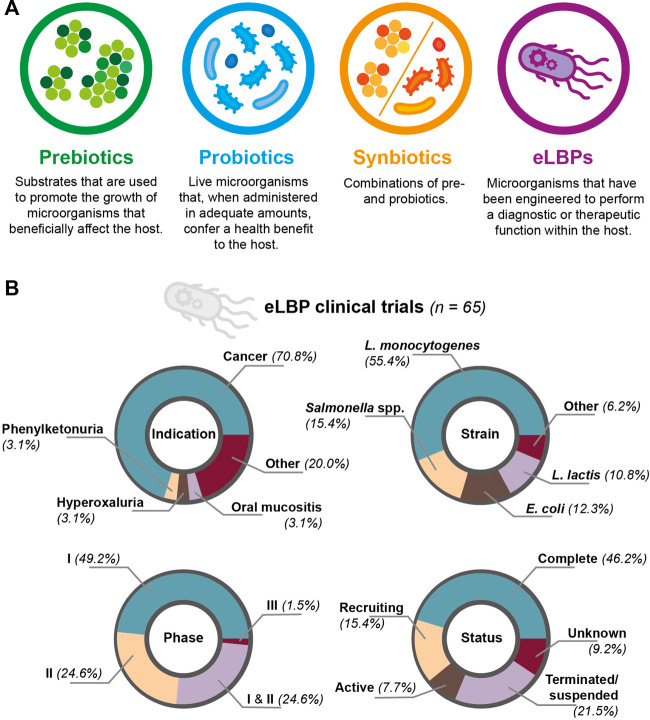
The human microbiota is implicated in many disease states, including neurological disorders, cancer, and inflammatory diseases. This potentially huge impact on human health has prompted the development of microbiome engineering methods, which attempt to adapt the composition and function of the human host-microbiota system for a therapeutic purpose. One promising method is the use of engineered microorganisms that have been modified to perform a therapeutic function. The majority of these products have only been demonstrated in laboratory models; however, in recent years more concepts have reached the translational stage. This has led to an increase in the number of clinical trials, which are designed to assess the safety and efficacy of these treatments in humans. Within this review, we highlight the progress of some of these microbiome engineering clinical studies, with a focus on engineered live biotherapeutic products.
人类微生物群与许多疾病状态有关,包括神经疾病、癌症和炎症性疾病。这种对人类健康潜在的巨大影响促使了微生物组工程方法的发展,这些方法试图为了治疗目的而调整人类宿主-微生物群系统的组成和功能。一种有前景的方法是使用经过改造以执行治疗功能的工程微生物。这些产品大多仅在实验室模型中得到验证;然而,近年来更多的概念已进入转化阶段。这导致了临床试验数量的增加,这些试验旨在评估这些治疗方法在人体中的安全性和有效性。在本综述中,我们重点介绍了其中一些微生物组工程临床研究的进展,尤其关注工程化活生物治疗产品。