Min Jinsoo, Kim Hyung Woo, Stagg Helen R, Rangaka Molebogeng X, Lipman Marc, Abubakar Ibrahim, Lee Yunhee, Myong Jun-Pyo, Jeong Hyunsuk, Bae Sanghyuk, Shin Ah Young, Kang Ji Young, Lee Sung-Soon, Park Jae Seuk, Yim Hyeon Woo, Kim Ju Sang
Division of Pulmonary and Critical Care Medicine, Department of Internal Medicine, Seoul St. Mary's Hospital, College of Medicine, The Catholic University of Korea, Seoul, South Korea.
Division of Pulmonary and Critical Care Medicine, Department of Internal Medicine, Incheon St. Mary's Hospital, College of Medicine, The Catholic University of Korea, Seoul, South Korea.
Front Med (Lausanne). 2022 Sep 15;9:927579. doi: 10.3389/fmed.2022.927579. eCollection 2022.
In 2017, Korea implemented a nationwide project to screen and treat latent tuberculosis infection (LTBI) in high-risk for transmission public congregate settings. We aimed to assess programme success using a cascade of care framework.
We undertook a cohort study of people from three congregate settings screened between March 2017 and December 2018: (1) first-grade high school students, (2) employees of educational institutions, (3) employees of social welfare facilities. We report percentages of participants with LTBI completing each step in the cascade of care model. Poisson regression models were used to determine factors associated with not visiting clinics, not initiating treatment, and not completing treatment.
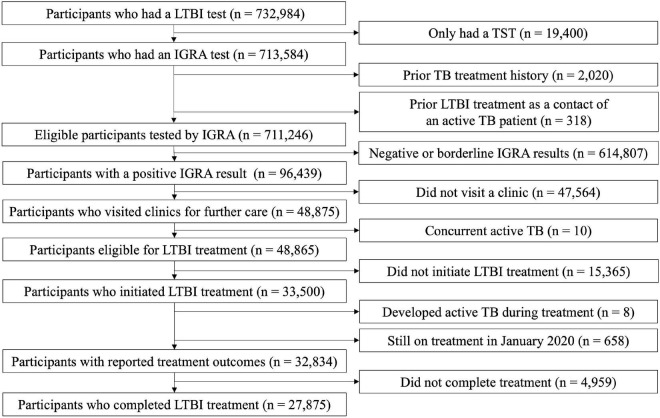
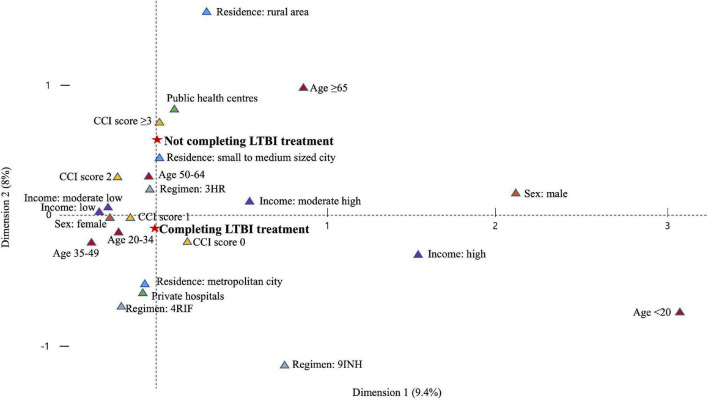
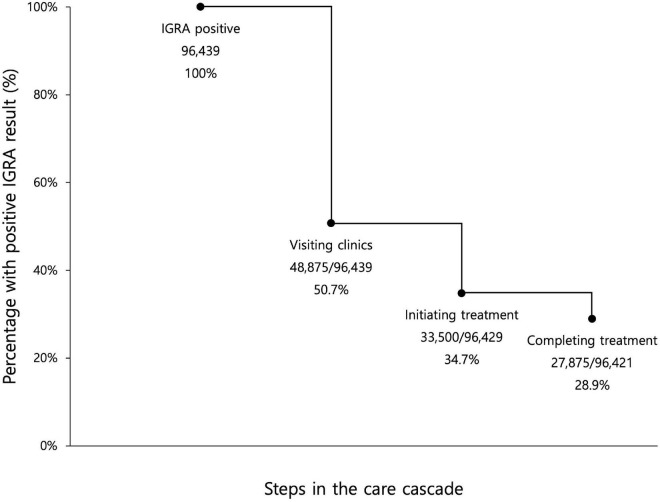
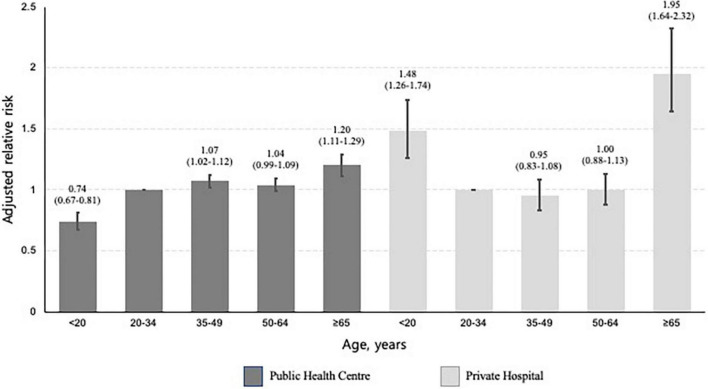
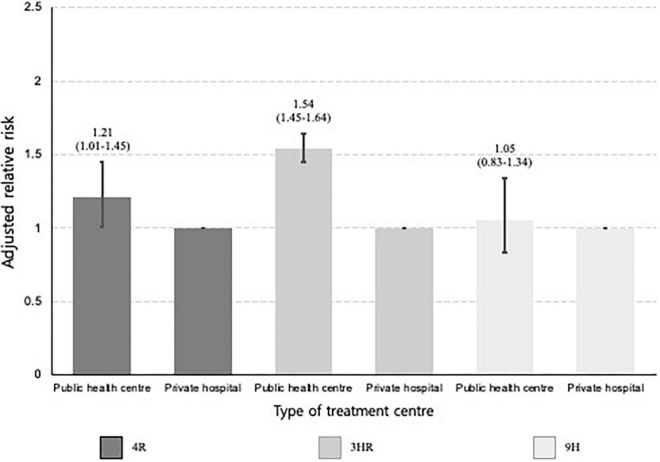
Among the 96,439 participants who had a positive interferon-gamma release assay result, the percentage visiting clinics for further assessment, to initiate treatment, and who then completed treatment were 50.7, 34.7, and 28.9%, respectively. Compared to those aged 20-34 years, individuals aged < 20 years and aged ≥ 65 years were less likely to visit clinics, though more likely to complete treatment once initiated. Using public health centres rather than private hospitals was associated with people "not initiating treatment" (adjusted risk ratio [aRR], 3.72; 95% confidence interval [CI], 3.95-3.86). Nine-month isoniazid monotherapy therapy was associated with "not completing treatment," compared to 3-month isoniazid and rifampin therapy (aRR, 1.28; 95% CI, 1.16-1.41).
Among participants with LTBI from three congregate settings, less than one third completed treatment. Age, treatment centre, and initial regimen were important determinants of losses to care through the cascade.
2017年,韩国实施了一项全国性项目,在具有高传播风险的公共聚集场所筛查和治疗潜伏性结核感染(LTBI)。我们旨在使用一系列照护框架评估该项目的成效。
我们对2017年3月至2018年12月期间在三个聚集场所接受筛查的人群进行了队列研究:(1)高一学生,(2)教育机构员工,(3)社会福利设施员工。我们报告了LTBI参与者在照护模式的每一步骤中完成情况的百分比。使用泊松回归模型来确定与未就诊、未开始治疗以及未完成治疗相关的因素。
在96439名干扰素-γ释放试验结果呈阳性的参与者中,前往诊所进行进一步评估、开始治疗以及完成治疗的百分比分别为50.7%、34.7%和28.9%。与20 - 34岁的人群相比,年龄小于20岁和年龄≥65岁的个体就诊可能性较小,不过一旦开始治疗,完成治疗的可能性更大。使用公共卫生中心而非私立医院与“未开始治疗”相关(调整风险比[aRR],3.72;95%置信区间[CI],3.95 - 3.86)。与3个月的异烟肼和利福平治疗相比,9个月的异烟肼单药治疗与“未完成治疗”相关(aRR,1.28;95% CI,1.16 - 1.41)。
在来自三个聚集场所的LTBI参与者中,不到三分之一的人完成了治疗。年龄、治疗中心和初始治疗方案是整个照护过程中失访的重要决定因素。