Neto João G Oliveira, Viana Jailton R, Lopes Jardel B O, Lima Antonio D S G, Sousa Marcus L, Lage Mateus R, Stoyanov Stanislav R, Lang Rossano, Santos Adenilson O
Center for Social Sciences, Health and Technology, Federal University of Maranhão - UFMA, Imperatriz, MA, 65900-410, Brazil.
Chemistry Institute, State University of Campinas - UNICAMP, Campinas, SP, 13083-970, Brazil.
J Mol Model. 2022 Oct 5;28(11):341. doi: 10.1007/s00894-022-05323-4.
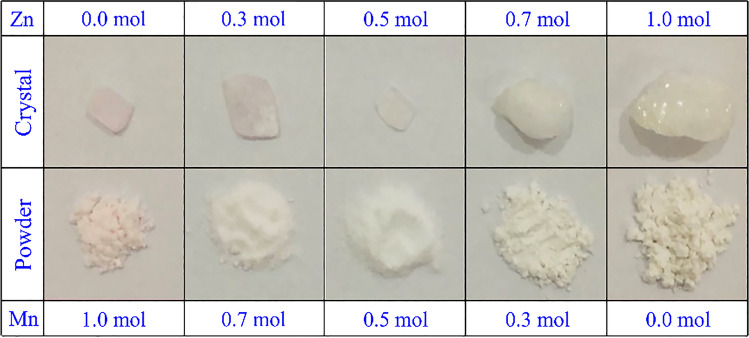
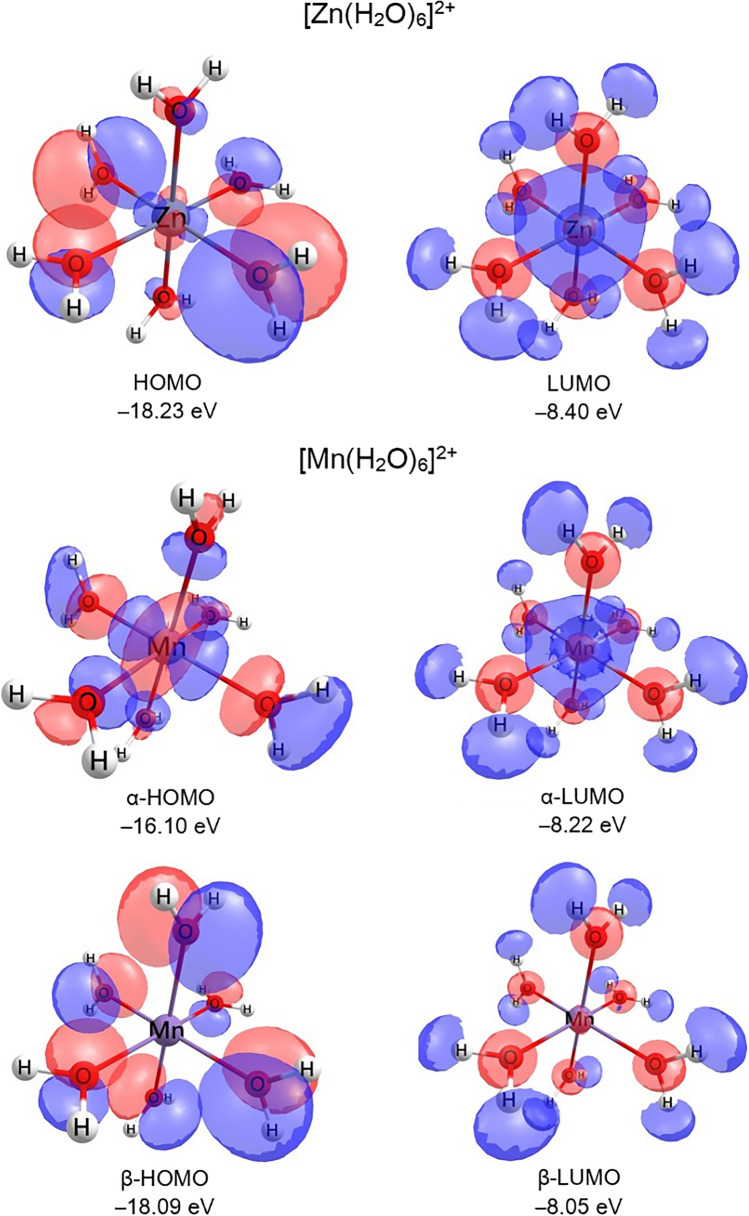
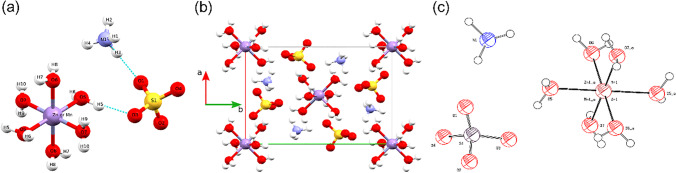
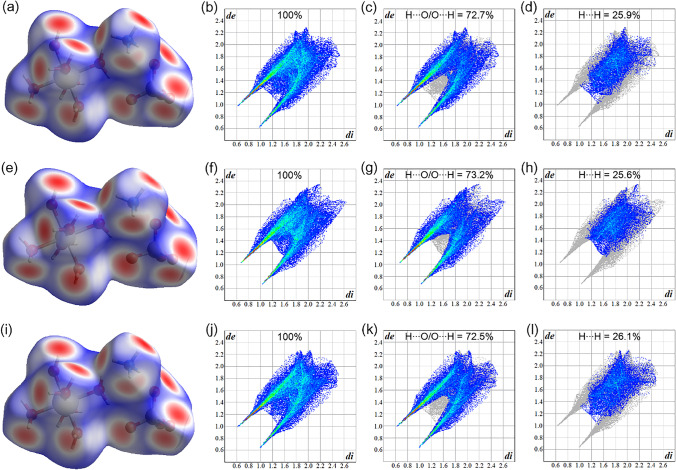
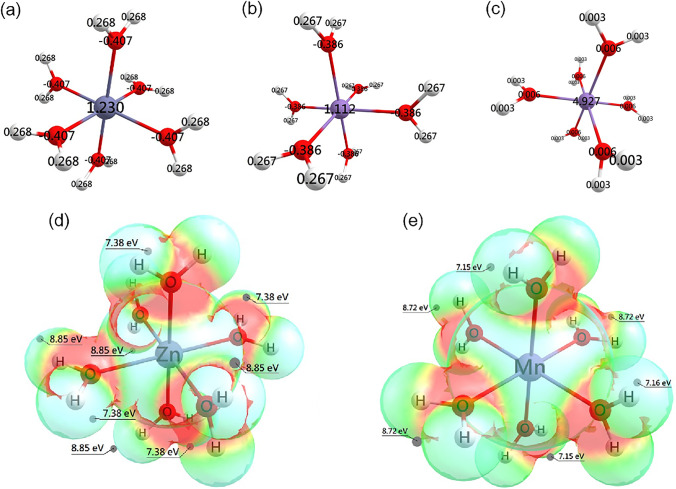
Tutton salts have been extensively explored in recent decades due to their attractive physical and chemical properties, which make them potential candidates for thermochemical heat storage systems and optical technologies. In this paper, a series of new mixed Tutton salts with the chemical formula (NH)MnZn(SO)(HO) is reported. Crystals are successfully grown by the solvent slow evaporation method and characterized by powder X-ray diffraction (PXRD) with Rietveld refinement. In particular, the crystal structure of the mixed (NH)MnZn(SO)(HO) crystal is solved through PRXD data using the DICVOL06 algorithm for diffraction pattern indexing and the Le Bail method for lattice parameter and spatial group determination. The structure is refined using the Rietveld method implemented in TOPAS® and reported in the Cambridge Structural Database file number 2104098. Moreover, a computational study using Hirshfeld surface and crystal void analyses is conducted to identify and quantify the intermolecular interactions in the crystal structure as well as to determine the amount of free space in the unit cell. Furthermore, 2D-fingerprint plots are generated to evaluate the main intermolecular contacts that stabilize the crystal lattice. Density functional theory is employed to calculate the structural, thermodynamic, and electronic properties of the coordination [Zn(HO)] and [Mn(HO)] complexes present in the salts. Molecular orbitals, bond lengths, and the Jahn-Teller effect are also discussed. The findings suggest that in Mn-Zn salts several properties dependent on the electronic structure can be tuned up by modifying the chemical composition.
近几十年来,由于其具有吸引人的物理和化学性质,图顿盐受到了广泛研究,这使其成为热化学蓄热系统和光学技术的潜在候选材料。本文报道了一系列化学式为(NH)MnZn(SO)(HO)的新型混合图顿盐。通过溶剂缓慢蒸发法成功生长出晶体,并通过Rietveld精修的粉末X射线衍射(PXRD)对其进行表征。特别地,利用DICVOL06算法进行衍射图谱索引以及利用Le Bail方法确定晶格参数和空间群,通过PXRD数据解析了混合(NH)MnZn(SO)(HO)晶体的晶体结构。使用TOPAS®中实现的Rietveld方法对结构进行精修,并将其报告在剑桥结构数据库文件编号2104098中。此外,进行了一项使用Hirshfeld表面和晶体空隙分析的计算研究,以识别和量化晶体结构中的分子间相互作用,并确定晶胞中的自由空间量。此外,生成了二维指纹图谱以评估稳定晶格的主要分子间接触。采用密度泛函理论计算盐中存在的配位[Zn(HO)]和[Mn(HO)]配合物的结构、热力学和电子性质。还讨论了分子轨道、键长和 Jahn-Teller 效应。研究结果表明,在锰锌盐中,一些依赖于电子结构的性质可以通过改变化学成分来调节。