Département de sciences animales, Faculté de l'agriculture et d'alimentation, Université Laval, Quebec City, Québec, Canada.
Centre de recherche en reproduction, développement et santé intergénérationnelle (CRDSI), Quebec City, Québec, Canada.
BMC Genomics. 2022 Oct 5;23(1):687. doi: 10.1186/s12864-022-08899-6.
Development of large single nucleotide polymorphism (SNP) arrays can make genomic data promptly available for conservation problematic. Medium and high-density panels can be designed with sufficient coverage to offer a genome-wide perspective and the generated genotypes can be used to assess different genetic metrics related to population structure, relatedness, or inbreeding. SNP genotyping could also permit sexing samples with unknown associated metadata as it is often the case when using non-invasive sampling methods favored for endangered species. Genome sequencing of wild species provides the necessary information to design such SNP arrays. We report here the development of a SNP-array for endangered Rangifer tarandus using a multi-platform sequencing approach from animals found in diverse populations representing the entire circumpolar distribution of the species.
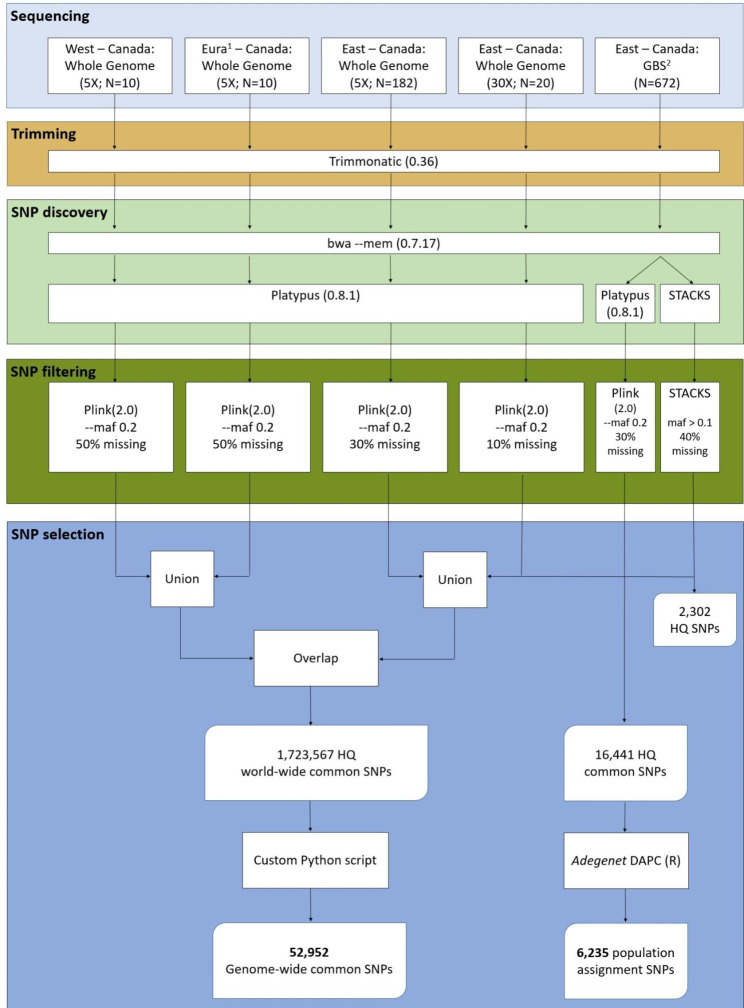
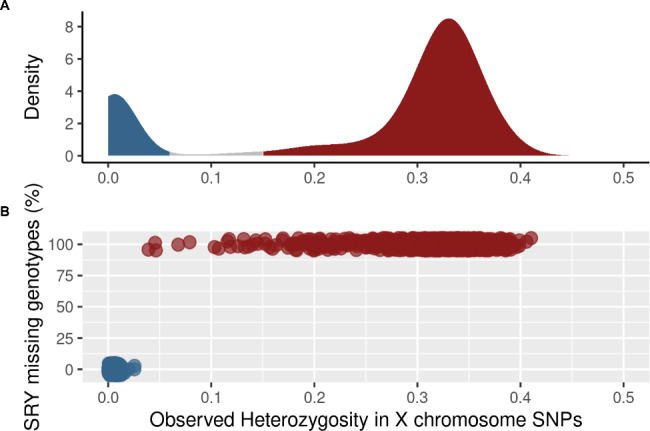
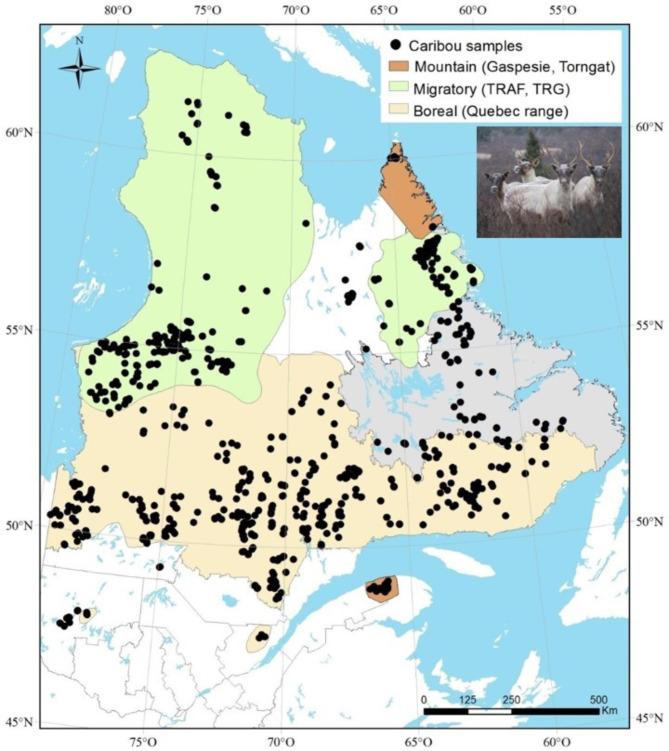
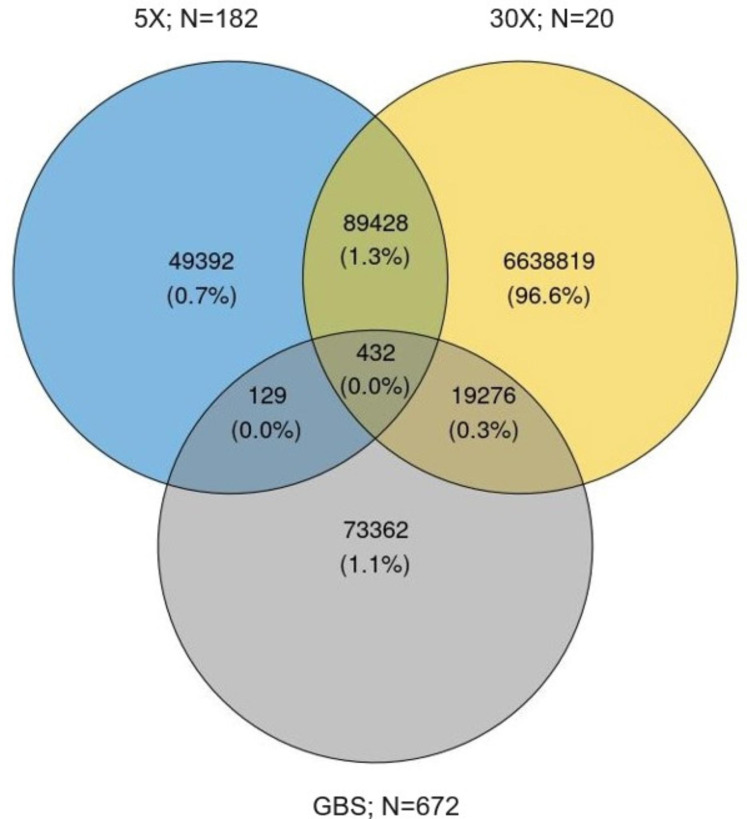
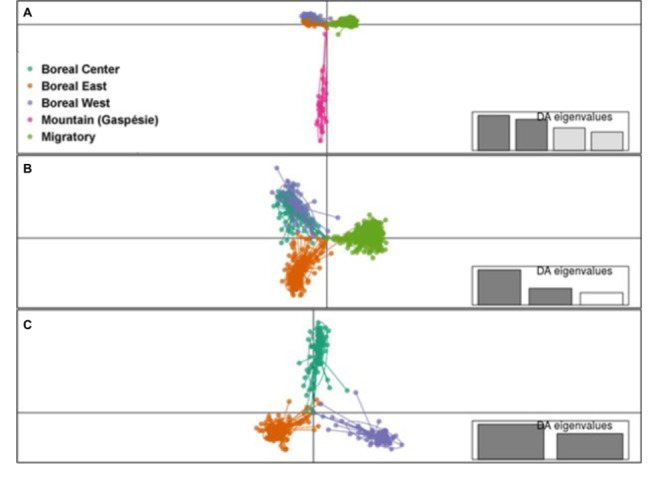
From a very large comprehensive catalog of SNPs detected over the entire sample set (N = 894), a total of 63,336 SNPs were selected. SNP selection accounted for SNPs evenly distributed across the entire genome (~ every 50Kb) with known minor alleles across populations world-wide. In addition, a subset of SNPs was selected to represent rare and local alleles found in Eastern Canada which could be used for ecotype and population assignments - information urgently needed for conservation planning. In addition, heterozygosity from SNPs located in the X-chromosome and genotyping call-rate of SNPs located into the SRY gene of the Y-chromosome yielded an accurate and robust sexing assessment. All SNPs were validated using a high-throughput SNP-genotyping chip.
This design is now integrated into the first genome-wide commercially available genotyping platform for Rangifer tarandus. This platform would pave the way to future genomic investigation of populations for this endangered species, including estimation of genetic diversity parameters, population assignments, as well as animal sexing from genetic SNP data for non-invasive samples.
大型单核苷酸多态性(SNP)芯片的开发可以使保护遗传学数据迅速可用。中密度和高密度面板可以设计为具有足够的覆盖范围,以提供全基因组的视角,并且生成的基因型可用于评估与种群结构、亲缘关系或近亲繁殖相关的不同遗传指标。SNP 基因分型还可以对使用非侵入性采样方法(常用于濒危物种)时具有未知相关元数据的样本进行性别鉴定。野生物种的基因组测序为设计此类 SNP 芯片提供了必要的信息。我们在这里报告了一种用于濒危驯鹿的 SNP 芯片的开发,该芯片使用来自代表该物种整个环极分布的不同种群的动物的多平台测序方法。
从整个样本集(N=894)中检测到的非常大的综合 SNP 目录中,共选择了 63336 个 SNP。SNP 选择考虑了在全世界范围内均匀分布在整个基因组中的 SNP(~每 50Kb 一个),以及已知的小等位基因。此外,选择了一组 SNP 来代表在加拿大东部发现的稀有和局部等位基因,这些 SNP 可用于生态型和种群分配——这是保护规划急需的信息。此外,来自 X 染色体上的 SNP 的杂合性和位于 Y 染色体上的 SRY 基因中的 SNP 的基因分型调用率得出了准确而稳健的性别鉴定。所有 SNP 均使用高通量 SNP 基因分型芯片进行验证。
该设计现已集成到首个用于驯鹿的全基因组商业可用基因分型平台中。该平台将为该濒危物种的种群未来的基因组研究铺平道路,包括遗传多样性参数的估计、种群分配以及非侵入性样本的遗传 SNP 数据的动物性别鉴定。