MMWR Morb Mortal Wkly Rep. 2022 Oct 7;71(40):1265-1270. doi: 10.15585/mmwr.mm7140e1.
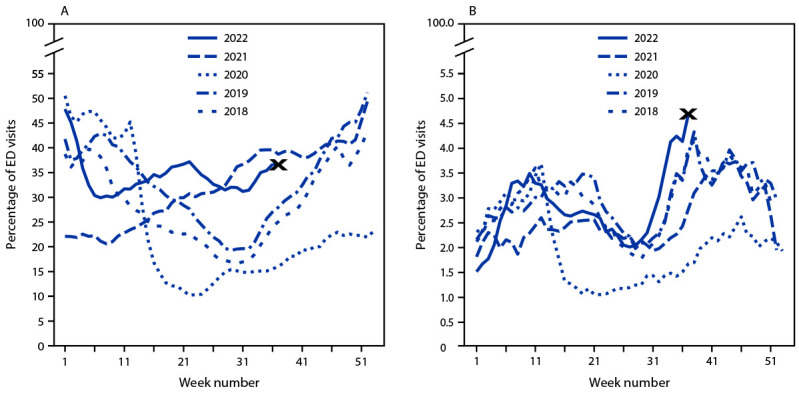
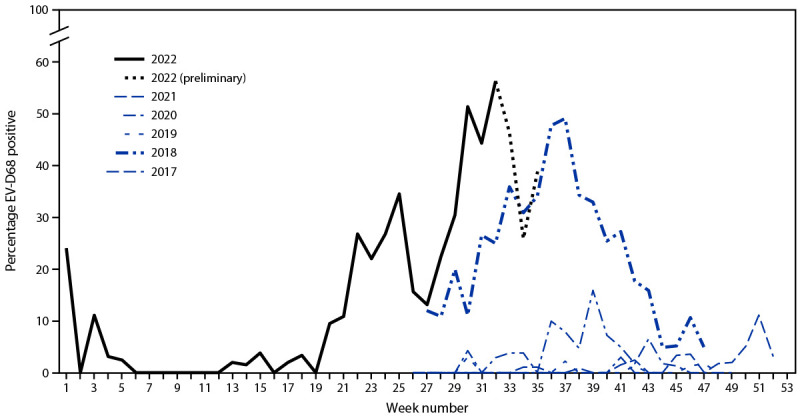
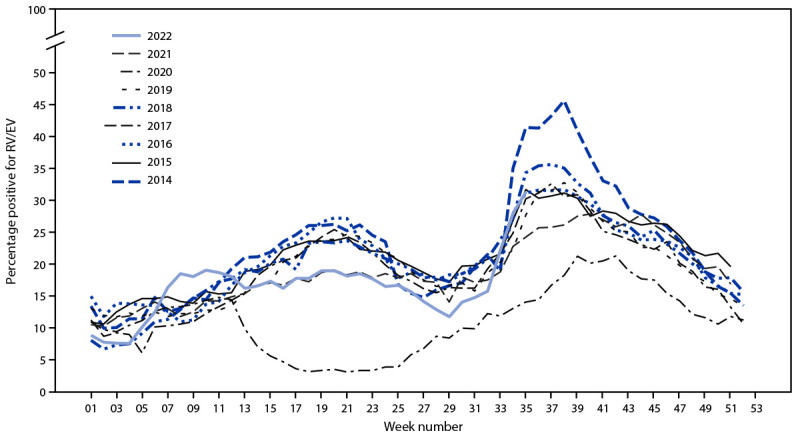
Increases in severe respiratory illness and acute flaccid myelitis (AFM) among children and adolescents resulting from enterovirus D68 (EV-D68) infections occurred biennially in the United States during 2014, 2016, and 2018, primarily in late summer and fall. Although EV-D68 annual trends are not fully understood, EV-D68 levels were lower than expected in 2020, potentially because of implementation of COVID-19 mitigation measures (e.g., wearing face masks, enhanced hand hygiene, and physical distancing) (1). In August 2022, clinicians in several geographic areas notified CDC of an increase in hospitalizations of pediatric patients with severe respiratory illness and positive rhinovirus/enterovirus (RV/EV) test results.* Surveillance data were analyzed from multiple national data sources to characterize reported trends in acute respiratory illness (ARI), asthma/reactive airway disease (RAD) exacerbations, and the percentage of positive RV/EV and EV-D68 test results during 2022 compared with previous years. These data demonstrated an increase in emergency department (ED) visits by children and adolescents with ARI and asthma/RAD in late summer 2022. The percentage of positive RV/EV test results in national laboratory-based surveillance and the percentage of positive EV-D68 test results in pediatric sentinel surveillance also increased during this time. Previous increases in EV-D68 respiratory illness have led to substantial resource demands in some hospitals and have also coincided with increases in cases of AFM (2), a rare but serious neurologic disease affecting the spinal cord. Therefore, clinicians should consider AFM in patients with acute flaccid limb weakness, especially after respiratory illness or fever, and ensure prompt hospitalization and referral to specialty care for such cases. Clinicians should also test for poliovirus infection in patients suspected of having AFM because of the clinical similarity to acute flaccid paralysis caused by poliovirus. Ongoing surveillance for EV-D68 is critical to ensuring preparedness for possible future increases in ARI and AFM.
在美国,2014 年、2016 年和 2018 年,肠病毒 D68(EV-D68)感染导致儿童和青少年严重呼吸道疾病和急性弛缓性脊髓炎(AFM)每两年发生一次,主要发生在夏末和秋季。尽管 EV-D68 的年度趋势尚不完全清楚,但 2020 年 EV-D68 的水平低于预期,这可能是由于 COVID-19 缓解措施的实施(例如,戴口罩、加强手部卫生和保持身体距离)(1)。2022 年 8 月,几个地理区域的临床医生通知 CDC,患有严重呼吸道疾病和鼻病毒/肠病毒(RV/EV)检测结果阳性的儿科患者住院人数增加。* 从多个国家数据来源分析监测数据,以描述 2022 年与前几年相比,急性呼吸道疾病(ARI)、哮喘/气道反应性疾病(RAD)加重以及 RV/EV 和 EV-D68 检测结果阳性的报告趋势。这些数据表明,2022 年夏末儿童和青少年 ARI 和哮喘/RAD 的急诊就诊次数增加。国家基于实验室的监测中 RV/EV 检测结果阳性的百分比和儿科监测哨点中 EV-D68 检测结果阳性的百分比在此期间也有所增加。以前 EV-D68 呼吸道疾病的增加导致一些医院的资源需求大幅增加,并且也与 AFM(2)的病例增加同时发生,这是一种罕见但严重的影响脊髓的神经系统疾病。因此,临床医生应考虑在患有急性弛缓性肢体无力的患者中考虑 AFM,尤其是在呼吸道疾病或发热后,并确保此类病例及时住院并转至专科治疗。临床医生还应在怀疑患有 AFM 的患者中检测脊髓灰质炎病毒感染,因为它与脊髓灰质炎病毒引起的急性弛缓性麻痹具有临床相似性。持续监测 EV-D68 对于为可能发生的未来 ARI 和 AFM 增加做好准备至关重要。