Marzi Roberta, Bassi Jessica, Silacci-Fregni Chiara, Bartha Istvan, Muoio Francesco, Culap Katja, Sprugasci Nicole, Lombardo Gloria, Saliba Christian, Cameroni Elisabetta, Cassotta Antonino, Low Jun Siong, Walls Alexandra C, McCallum Matthew, Tortorici M Alejandra, Bowen John E, Dellota Exequiel A, Dillen Josh R, Czudnochowski Nadine, Pertusini Laura, Terrot Tatiana, Lepori Valentino, Tarkowski Maciej, Riva Agostino, Biggiogero Maira, Pellanda Alessandra Franzetti, Garzoni Christian, Ferrari Paolo, Ceschi Alessandro, Giannini Olivier, Havenar-Daughton Colin, Telenti Amalio, Arvin Ann, Virgin Herbert W, Sallusto Federica, Veesler David, Lanzavecchia Antonio, Corti Davide, Piccoli Luca
Humabs BioMed SA, a subsidiary of Vir Biotechnology, Bellinzona, Switzerland.
Institute for Research in Biomedicine, Università della Svizzera italiana, Bellinzona, Switzerland.
bioRxiv. 2022 Sep 30:2022.09.30.509852. doi: 10.1101/2022.09.30.509852.
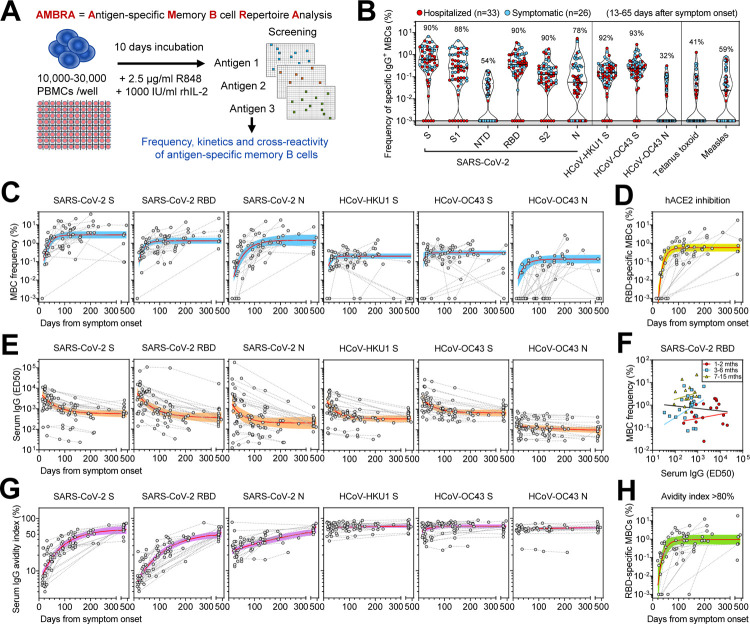
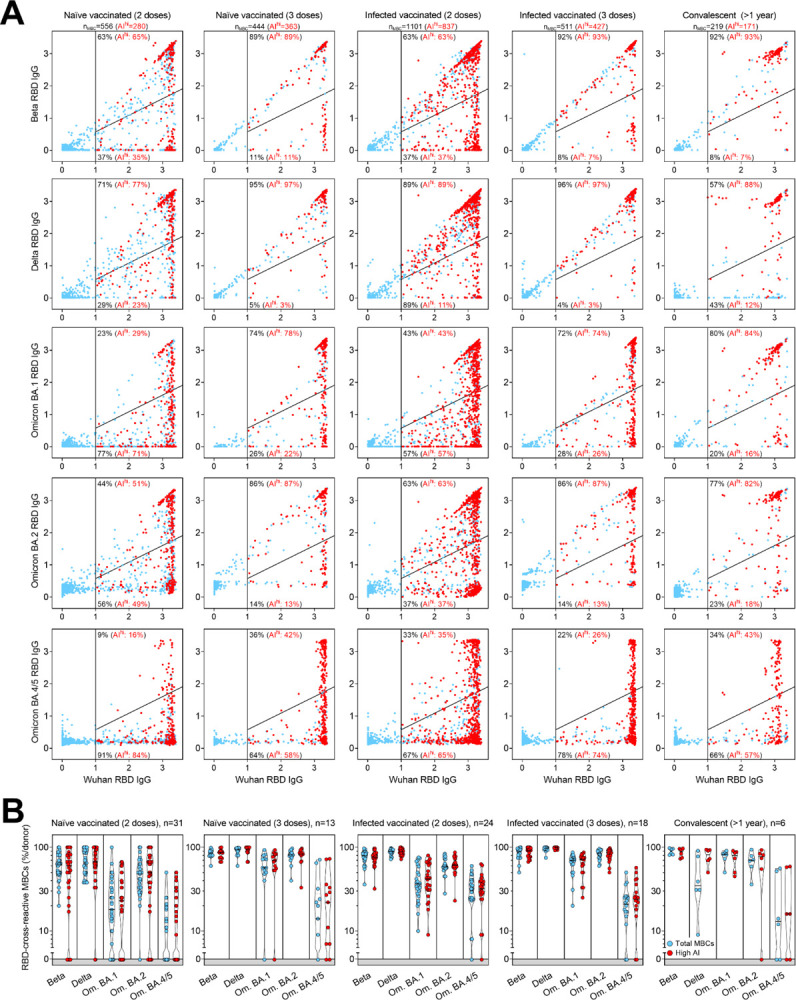
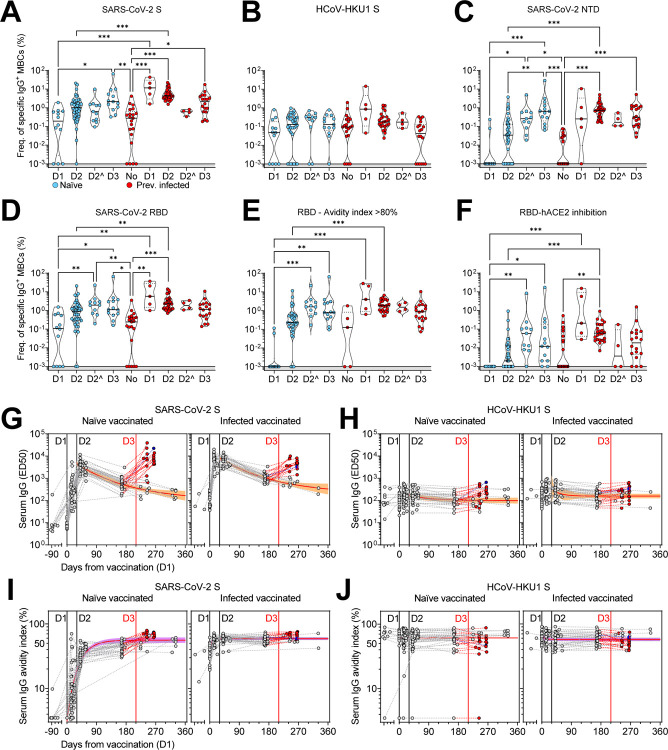
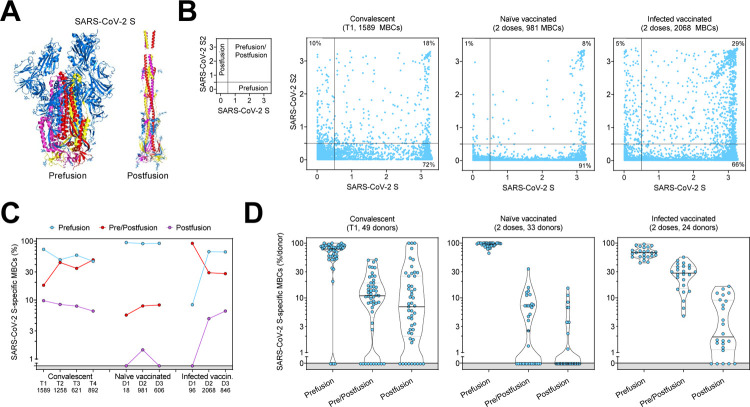
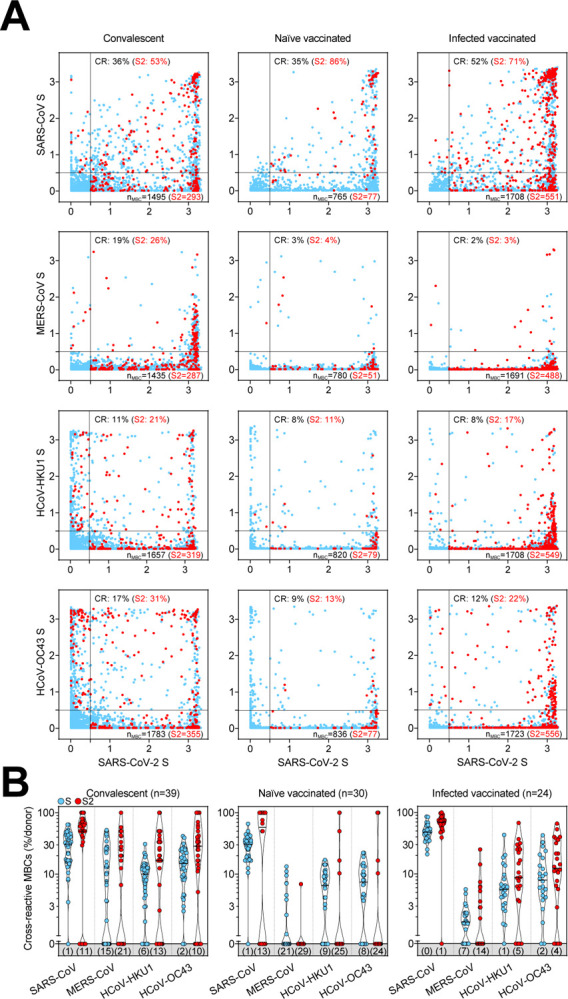
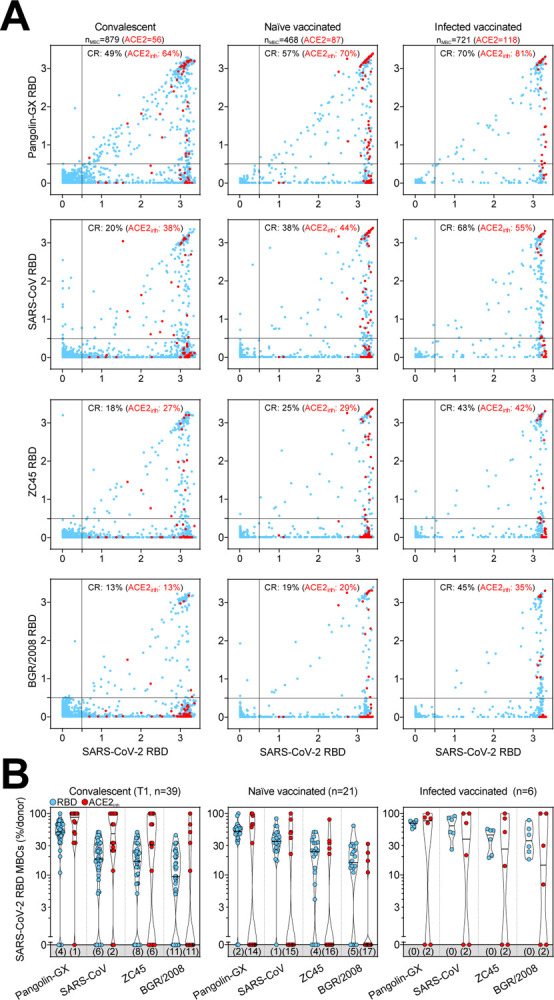
Memory B cells (MBCs) generate rapid antibody responses upon secondary encounter with a pathogen. Here, we investigated the kinetics, avidity and cross-reactivity of serum antibodies and MBCs in 155 SARS-CoV-2 infected and vaccinated individuals over a 16-month timeframe. SARS-CoV-2-specific MBCs and serum antibodies reached steady-state titers with comparable kinetics in infected and vaccinated individuals. Whereas MBCs of infected individuals targeted both pre- and postfusion Spike (S), most vaccine-elicited MBCs were specific for prefusion S, consistent with the use of prefusion-stabilized S in mRNA vaccines. Furthermore, a large fraction of MBCs recognizing postfusion S cross-reacted with human betacoronaviruses. The avidity of MBC-derived and serum antibodies increased over time resulting in enhanced resilience to viral escape by SARS-CoV-2 variants, including Omicron BA.1 and BA.2 sub-lineages, albeit only partially for BA.4 and BA.5 sublineages. Overall, the maturation of high-affinity and broadly-reactive MBCs provides the basis for effective recall responses to future SARS-CoV-2 variants.
记忆B细胞(MBCs)在再次接触病原体时会产生快速的抗体反应。在此,我们在16个月的时间内,对155名感染和接种过严重急性呼吸综合征冠状病毒2(SARS-CoV-2)的个体的血清抗体和MBCs的动力学、亲和力和交叉反应性进行了研究。在感染和接种过疫苗的个体中,SARS-CoV-2特异性MBCs和血清抗体以相似的动力学达到稳态滴度。虽然感染个体的MBCs靶向融合前和融合后的刺突蛋白(S),但大多数疫苗诱导的MBCs对融合前S具有特异性,这与mRNA疫苗中使用融合前稳定化的S一致。此外,很大一部分识别融合后S的MBCs与人β冠状病毒发生交叉反应。MBC衍生抗体和血清抗体的亲和力随时间增加,从而增强了对包括奥密克戎BA.1和BA.2亚谱系在内的SARS-CoV-2变体病毒逃逸的抵抗力,尽管对BA.4和BA.5亚谱系只是部分有效。总体而言,高亲和力和广泛反应性MBCs的成熟为未来对SARS-CoV-2变体的有效回忆反应提供了基础。