Zhang Man-Ka, Rao Zhi-Guo, Ma Tao, Tang Ming, Xu Tian-Qi, He Xiao-Xu, Li Zhou-Ping, Liu Yin, Xu Qing-Jie, Yang Ke-Yu, Gong Yi-Fan, Xue Jing, Wu Mei-Qing, Xue Xiao-Yan
Department of Critical Care Medicine, Aerospace Center Hospital, Beijing, China.
Front Med (Lausanne). 2022 Sep 20;9:952611. doi: 10.3389/fmed.2022.952611. eCollection 2022.
The study aimed to determine the prevalence and pathogens of invasive fungal infection (IFI) among intensive care unit (ICU) patients. The next goal was to investigate the association between empirical antifungal treatment and mortality in ICU patients.
Using microbiological events, we identified all ICU patients with IFI and then retrieved electronic clinical data from the Medical Information Mart for Intensive Care IV (MIMIC-IV) database. The data were statistically analyzed using -tests, chi-square tests, log-rank tests, and Cox regression.
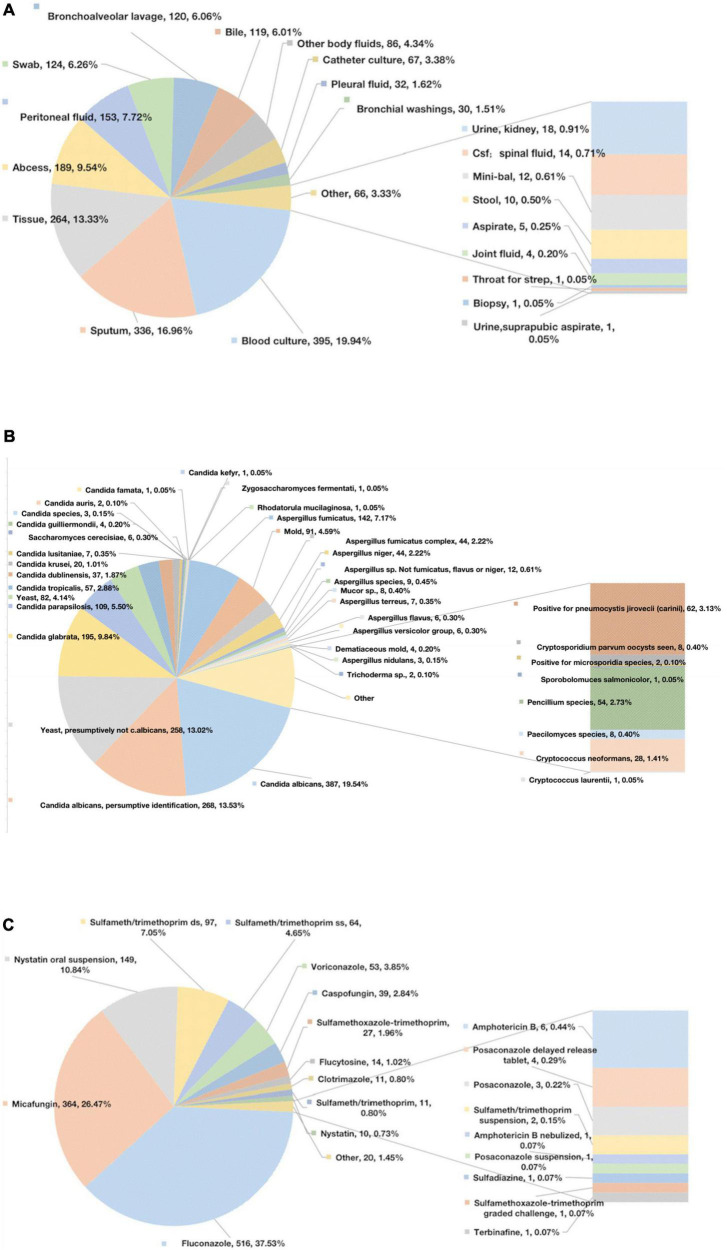
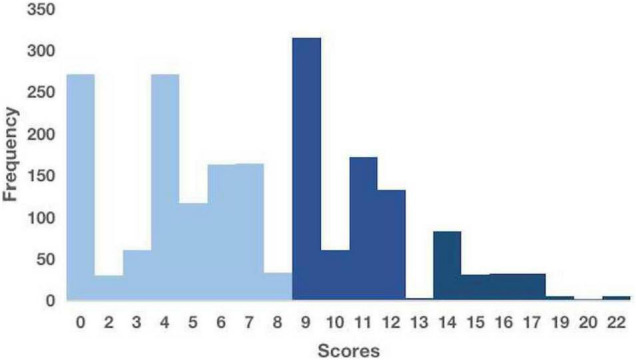
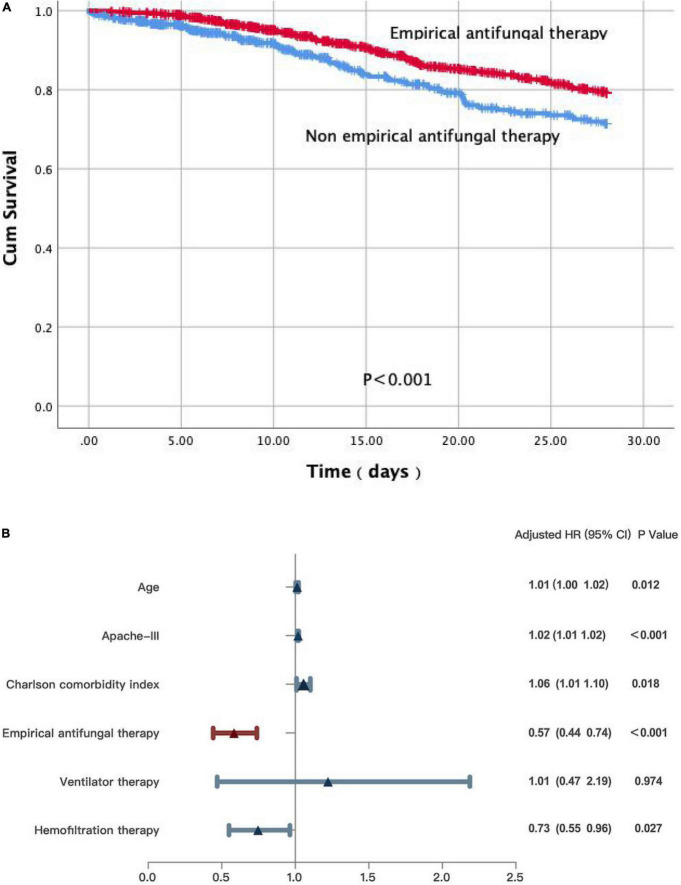
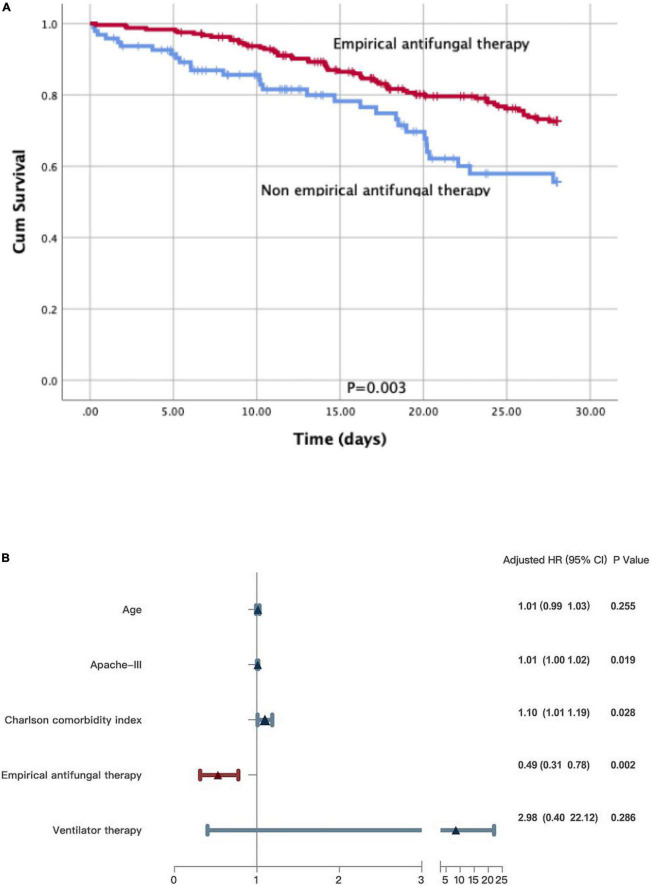
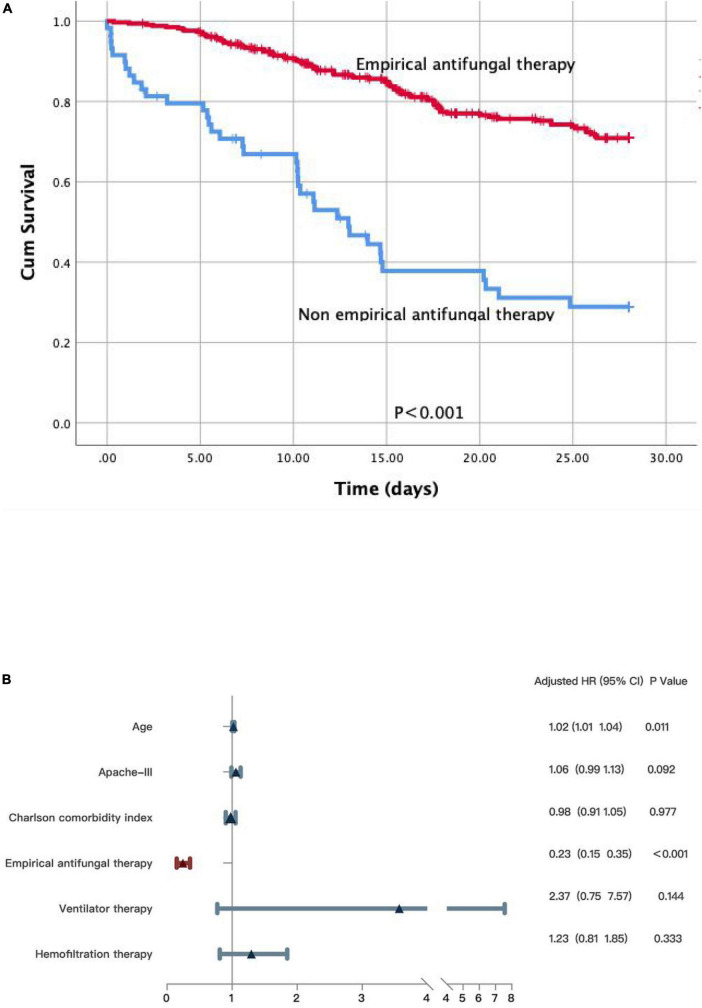
The most commonly reported fungi were Candida (72.64%) and Aspergillus (19.08%). The most frequently prescribed antifungal medication was fluconazole (37.57%), followed by micafungin (26.47%). In the survival study of ICU patients and patients with sepsis, survivors were more likely to receive empirical antifungal treatment. In contrast, non-empirical antifungal therapy was significantly associated with poor survival in patients with positive blood cultures. We found that the current predictive score makes an accurate prediction of patients with fungal infections challenging.
Our study demonstrated that empirical antifungal treatment is associated with decreased mortality in ICU patients. To avoid treatment delays, novel diagnostic techniques should be implemented in the clinic. Until such tests are available, appropriate empirical antifungal therapy could be administered based on a model that predicts the optimal time to initiate antifungal therapy. Additional studies should be conducted to establish more accurate predictive models in the future.
本研究旨在确定重症监护病房(ICU)患者侵袭性真菌感染(IFI)的患病率及病原体。下一个目标是调查经验性抗真菌治疗与ICU患者死亡率之间的关联。
利用微生物学事件,我们确定了所有患有IFI的ICU患者,然后从重症监护医学信息集市IV(MIMIC-IV)数据库中检索电子临床数据。使用t检验、卡方检验、对数秩检验和Cox回归对数据进行统计分析。
最常报告的真菌是念珠菌(72.64%)和曲霉菌(19.08%)。最常开具的抗真菌药物是氟康唑(37.57%),其次是米卡芬净(26.47%)。在ICU患者和脓毒症患者的生存研究中,幸存者更有可能接受经验性抗真菌治疗。相比之下,非经验性抗真菌治疗与血培养阳性患者的不良生存显著相关。我们发现,目前的预测评分对真菌感染患者进行准确预测具有挑战性。
我们的研究表明,经验性抗真菌治疗与ICU患者死亡率降低有关。为避免治疗延迟,应在临床中采用新的诊断技术。在有此类检测方法之前,可以基于预测启动抗真菌治疗最佳时机的模型进行适当的经验性抗真菌治疗。未来应开展更多研究以建立更准确的预测模型。