State Key Laboratory of Agricultural Genomics, BGI-Shenzhen, Shenzhen, 518083, China.
National Key Laboratory of Plant Molecular Genetics, Chinese Academy of Sciences Center for Excellence in Molecular Plant Sciences, Institute of Plant Physiology and Ecology, Shanghai Institutes for Biological Sciences, Chinese Academy of Sciences, Shanghai, 200032, China.
Nat Commun. 2022 Oct 7;13(1):5913. doi: 10.1038/s41467-022-33238-4.
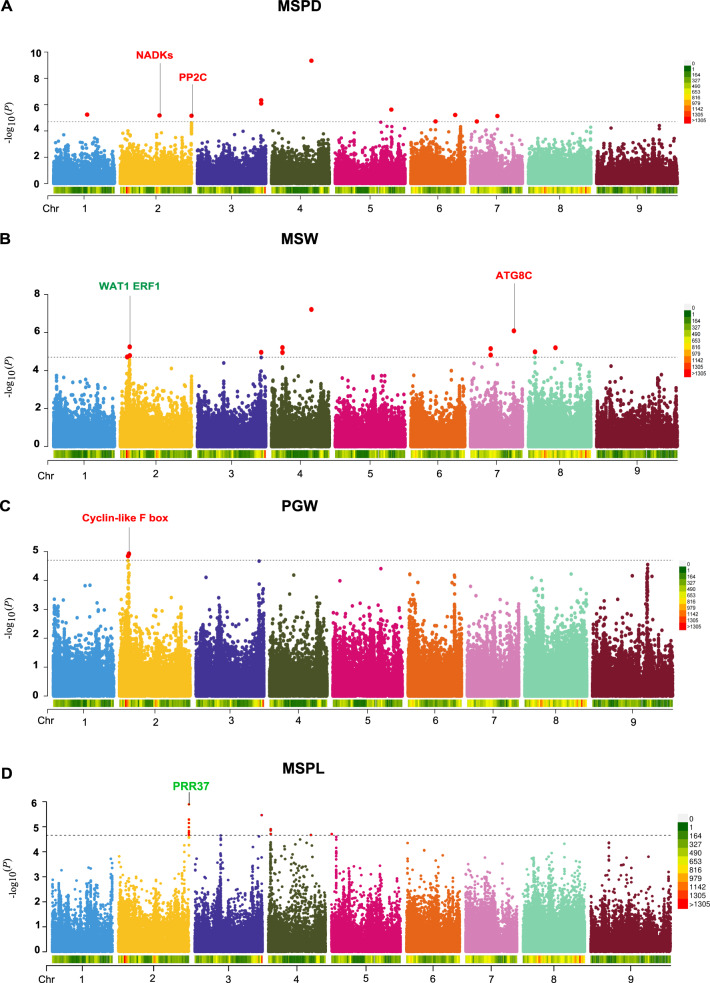
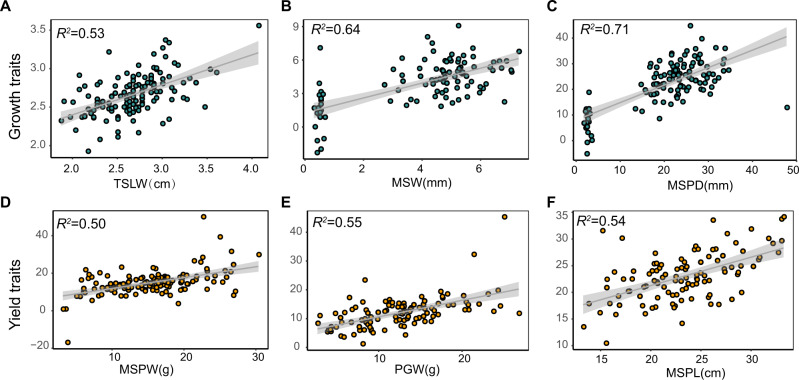
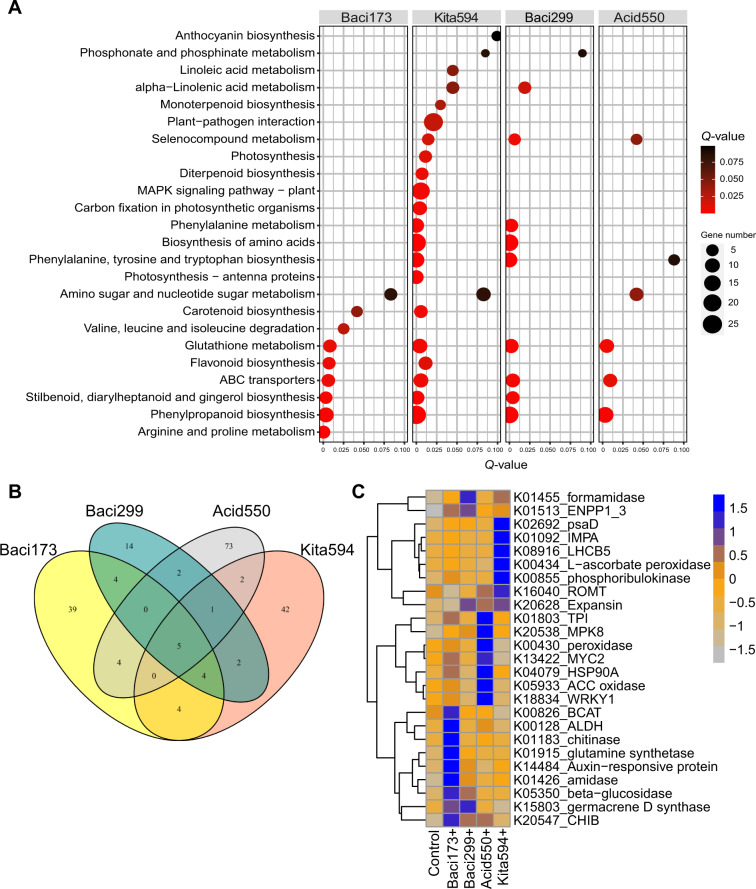
Genetic and environmental factors collectively determine plant growth and yield. In the past 20 years, genome-wide association studies (GWAS) have been conducted on crops to decipher genetic loci that contribute to growth and yield, however, plant genotype appears to be insufficient to explain the trait variations. Here, we unravel the associations between genotypic, phenotypic, and rhizoplane microbiota variables of 827 foxtail millet cultivars by an integrated GWAS, microbiome-wide association studies (MWAS) and microbiome genome-wide association studies (mGWAS) method. We identify 257 rhizoplane microbial biomarkers associated with six key agronomic traits and validated the microbial-mediated growth effects on foxtail millet using marker strains isolated from the field. The rhizoplane microbiota composition is mainly driven by variations in plant genes related to immunity, metabolites, hormone signaling and nutrient uptake. Among these, the host immune gene FLS2 and transcription factor bHLH35 are widely associated with the microbial taxa of the rhizoplane. We further uncover a plant genotype-microbiota interaction network that contributes to phenotype plasticity. The microbial-mediated growth effects on foxtail millet are dependent on the host genotype, suggesting that precision microbiome management could be used to engineer high-yielding cultivars in agriculture systems.
遗传和环境因素共同决定了植物的生长和产量。在过去的 20 年中,人们对作物进行了全基因组关联研究(GWAS),以破译有助于生长和产量的遗传基因座,但植物基因型似乎不足以解释性状变异。在这里,我们通过整合全基因组关联研究(GWAS)、微生物组全关联研究(MWAS)和微生物组全基因组关联研究(mGWAS)方法,揭示了 827 个谷子品种的基因型、表型和根际微生物组变量之间的关联。我们确定了 257 个与 6 个关键农艺性状相关的根际微生物生物标志物,并使用从田间分离的标记菌株验证了微生物对谷子生长的影响。根际微生物群落的组成主要受与植物免疫、代谢物、激素信号和养分吸收相关的基因变异的驱动。在这些基因中,宿主免疫基因 FLS2 和转录因子 bHLH35 与根际微生物类群广泛相关。我们进一步揭示了一个有助于表型可塑性的植物基因型-微生物组互作网络。微生物对谷子生长的影响取决于宿主基因型,这表明精准微生物组管理可用于农业系统中培育高产品种。