Center for Precision Genome Editing and Genetic Technologies for Biomedicine, Institute of Gene Biology, Russian Academy of Sciences, Moscow, Russia.
Atlas Biomed Group - Knomx LLC, Tintagel House, 92 Albert Embankment, Lambeth, London, SE1 7TY, UK.
NPJ Biofilms Microbiomes. 2022 Oct 8;8(1):77. doi: 10.1038/s41522-022-00342-8.
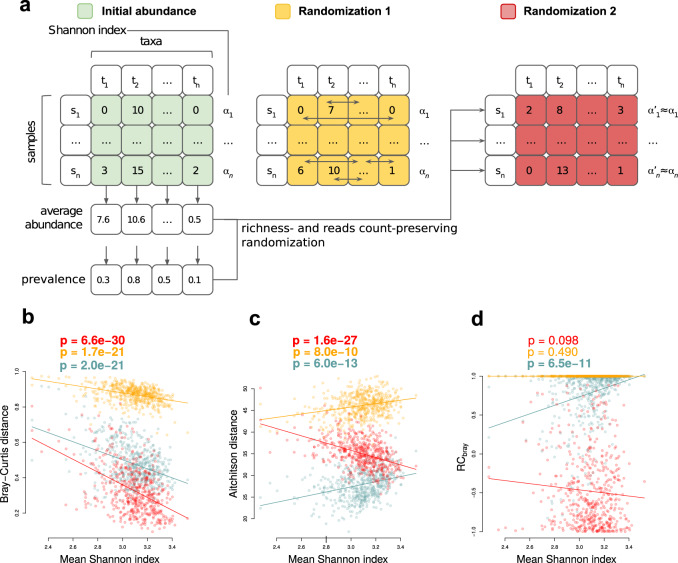
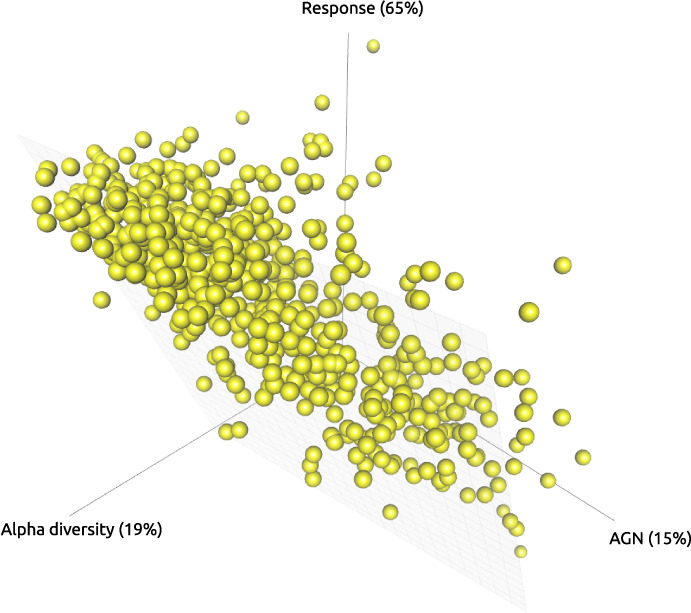
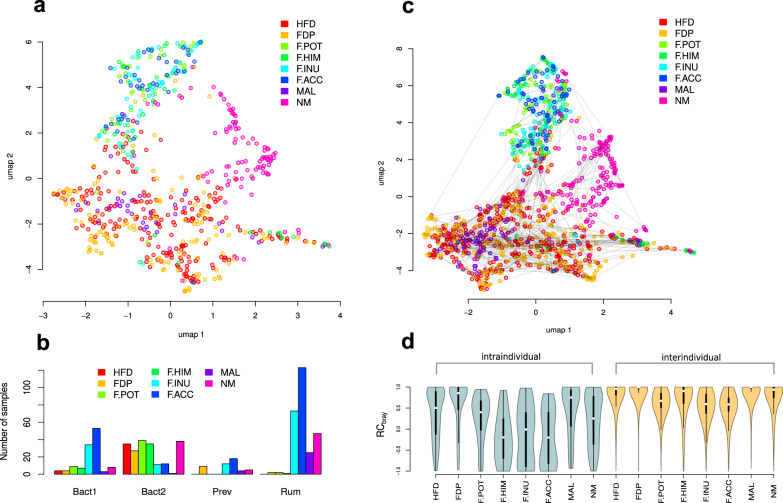
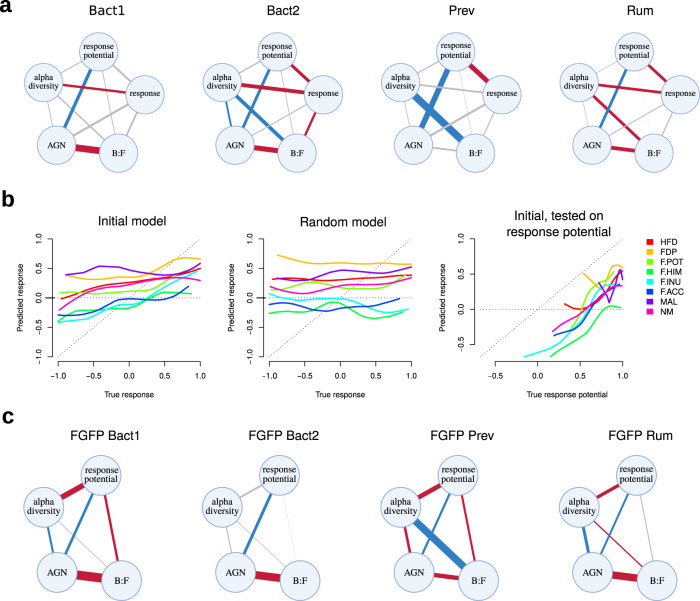
Maintaining equilibrium of the gut microbiome is crucial for human health. Diet represents an important and generally accessible natural channel of controlling the nutrients supply to the intestinal microorganisms. Although many studies showed that dietary interventions can specifically modulate gut microbiome composition, further progress of the approach is complicated by interindividual variability of the microbial community response. The reported causes of this variability include the baseline microbiome composition features, but it is unclear whether any of them are intervention-specific. Here, we applied a unified computational framework to investigate the variability of microbiome response measured as beta diversity in eight various dietary interventions using previously published 16S rRNA sequencing datasets. We revealed a number of baseline microbiome features which determine the microbiome response in an intervention-independent manner. One of the most stable associations, reproducible for different interventions and enterotypes, was a negative dependence of the response on the average number of genes per microorganism in the community-an indicator of the community functional redundancy. Meanwhile, many revealed microbiome response determinants were enterotype-specific. In Bact1 and Rum enterotypes, the response was negatively correlated with the baseline abundance of their main drivers. Additionally, we proposed a method for preliminary assessment of the microbiome response. Our study delineats the universal features determining microbiome response to diverse interventions. The proposed approach is promising for understanding the mechanisms of gut microbiome stability and improving the efficacy of personalised microbiome-tailored interventions.
维持肠道微生物组的平衡对于人类健康至关重要。饮食是控制肠道微生物营养供应的重要且普遍可及的自然途径。尽管许多研究表明,饮食干预可以特异性地调节肠道微生物组的组成,但该方法的进一步进展受到微生物群落反应个体间变异性的复杂化。这种可变性的报告原因包括基线微生物组组成特征,但尚不清楚它们是否具有干预特异性。在这里,我们应用统一的计算框架,使用先前发表的 16S rRNA 测序数据集,研究了八种不同饮食干预措施下以β多样性衡量的微生物组反应的变异性。我们揭示了许多基线微生物组特征,这些特征以干预无关的方式决定了微生物组的反应。其中最稳定的关联之一,对于不同的干预措施和肠型都是可重复的,是反应与群落中每个微生物平均基因数(群落功能冗余的指标)之间的负依赖关系。同时,许多揭示的微生物组反应决定因素是肠型特异性的。在 Bact1 和 Rum 肠型中,反应与它们的主要驱动因素的基线丰度呈负相关。此外,我们提出了一种初步评估微生物组反应的方法。我们的研究描绘了决定肠道微生物组对不同干预措施反应的普遍特征。所提出的方法有望用于理解肠道微生物组稳定性的机制,并提高个性化微生物组定制干预措施的效果。