Si Mahan, Song Yujia, Wang Xiaohui, Wang Dong, Liu Xiaohui, Qu Xianjun, Song Zhiyu, Yu Xinfeng
Department of Pharmacology, School of Basic Medical Sciences, Capital Medical University, Beijing, China.
Department of General Surgery, Xuanwu Hospital, Capital Medical University, Beijing, China.
Cell Biosci. 2022 Oct 9;12(1):171. doi: 10.1186/s13578-022-00908-1.
Chemokine CXC motif receptor 7 (CXCR7) is an atypical G protein-coupled receptor (GPCR) that signals in a biased fashion. CXCL12/CXCR7 biased signal has been reported to play crucial roles in multiple stages of colorectal cancer (CRC). However, the mechanism of CXCL12/CXCR7 biased signal in promoting CRC progression and metastasis remains obscure.
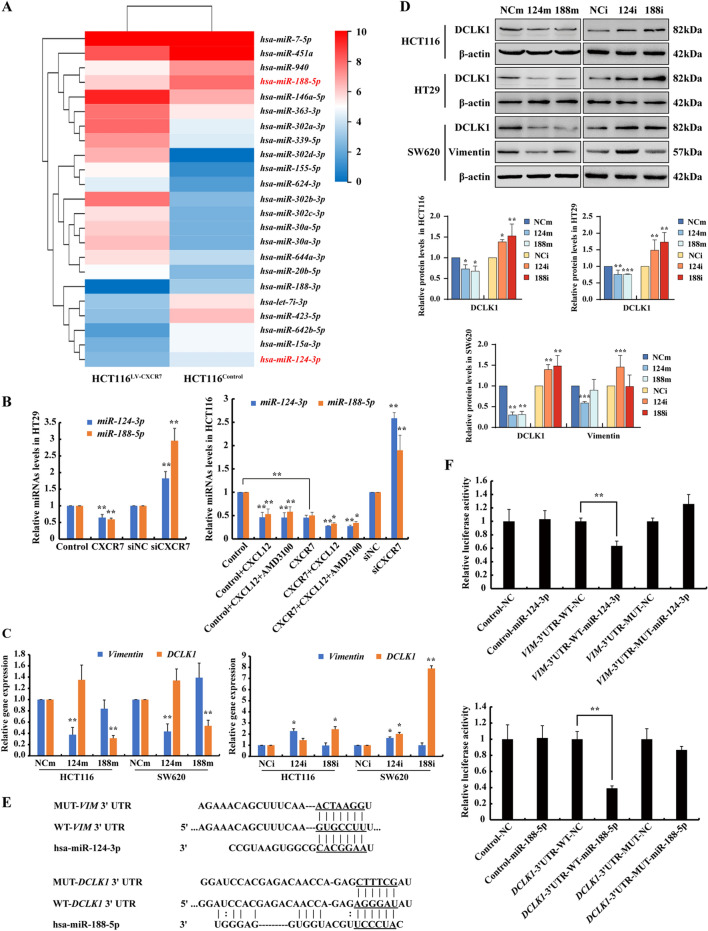
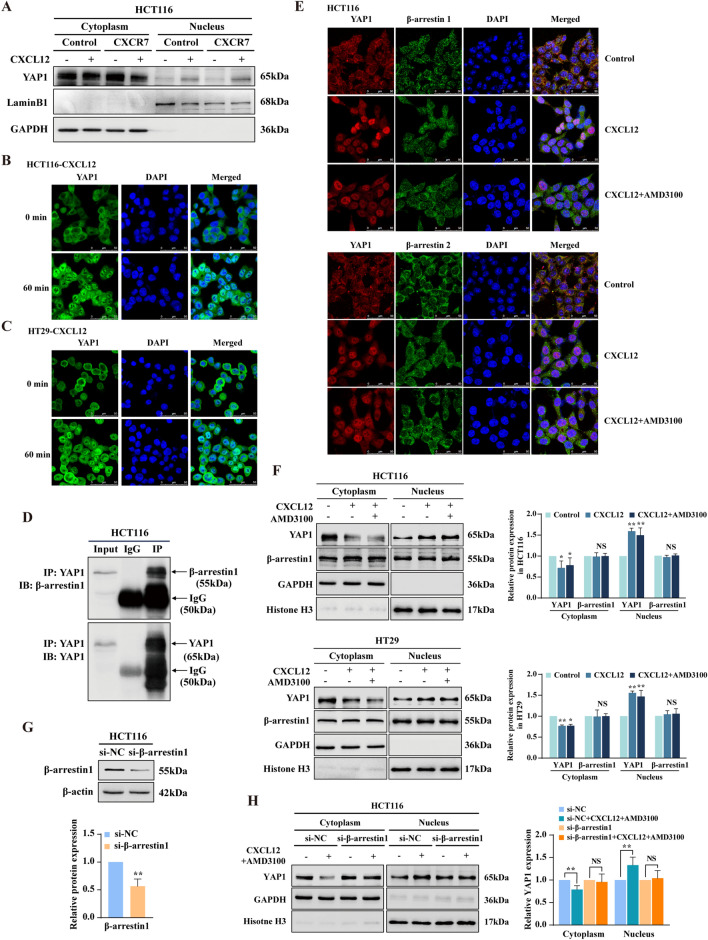
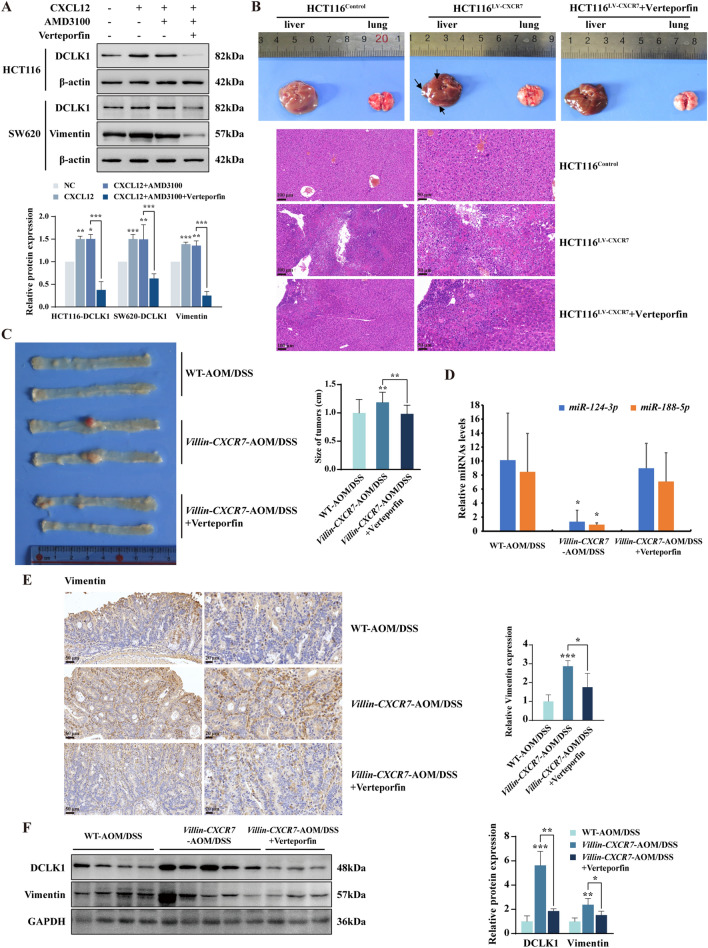
We demonstrate that CXCR7 activation promotes EMT and upregulates the expression of Vimentin and doublecortin-like kinase 1 (DCLK1) in CRC cells with concurrent repression of miR-124-3p and miR-188-5p through YAP1 nuclear translocation. Cell transfection and luciferase assay prove that these miRNAs regulate EMT by targeting Vimentin and DCLK1. More importantly, CXCL12/CXCR7/β-arrestin1-mediated biased signal induces YAP1 nuclear translocation, which functions as a transcriptional repressor by interacting with Yin Yang 1 (YY1) and recruiting YY1 to the promoters of miR-124-3p and miR-188-5p. Pharmacological inhibitor of YAP1 suppresses EMT and tumor metastasis upon CXCR7 activation in vivo in tumor xenografts of nude mice and inflammatory colonic adenocarcinoma models. Clinically, the expression of CXCR7 is positively correlated with nuclear YAP1 levels and EMT markers.
Our studies reveal a novel mechanism and clinical significance of CXCL12/CXCR7 biased signal in promoting EMT and invasion in CRC progression. These findings highlight the potential of targeting YAP1 nuclear translocation in hampering CXCL12/CXCR7 biased signal-induced metastasis of colorectal cancer.
趋化因子CXC基序受体7(CXCR7)是一种非典型G蛋白偶联受体(GPCR),以偏向性方式发出信号。据报道,CXCL12/CXCR7偏向性信号在结直肠癌(CRC)的多个阶段发挥关键作用。然而,CXCL12/CXCR7偏向性信号促进CRC进展和转移的机制仍不清楚。
我们证明,CXCR7激活通过YAP1核转位促进CRC细胞中的上皮-间质转化(EMT),并上调波形蛋白和双皮质素样激酶1(DCLK1)的表达,同时抑制miR-124-3p和miR-188-5p。细胞转染和荧光素酶测定证明,这些微小RNA通过靶向波形蛋白和DCLK1调节EMT。更重要的是,CXCL12/CXCR7/β-抑制蛋白1介导的偏向性信号诱导YAP1核转位,YAP1通过与阴阳1(YY1)相互作用并将YY1募集到miR-124-3p和miR-188-5p的启动子上,作为转录抑制因子发挥作用。YAP1的药理学抑制剂在裸鼠肿瘤异种移植和炎症性结肠腺癌模型中,可在体内抑制CXCR7激活后的EMT和肿瘤转移。在临床上,CXCR7的表达与核YAP1水平和EMT标志物呈正相关。
我们的研究揭示了CXCL12/CXCR7偏向性信号在促进CRC进展中的EMT和侵袭方面的新机制及临床意义。这些发现突出了靶向YAP1核转位在阻碍CXCL12/CXCR7偏向性信号诱导的结直肠癌转移中的潜力。