State Key Laboratory of Respiratory Disease, National Clinical Research Center for Respiratory Disease, National Center for Respiratory Medicine, Guangzhou Institute of Respiratory Health, The First Affiliated Hospital of Guangzhou Medical University, Guangzhou, China.
Guangzhou Laboratory, Guangzhou, China.
Front Immunol. 2022 Sep 20;13:997138. doi: 10.3389/fimmu.2022.997138. eCollection 2022.
Idiopathic pulmonary fibrosis (IPF) is a chronic, progressive, and fatal fibrotic pulmonary disease with unknow etiology. Owing to lack of reliable prognostic biomarkers and effective treatment measures, patients with IPF usually exhibit poor prognosis. The aim of this study is to establish a risk score prognostic model for predicting the prognosis of patients with IPF based on autophagy-related genes.
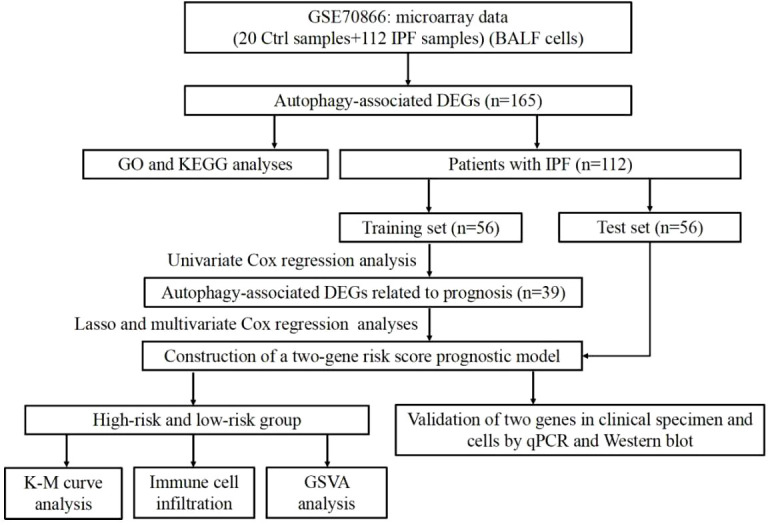
The GSE70866 dataset was obtained from the gene expression omnibus (GEO) database. The autophagy-related genes were collected from the Molecular Signatures Database (MSigDB). Gene enrichment analysis for differentially expressed genes (DEGs) was performed to explore the function of DEGs. Univariate, least absolute shrinkage and selection operator (LASSO), as well as multivariate Cox regression analyses were conducted to identify a multi-gene prognostic model. Receiver operating characteristic (ROC) curve was applied to assess the prediction accuracy of the model. The expression of genes screened from the prognostic model was validated in clinical samples and human lung fibroblasts by qPCR and western blot assays.
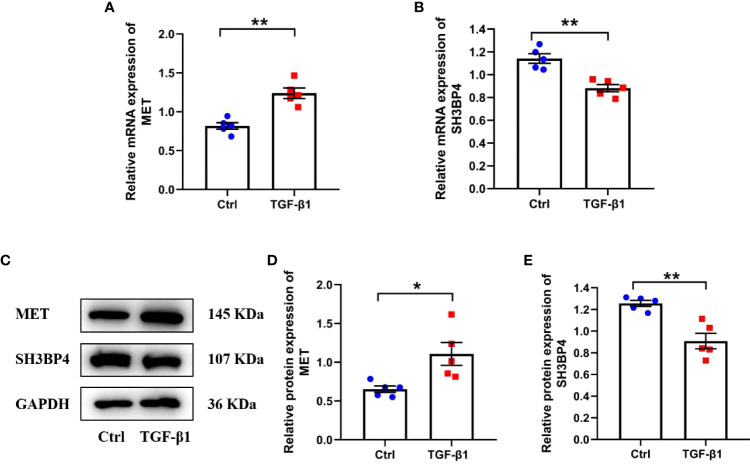
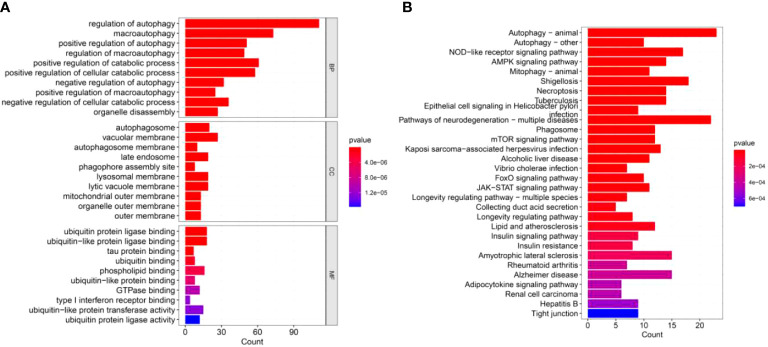
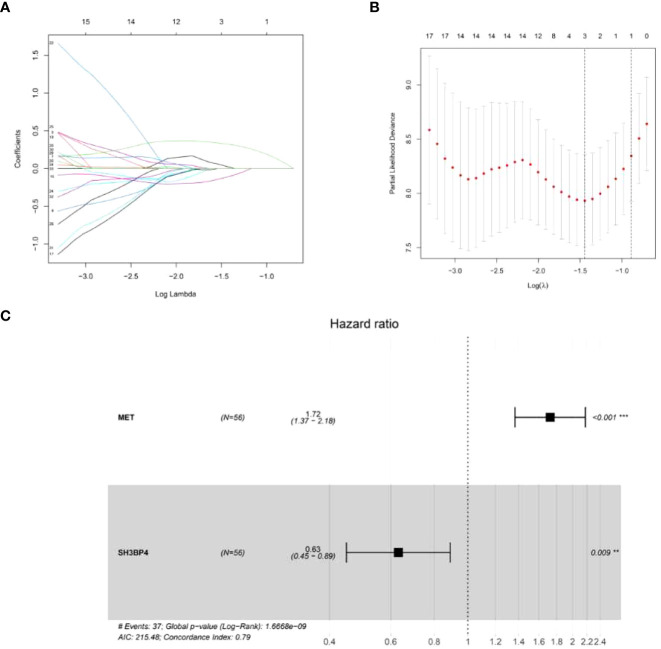
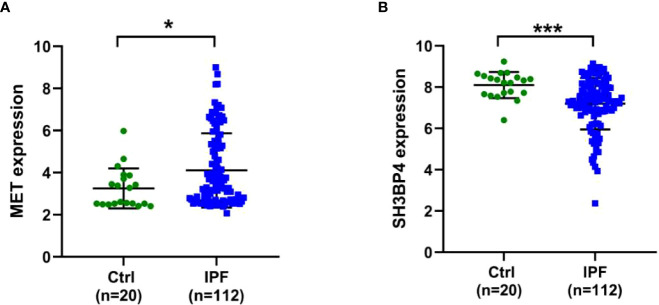
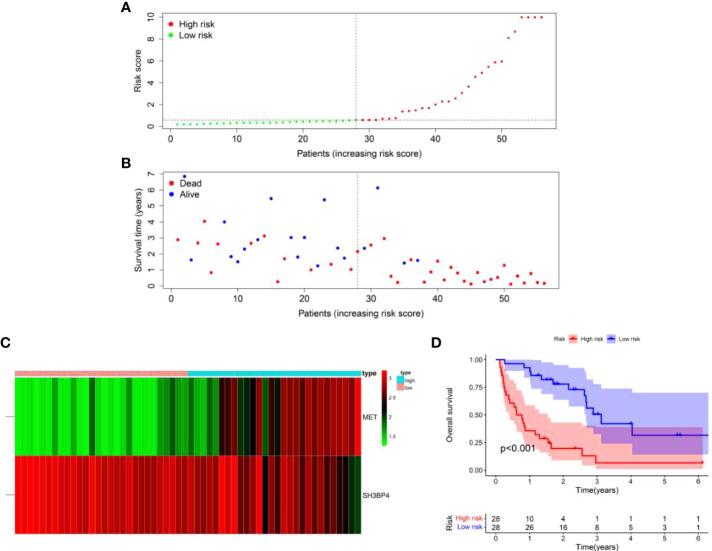
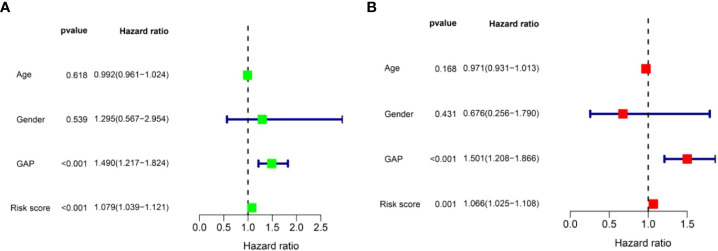
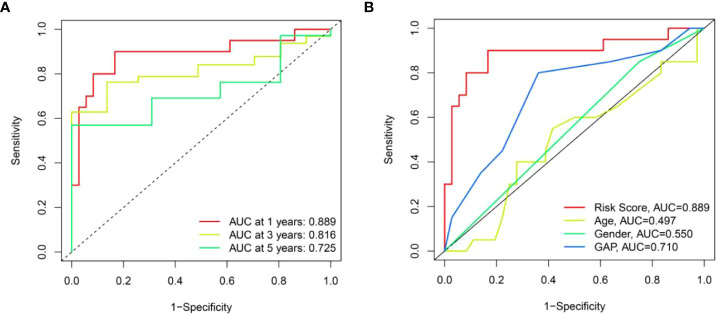
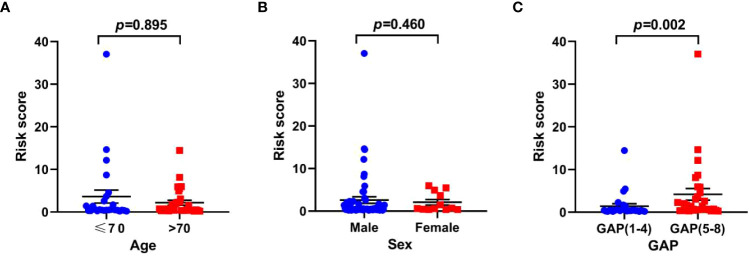
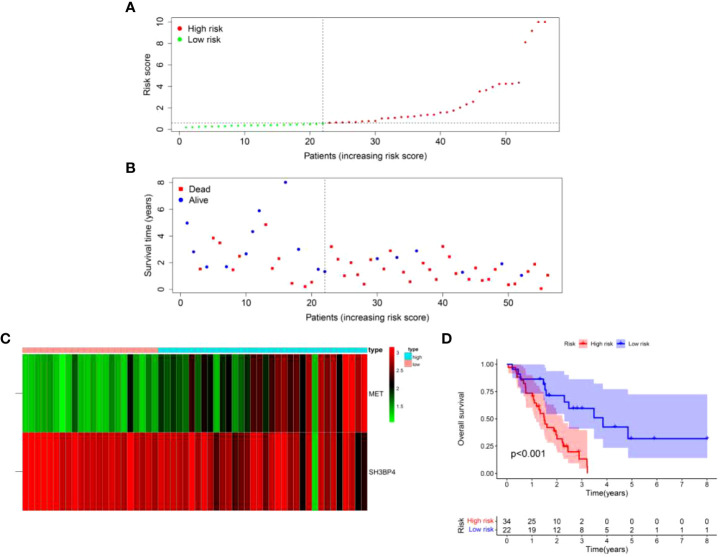
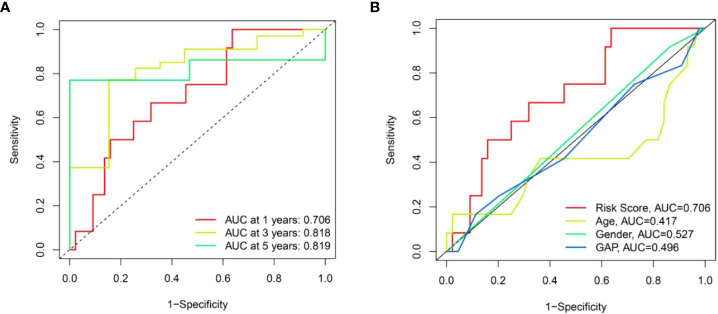
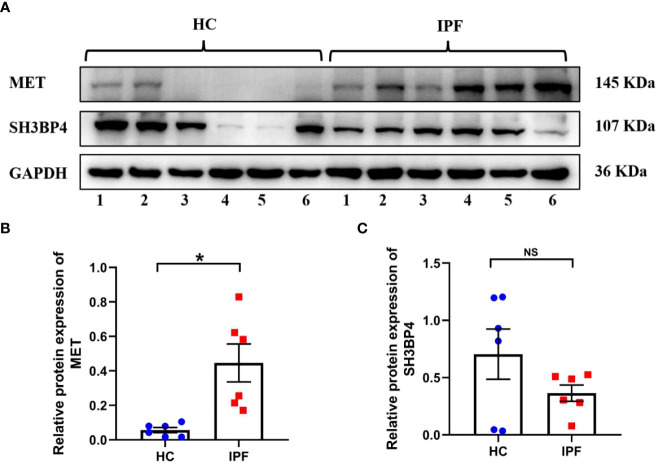
Among the 514 autophagy-related genes, a total of 165 genes were identified as DEGs. These DEGs were enriched in autophagy-related processes and pathways. Based on the univariate, LASSO, and multivariate Cox regression analyses, two genes (MET and SH3BP4) were included for establishing the risk score prognostic model. According to the median value of the risk score, patients with IPF were stratified into high-risk and low-risk groups. Patients in high-risk group had shorter overall survival (OS) than low-risk group in both training and test cohorts. Multivariate regression analysis indicated that prognostic model can act as an independent prognostic indicator for IPF. ROC curve analysis confirmed the reliable predictive value of prognostic model. In the validation experiments, upregulated MET expression and downregulated SH3BP4 expression were observed in IPF lung tissues and TGF-β1-activated human lung fibroblasts, which is consistent with results from microarray data analysis.
These findings indicated that the risk score prognostic model based on two autophagy-related genes can effectively predict the prognosis of patients with IPF.
特发性肺纤维化(IPF)是一种病因不明的慢性、进行性、致命性肺纤维化疾病。由于缺乏可靠的预后生物标志物和有效的治疗措施,IPF 患者通常预后不良。本研究旨在建立基于自噬相关基因预测 IPF 患者预后的风险评分预后模型。
从基因表达综合(GEO)数据库中获取 GSE70866 数据集。从分子特征数据库(MSigDB)中收集自噬相关基因。对差异表达基因(DEGs)进行基因富集分析,以探讨 DEGs 的功能。采用单变量、最小绝对值收缩和选择算子(LASSO)以及多变量 Cox 回归分析来识别多基因预后模型。采用受试者工作特征(ROC)曲线评估模型的预测准确性。通过 qPCR 和 Western blot 检测在临床样本和人肺成纤维细胞中验证从预后模型中筛选出的基因的表达。
在 514 个自噬相关基因中,共鉴定出 165 个 DEGs。这些 DEGs 富集在自噬相关过程和途径中。基于单变量、LASSO 和多变量 Cox 回归分析,纳入两个基因(MET 和 SH3BP4)构建风险评分预后模型。根据风险评分的中位数,将 IPF 患者分为高危和低危组。在训练和测试队列中,高危组患者的总生存期(OS)均短于低危组。多变量回归分析表明,预后模型可作为 IPF 的独立预后指标。ROC 曲线分析证实了预后模型具有可靠的预测价值。在验证实验中,在 IPF 肺组织和 TGF-β1 激活的人肺成纤维细胞中观察到 MET 表达上调和 SH3BP4 表达下调,与微阵列数据分析结果一致。
这些发现表明,基于两个自噬相关基因的风险评分预后模型可有效预测 IPF 患者的预后。