Ou Jieying, Wang Zhuo, Liu Xiaofei, Song Bingbing, Chen Jianping, Li Rui, Jia Xuejing, Huang Riming, Xiang Wenzhou, Zhong Saiyi
College of Food Science and Technology, Guangdong Ocean University, Guangdong Provincial Key Laboratory of Aquatic Product Processing and Safety, Guangdong Province Engineering Laboratory for Marine Biological Products, Guangdong Provincial Engineering Technology Research Center of Seafood, Guangdong Provincial Science and Technology Innovation Center for Subtropical Fruit and Vegetable Processing, Zhanjiang 524088, China.
College of Food Science, South China Agricultural University, Guangzhou 510642, China.
Food Chem X. 2022 Sep 9;15:100444. doi: 10.1016/j.fochx.2022.100444. eCollection 2022 Oct 30.
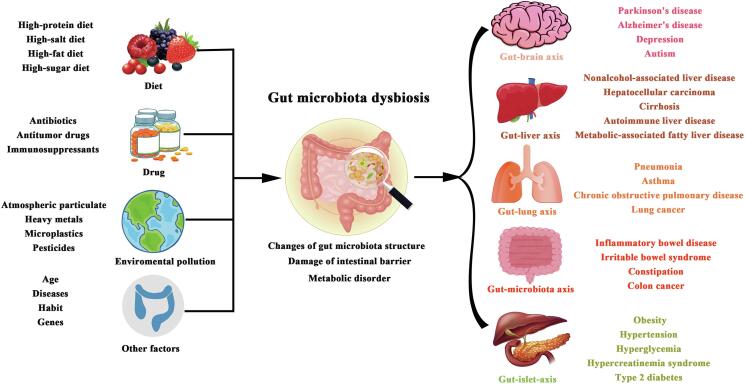
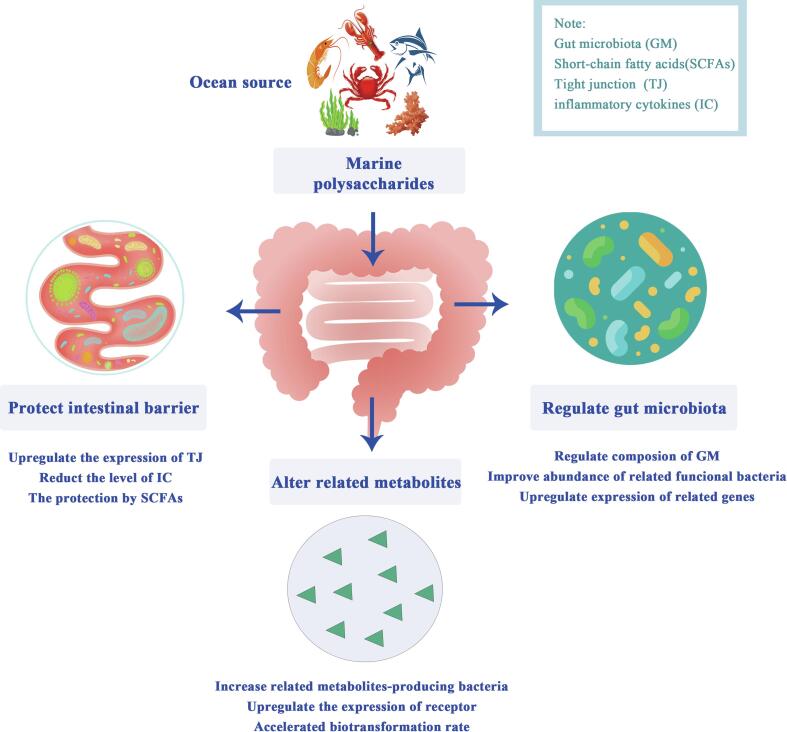
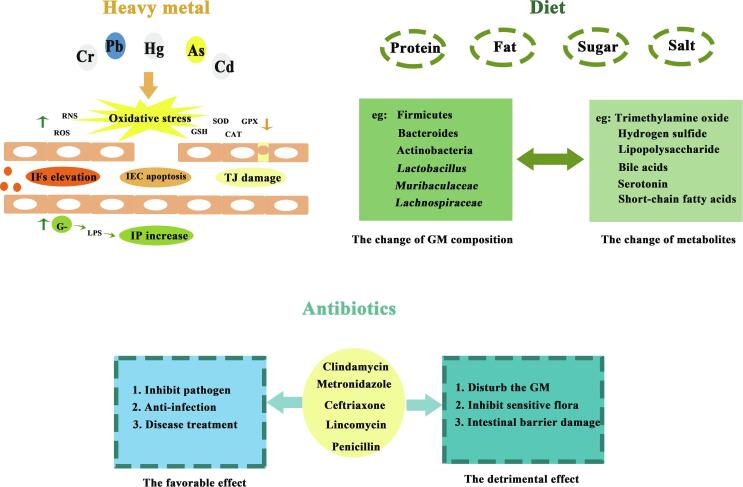
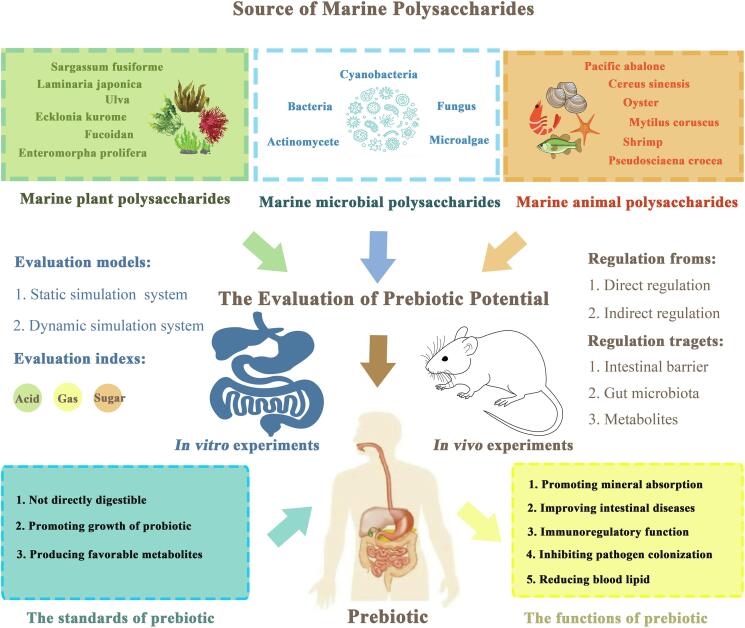
The gut microbiota dysbiosis is a state which the physiological combinations of flora are transformed into pathological combinations caused by factors such as diets, pollution, and drugs. Increasing evidence shows that dysbiosis is closely related to many diseases. With the continuous development and utilization of marine resources, marine polysaccharides have been found to regulate dysbiosis in many studies. In this review, we introduce the types of dysbiosis and the degree of it caused by different factors. We highlight the regulating effects of marine polysaccharides on dysbiosis as a potential prebiotic. The mechanisms of marine polysaccharides to regulate dysbiosis including protection of intestinal barrier, regulatory effect on gut microbiota, alteration for related metabolites, and some other possible mechanisms were summarized. And we aim to provide some references for the high-value utilization of marine polysaccharides and new targets for the treatment of gut microbiota dysbiosis by this review.
肠道微生物群失调是一种由饮食、污染和药物等因素导致菌群生理组合转变为病理组合的状态。越来越多的证据表明,失调与许多疾病密切相关。随着海洋资源的不断开发利用,在许多研究中发现海洋多糖可调节失调。在本综述中,我们介绍了失调的类型以及不同因素导致的失调程度。我们强调了海洋多糖作为一种潜在益生元对失调的调节作用。总结了海洋多糖调节失调的机制,包括保护肠道屏障、对肠道微生物群的调节作用、相关代谢产物的改变以及其他一些可能的机制。我们旨在通过本综述为海洋多糖的高值利用提供一些参考,并为肠道微生物群失调的治疗提供新的靶点。