Cheng Zhuowei, Ly Franklin, Santander Tyler, Turki Elyes, Zhao Yun, Yoo Jamie, Lonergan Kian, Gray Jordan, Li Christopher H, Yang Henry, Miller Michael, Hansma Paul, Petzold Linda
Departments of Computer Science.
Mechanical Engineering.
Pain Rep. 2022 Oct 4;7(6):e1039. doi: 10.1097/PR9.0000000000001039. eCollection 2022 Nov-Dec.
It is unknown if physiological changes associated with chronic pain could be measured with inexpensive physiological sensors. Recently, acute pain and laboratory-induced pain have been quantified with physiological sensors.
To investigate the extent to which chronic pain can be quantified with physiological sensors.
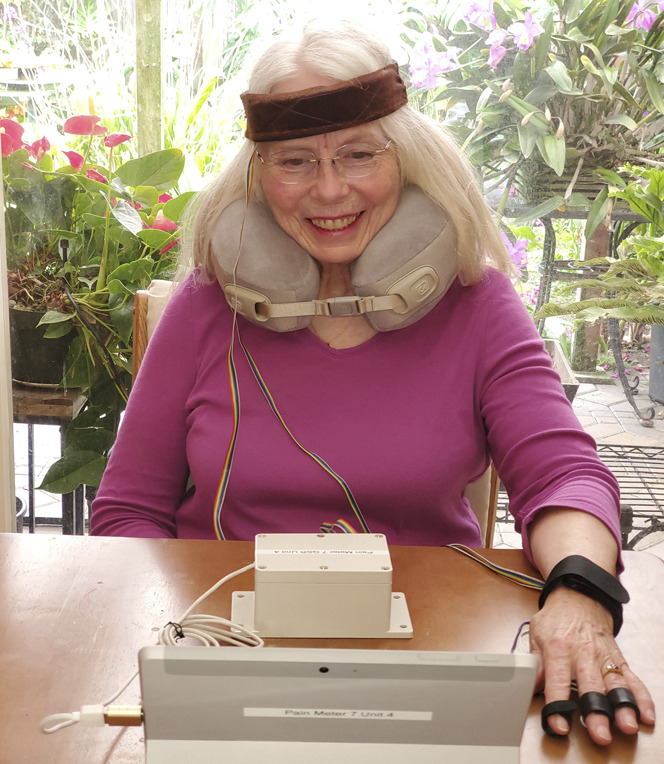
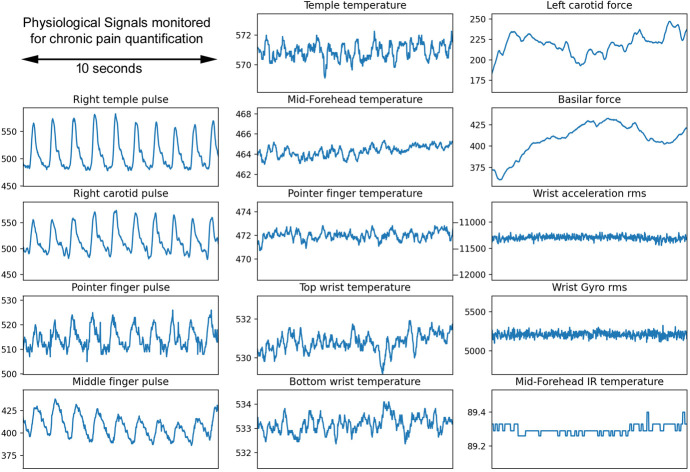
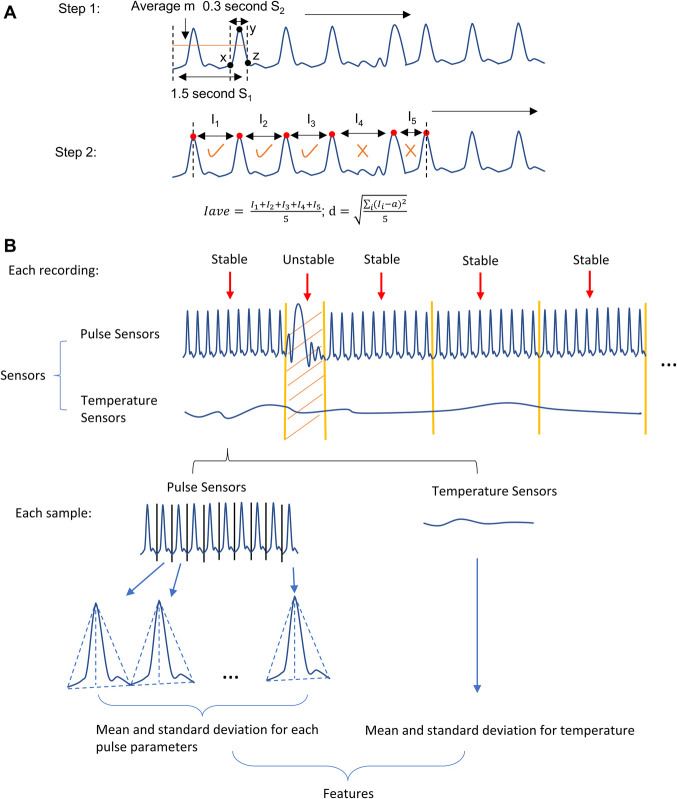
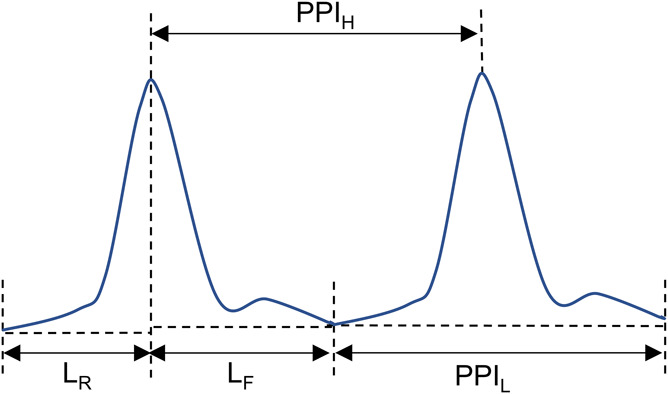
Data were collected from chronic pain sufferers who subjectively rated their pain on a 0 to 10 visual analogue scale, using our recently developed pain meter. Physiological variables, including pulse, temperature, and motion signals, were measured at head, neck, wrist, and finger with multiple sensors. To quantify pain, features were first extracted from 10-second windows. Linear models with recursive feature elimination were fit for each subject. A random forest regression model was used for pain score prediction for the population-level model.
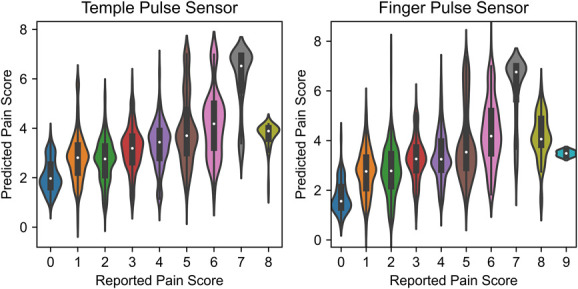
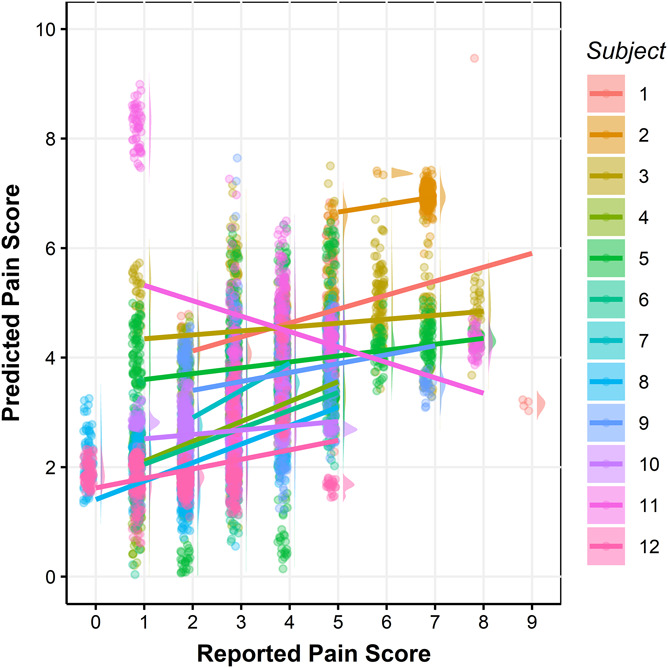
Predictive performance was assessed using leave-one-recording-out cross-validation and nonparametric permutation testing. For individual-level models, 5 of 12 subjects yielded intraclass correlation coefficients between actual and predicted pain scores of 0.46 to 0.75. For the population-level model, the random forest method yielded an intraclass correlation coefficient of 0.58. Bland-Altman analysis shows that our model tends to overestimate the lower end of the pain scores and underestimate the higher end.
This is the first demonstration that physiological data can be correlated with chronic pain, both for individuals and populations. Further research and more extensive data will be required to assess whether this approach could be used as a "chronic pain meter" to assess the level of chronic pain in patients.
与慢性疼痛相关的生理变化是否能用廉价的生理传感器进行测量尚不清楚。最近,急性疼痛和实验室诱发的疼痛已通过生理传感器进行了量化。
研究生理传感器能够量化慢性疼痛的程度。
使用我们最近开发的疼痛测量仪,从慢性疼痛患者那里收集数据,这些患者在0至10的视觉模拟量表上对自己的疼痛进行主观评分。使用多个传感器在头部、颈部、手腕和手指处测量包括脉搏、温度和运动信号在内的生理变量。为了量化疼痛,首先从10秒的窗口中提取特征。对每个受试者拟合具有递归特征消除的线性模型。随机森林回归模型用于人群水平模型的疼痛评分预测。
使用留一记录交叉验证和非参数置换检验评估预测性能。对于个体水平模型,12名受试者中有5名的实际疼痛评分与预测疼痛评分之间的组内相关系数为0.46至0.75。对于人群水平模型,随机森林方法得出的组内相关系数为0.58。布兰德-奥特曼分析表明,我们的模型倾向于高估疼痛评分的下限,低估上限。
这是首次证明生理数据可以与个体和人群的慢性疼痛相关联。需要进一步的研究和更广泛的数据来评估这种方法是否可以用作“慢性疼痛测量仪”来评估患者慢性疼痛的程度。