Department of Biomolecular Mechanisms, Max Planck Institute for Medical Research, Heidelberg, Germany.
Department of Cell and Molecular Biology, Uppsala University, Uppsala, Sweden.
PeerJ. 2022 Oct 5;10:e14047. doi: 10.7717/peerj.14047. eCollection 2022.
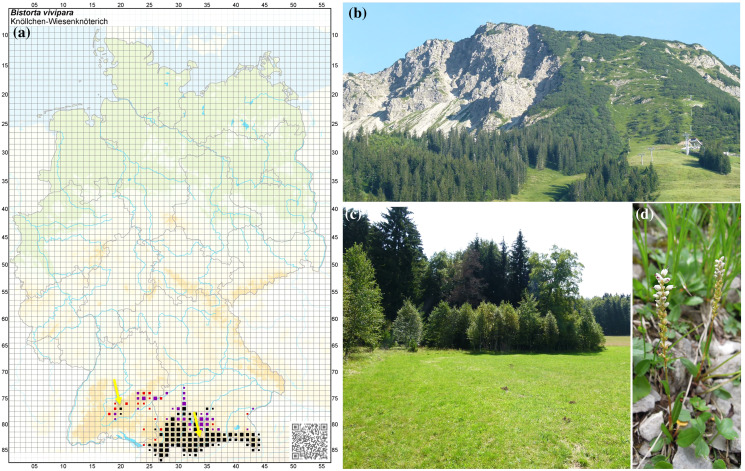
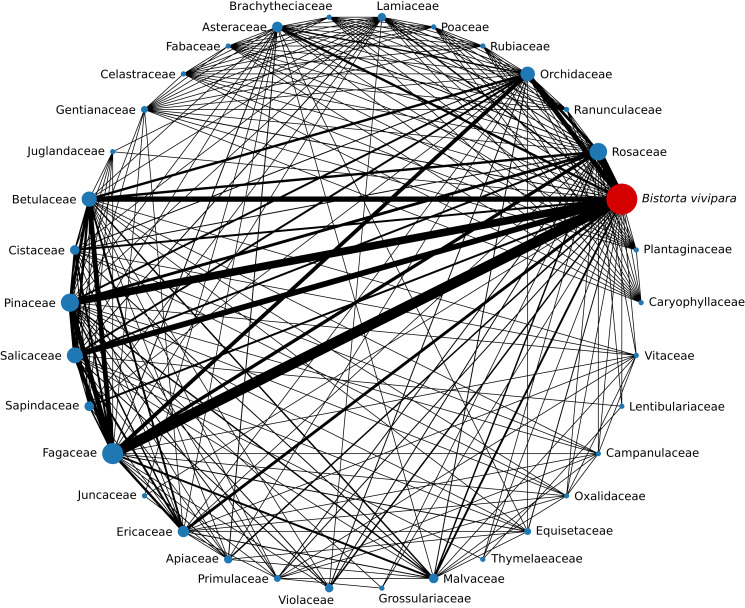
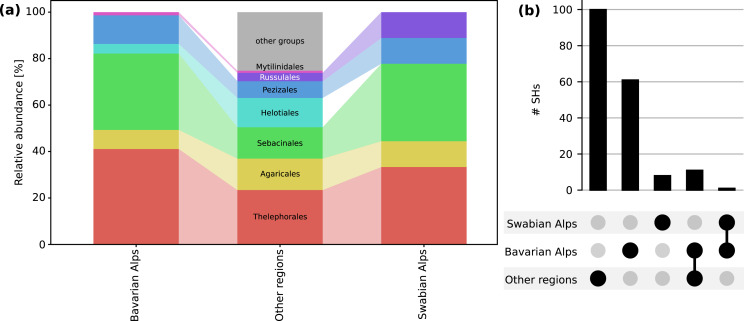
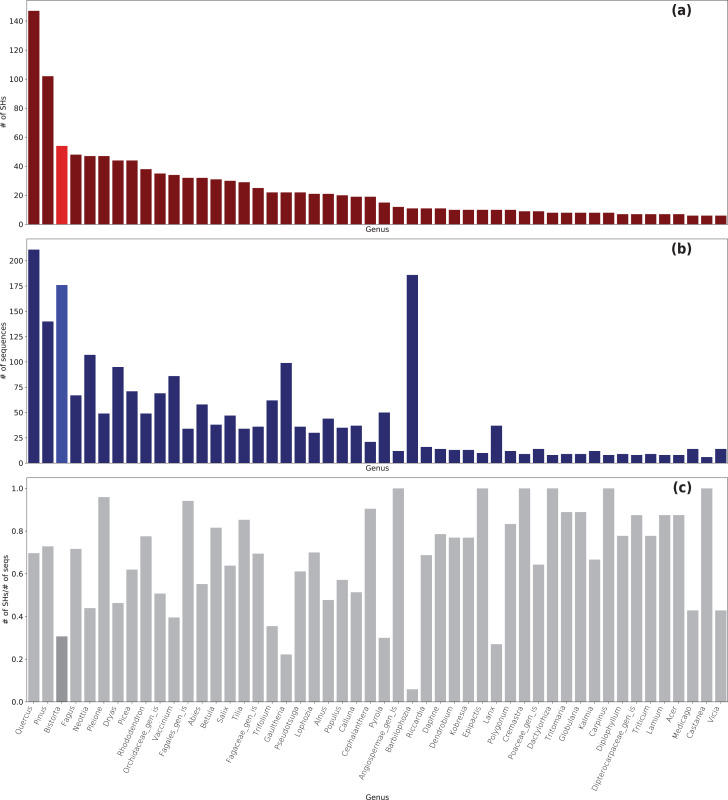
is a widespread herbaceous perennial plant with a discontinuous pattern of distribution in arctic, alpine, subalpine and boreal habitats across the northern Hemisphere. Studies of the fungi associated with the roots of have mainly been conducted in arctic and alpine ecosystems. This study examined the fungal diversity and specificity from root tips of in two local mountain ecosystems as well as on a global scale. Sequences were generated by Sanger sequencing of the internal transcribed spacer (ITS) region followed by an analysis of accurately annotated nuclear segments including ITS1-5.8S-ITS2 sequences available from public databases. In total, 181 different UNITE species hypotheses (SHs) were detected to be fungi associated with , 73 of which occurred in the Bavarian Alps and nine in the Swabian Alps-with one SH shared among both mountains. In both sites as well as in additional public data, individuals of were found to contain phylogenetically diverse fungi, with the Basidiomycota, represented by the Thelephorales and Sebacinales, being the most dominant. A comparative analysis of the diversity of the Sebacinales associated with and other co-occurring plant genera showed that the highest number of sebacinoid SHs were associated with and , followed by . A comparison of with plant families such as Ericaceae, Fagaceae, Orchidaceae, and Pinaceae showed a clear trend: Only a few species were specific to and a large number of SHs were shared with other co-occurring non- plant species. In Sebacinales, the majority of SHs associated with belonged to the ectomycorrhiza (ECM)-forming Sebacinaceae, with fewer SHs belonging to the Serendipitaceae encompassing diverse ericoid-orchid-ECM-endophytic associations. The large proportion of non-host-specific fungi able to form a symbiosis with other non- plants could suggest that the high fungal diversity in comes from an active recruitment of their associates from the co-occurring vegetation. The non-host-specificity suggests that this strategy may offer ecological advantages; specifically, linkages with generalist rather than specialist fungi. Proximity to co-occurring non- plants can maximise the fitness of , allowing more rapid and easy colonisation of the available habitats.
是一种广泛分布的草本多年生植物,在北半球的北极、高山、亚高山和北方森林栖息地呈不连续分布模式。对与根相关的真菌的研究主要在北极和高山生态系统中进行。本研究检查了两个当地山地生态系统以及全球范围内的根尖真菌的多样性和特异性。通过对内部转录间隔区(ITS)区域进行 Sanger 测序,然后对来自公共数据库的准确注释核片段(包括 ITS1-5.8S-ITS2 序列)进行分析,生成了序列。总共检测到 181 种不同的 UNITE 物种假说(SH)与有关,其中 73 种发生在巴伐利亚阿尔卑斯山,9 种发生在施瓦本阿尔卑斯山-其中一种 SH 在两座山上都有。在这两个地点以及其他公共数据中,发现个体含有系统发育上多样的真菌,其中担子菌门,由 Thelephorales 和 Sebacinales 代表,是最主要的。与和其他共存植物属相关的 Sebacinales 多样性的比较分析表明,与 Sebacina 和相关的 sebacinoid SH 数量最多,其次是。与 Ericaceae、Fagaceae、Orchidaceae 和 Pinaceae 等植物科的比较表明,存在明显的趋势:只有少数物种是特有的,而大量的 SH 与其他共存的非植物物种共享。在 Sebacinales 中,与相关的大多数 SH 属于外生菌根(ECM)形成的 Sebacinaceae,而较少的 SH 属于包含各种石楠-兰花-ECM-内生菌的 Serendipitaceae。能够与其他非植物形成共生关系的非宿主特异性真菌的比例很高,这可能表明在中存在的高真菌多样性来自与其共生植被的积极招募。非宿主特异性表明这种策略可能具有生态优势;特别是与非专业真菌的联系。与共存的非植物的接近可以最大限度地提高的适应性,允许更快速和容易地殖民可用栖息地。