Zhou Zhao, Cui Xiaohan, Gao Peng, Zhang Xudong, Zhu Chunfu, Sun Beicheng
Department of Hepatobiliary Surgery of Nanjing Drum Tower Hospital, Clinical College of Nanjing Medical University, Nanjing, People's Republic of China.
The Affiliated Changzhou NO.2 People's Hospital of Nanjing Medical University, Changzhou, People's Republic of China.
J Hepatocell Carcinoma. 2022 Oct 4;9:1041-1056. doi: 10.2147/JHC.S376063. eCollection 2022.
Recently, emerging studies have validated that circular RNAs participate in multiple biological progresses in various human malignant tumors, including hepatocellular carcinoma (HCC). However, until now, the elucidated mechanism of circular RNAs is only the tip of the iceberg. In this study, we firstly identify a novel circular RNA circRASSF5 (the only circular RNA derived from the gene), and attempt to investigate its biological function and underlying mechanism in HCC.
qRT-PCR, Western blotting and IHC were applied to detect the expression of related genes. CCK-8 assay, EdU staining, wound healing and transwell assays were used to investigate HCC proliferation, migration and invasion abilities. Animal model studies were included to investigate the function of circRASSF5 in HCC tumorigenesis and metastasis. RNA pull-down assay, luciferase reporter assay and FISH (fluorescence in situ hybridization) assay were performed to explore the potential biological mechanism underlying circRASSF5 function in HCC.
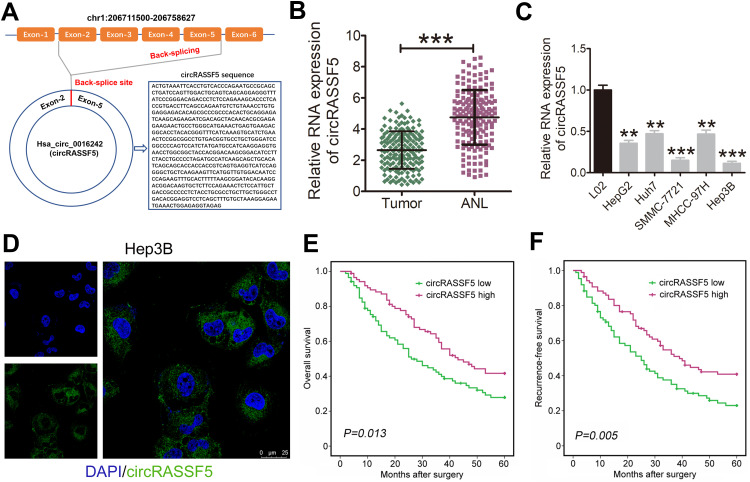
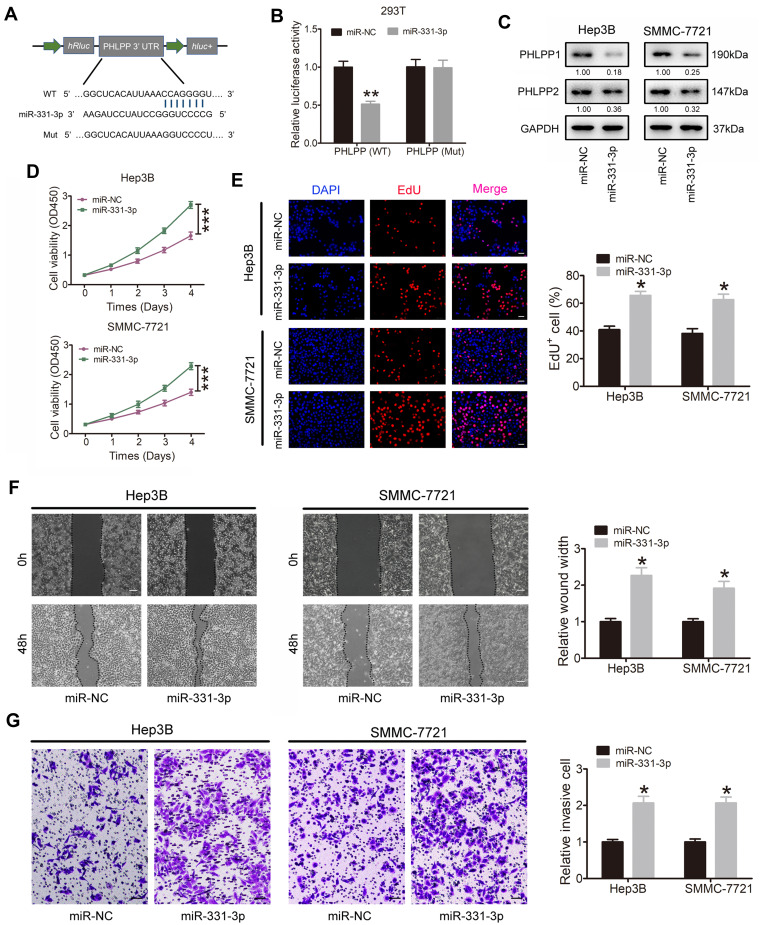
CircRASSF5 is obviously downregulated in both HCC tissues and cell lines. Low level of circRASSF5 is negatively associated with larger tumor size, severe vascular invasion, more portal vein tumor embolus and unfavorable prognosis. Loss-of-function assay reveals that circRASSF5 remarkably impedes the growth and metastasis of HCC cells in vitro and in vivo. Mechanistically, circRASSF5 directly interacts with miR-331-3p as a sponge, and then enhances the expression of PH domain and leucine-rich repeat protein phosphatase (PHLPP), thus restraining the progression of HCC cells.
Altogether, we validate that circRASSF5 is a tumor suppressor in HCC, which competitively sponges with miR-331-3p and then enhances the tumor inhibitory effect of PHLPP, indicating the potential application value of circRASSF5 for HCC diagnosis and clinical treatment.
最近,新出现的研究证实环状RNA参与多种人类恶性肿瘤(包括肝细胞癌,即HCC)的多种生物学进程。然而,到目前为止,已阐明的环状RNA机制只是冰山一角。在本研究中,我们首先鉴定出一种新型环状RNA circRASSF5(唯一源自该基因的环状RNA),并试图研究其在HCC中的生物学功能及潜在机制。
应用qRT-PCR、蛋白质免疫印迹法和免疫组化法检测相关基因的表达。采用CCK-8检测、EdU染色、伤口愈合实验和Transwell实验研究HCC的增殖、迁移和侵袭能力。纳入动物模型研究以探究circRASSF5在HCC肿瘤发生和转移中的作用。进行RNA下拉实验、荧光素酶报告基因实验和荧光原位杂交(FISH)实验,以探索circRASSF5在HCC中发挥功能的潜在生物学机制。
CircRASSF5在HCC组织和细胞系中均明显下调。CircRASSF5低表达与更大的肿瘤大小、严重的血管侵犯、更多的门静脉肿瘤栓子及不良预后呈负相关。功能丧失实验表明,circRASSF5在体外和体内均显著抑制HCC细胞的生长和转移。机制上,circRASSF5作为海绵直接与miR-331-3p相互作用,进而增强PH结构域和富含亮氨酸重复蛋白磷酸酶(PHLPP)的表达,从而抑制HCC细胞的进展。
总之,我们证实circRASSF5是HCC中的一种肿瘤抑制因子,它与miR-331-3p竞争性结合,进而增强PHLPP的肿瘤抑制作用,表明circRASSF5在HCC诊断和临床治疗中的潜在应用价值。