Department of Laboratory Medicine, The First Affiliated Hospital of Chongqing Medical University, Chongqing 400016, P.R. China.
Department of Cardiothoracic Surgery, The First Affiliated Hospital of Chongqing Medical University, Chongqing 400016, P.R. China.
Oncol Rep. 2022 Dec;48(6). doi: 10.3892/or.2022.8422. Epub 2022 Oct 12.
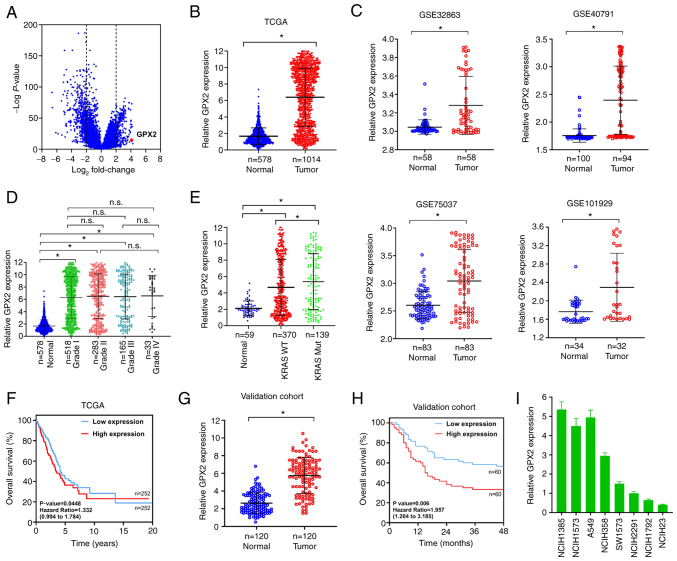
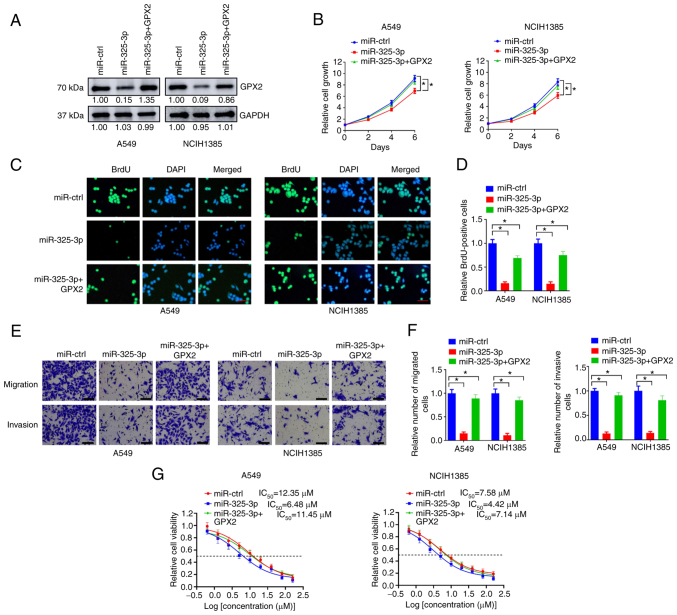
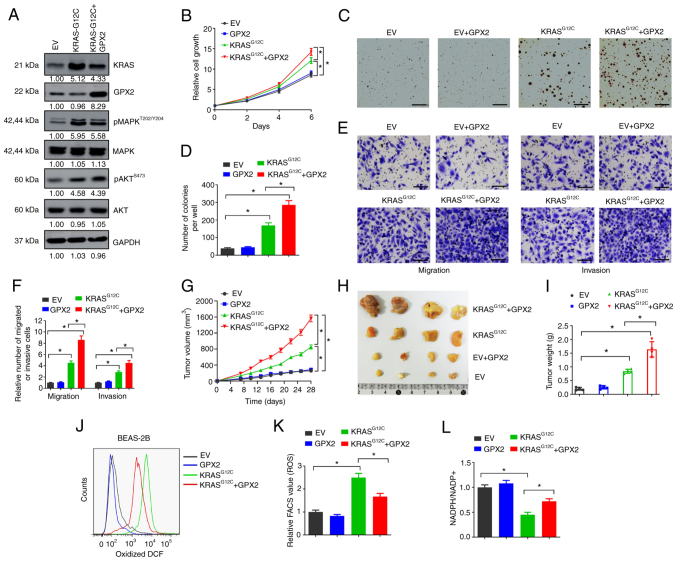
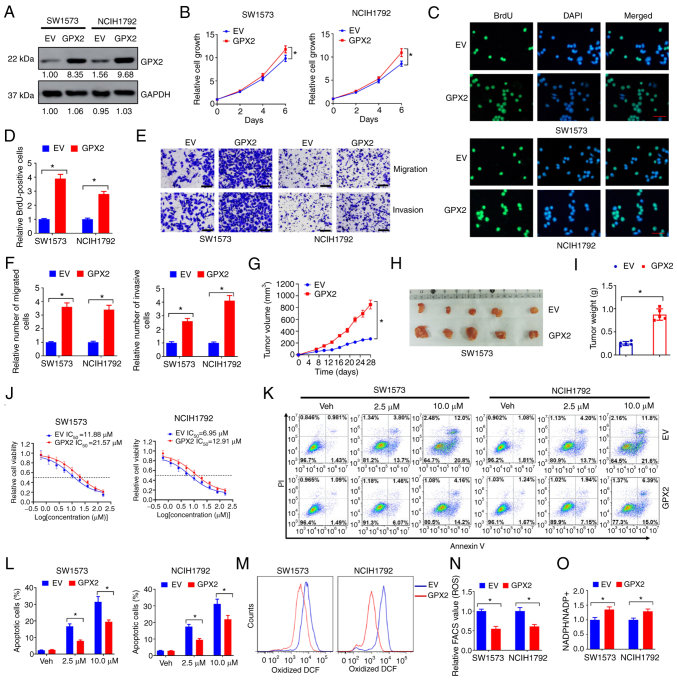
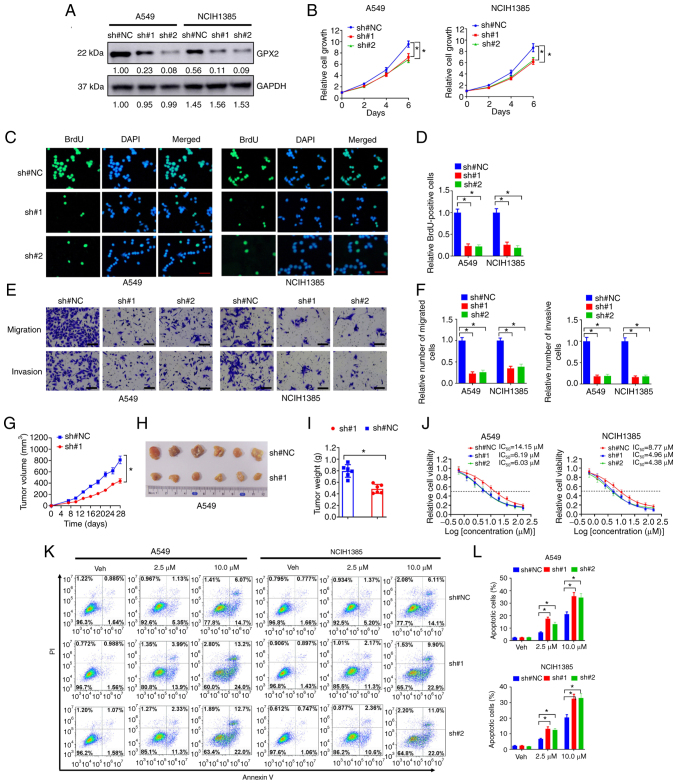
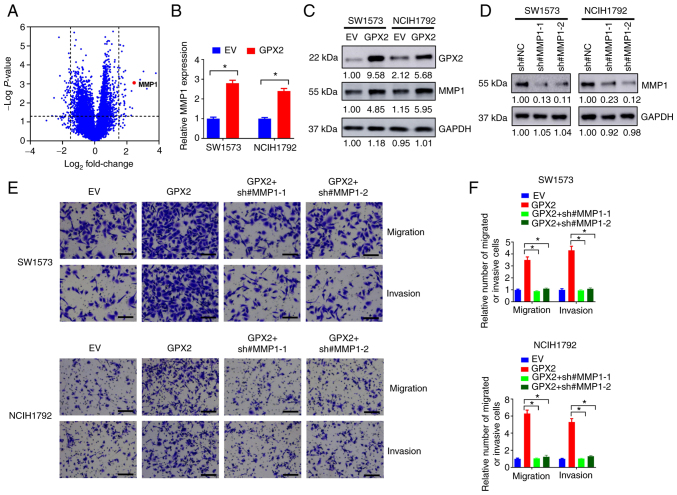
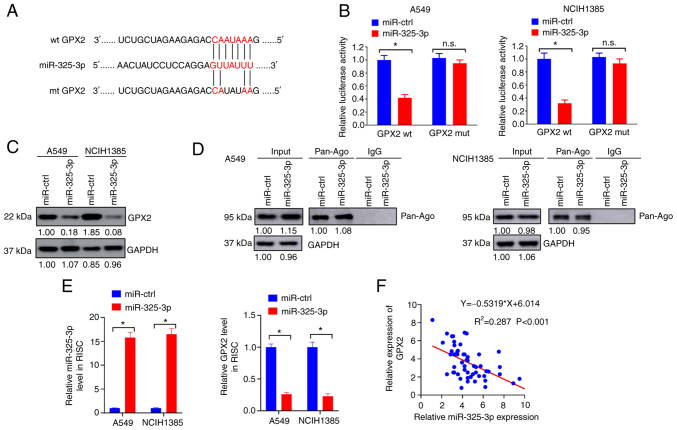
Kirsten rat sarcoma viral oncogene homolog (KRAS) aberrations frequently occur in patients with lung cancer. Oncogenic KRAS is characterized by excessive reactive oxygen species (ROS) accumulation, thus, ROS detoxification may contribute to KRAS‑driven lung tumorigenesis. In the present study, the influence of glutathione peroxidase 2 (GPX2) on malignant progression and cisplatin resistance of KRAS‑driven lung cancer was explored. The RNA sequencing data from TCGA lung cancer samples and GEO database were downloaded and analyzed. The effects of GPX2 on KRAS‑driven lung tumorigenesis were evaluated by western blotting, cell viability assay, soft agar assay, Transwell assay, tumor xenograft model, flow cytometry, BrdU incorporation assay, transcriptome RNA sequencing, luciferase reporter assay and RNA immunoprecipitation. In the present study, GPX2 was upregulated in patients with non‑small cell lung carcinoma (NSCLC), and positively correlated with poor overall survival. Ectopic GPX2 expression facilitated malignant progression of KRAS‑transformed BEAS‑2B cells. Moreover, GPX2 overexpression promoted growth, migration, invasion, tumor xenograft growth and cisplatin resistance of KRAS‑mutated NSCLC cells, while GPX2 knockdown exhibited the opposite effects. GPX2 overexpression reduced ROS accumulation and increased matrix metalloproteinase‑1 (MMP1) expression in KRAS‑mutated NSCLC cells. In addition, GPX2 was directly targeted by miR‑325‑3p, while MMP1 knockdown or miR‑325‑3p overexpression partially abrogated the effects of GPX2 in NSCLC cells. In conclusion, the results indicated that GPX2 facilitated malignant progression and cisplatin resistance of KRAS‑driven lung cancer, and inhibition of GPX2 may be a feasible strategy for lung cancer treatment, particularly in patients with active KRAS mutations.
Kirsten 大鼠肉瘤病毒致癌基因同源物(KRAS)异常经常发生在肺癌患者中。致癌性 KRAS 的特征是活性氧(ROS)过度积累,因此,ROS 解毒可能有助于 KRAS 驱动的肺肿瘤发生。在本研究中,探讨了谷胱甘肽过氧化物酶 2(GPX2)对 KRAS 驱动的肺癌恶性进展和顺铂耐药性的影响。从 TCGA 肺癌样本和 GEO 数据库下载并分析了 RNA 测序数据。通过 Western blot、细胞活力测定、软琼脂测定、Transwell 测定、肿瘤异种移植模型、流式细胞术、BrdU 掺入测定、转录组 RNA 测序、荧光素酶报告基因测定和 RNA 免疫沉淀评估 GPX2 对 KRAS 驱动的肺肿瘤发生的影响。在本研究中,GPX2 在非小细胞肺癌(NSCLC)患者中上调,并与总体生存不良呈正相关。异位 GPX2 表达促进 KRAS 转化的 BEAS-2B 细胞的恶性进展。此外,GPX2 过表达促进 KRAS 突变型 NSCLC 细胞的生长、迁移、侵袭、肿瘤异种移植生长和顺铂耐药性,而 GPX2 敲低则表现出相反的效果。GPX2 过表达减少了 KRAS 突变型 NSCLC 细胞中 ROS 的积累并增加了基质金属蛋白酶 1(MMP1)的表达。此外,GPX2 被 miR-325-3p 直接靶向,而 MMP1 敲低或 miR-325-3p 过表达部分削弱了 GPX2 在 NSCLC 细胞中的作用。总之,结果表明 GPX2 促进了 KRAS 驱动的肺癌的恶性进展和顺铂耐药性,抑制 GPX2 可能是治疗肺癌的一种可行策略,特别是在具有活跃 KRAS 突变的患者中。