Li Chao, Liu Zhong, Zhang Xiaoxia, Wang Huafeng, Friedman Gregory K, Ding Qiang, Zhao Xinyang, Li Hu, Kim Kitai, Yu Xi, Burt Nabors L, Han Xiaosi, Zhao Rui
Department of Biochemistry and Molecular Genetics, University of Alabama at Birmingham, AL 35294, USA.
Department of Genetics, University of Alabama at Birmingham, AL 35294, USA.
Neurooncol Adv. 2022 Aug 18;4(1):vdac131. doi: 10.1093/noajnl/vdac131. eCollection 2022 Jan-Dec.
Chromosomal translocation has been detected in many human cancers including gliomas and is considered a driving force in tumorigenesis. Co-deletion of chromosome arms 1p and 19q is a hallmark for oligodendrogliomas. On the molecular level, 1p/19q co-deletion results from t(1;19)(q10;p10), which leads to the concomitant formation of a hybrid chromosome containing the 1q and 19p arms. A method to generate 1p/19q co-deletion is lacking, which hinders the investigation of how 1p/19q co-deletion contributes to gliomagenesis.
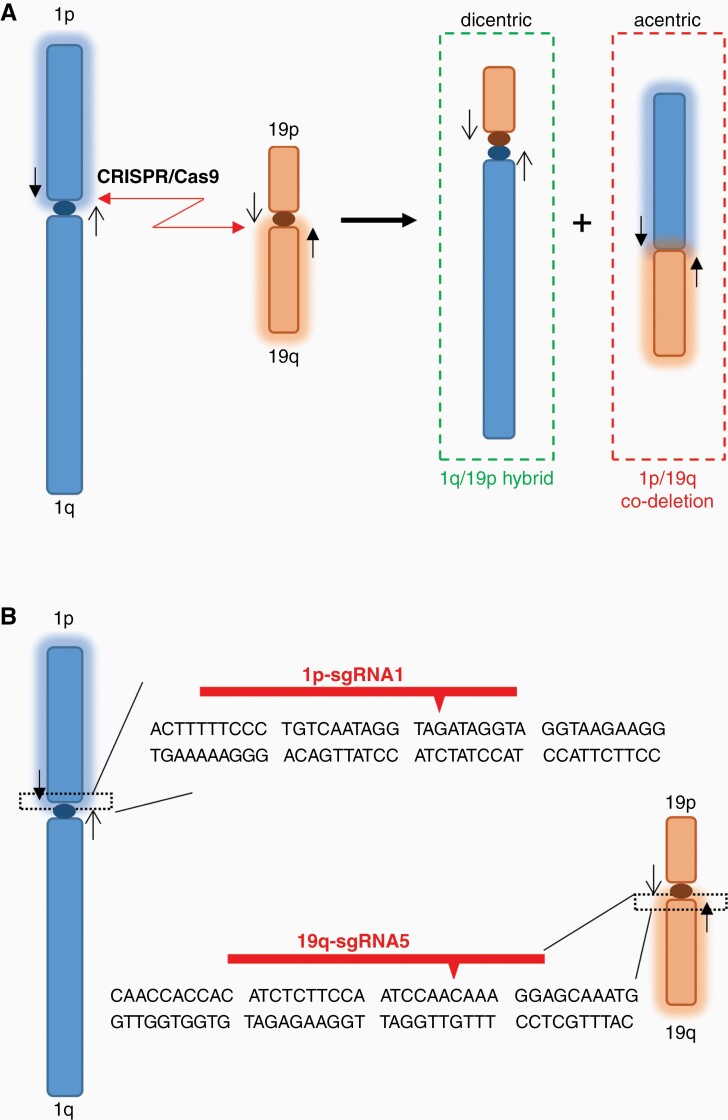
We hypothesized that chromosomal translocation, such as t(1;19)(q10;p10) resulting in the 1p/19q co-deletion, may be induced by simultaneously introducing DNA double-strand breaks (DSBs) into chromosomes 1p and 19q using CRISPR/Cas9. We developed a CRISPR/Cas9-based strategy to induce t(1;19)(q10;p10) and droplet digital PCR (ddPCR) assays to detect the hybrid 1q/19p and 1p/19q chromosomes.
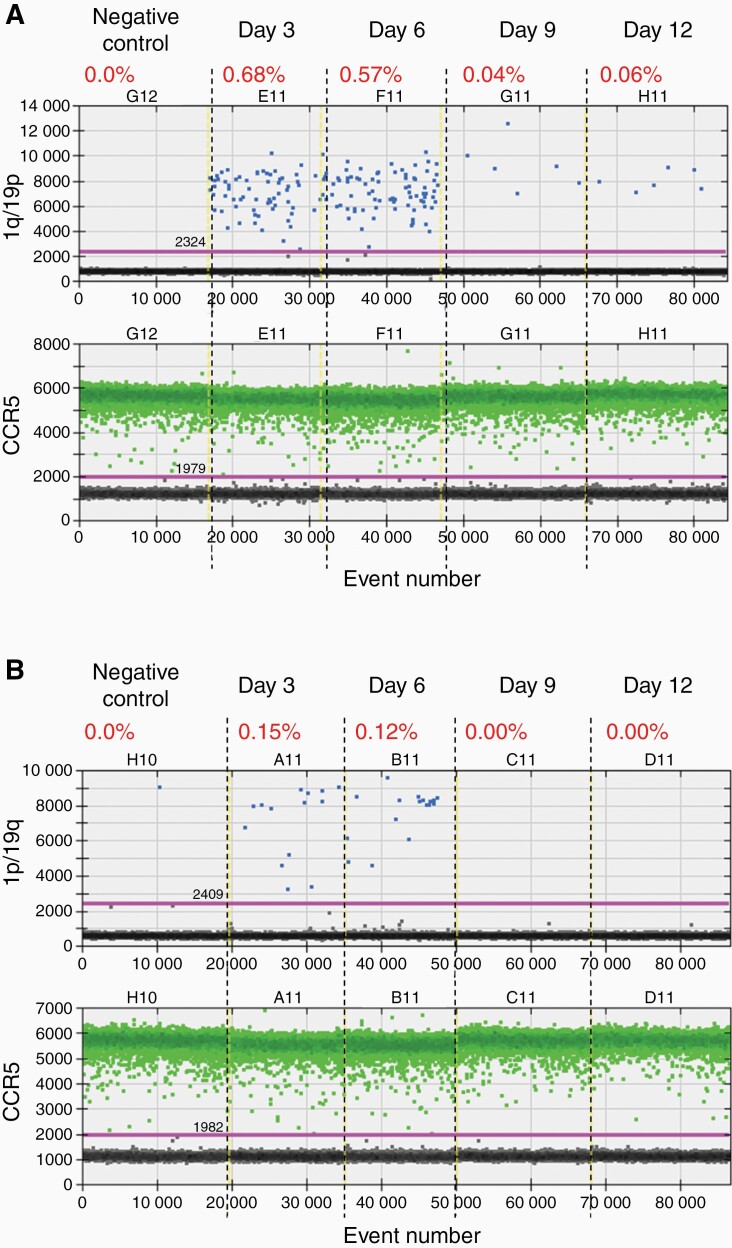
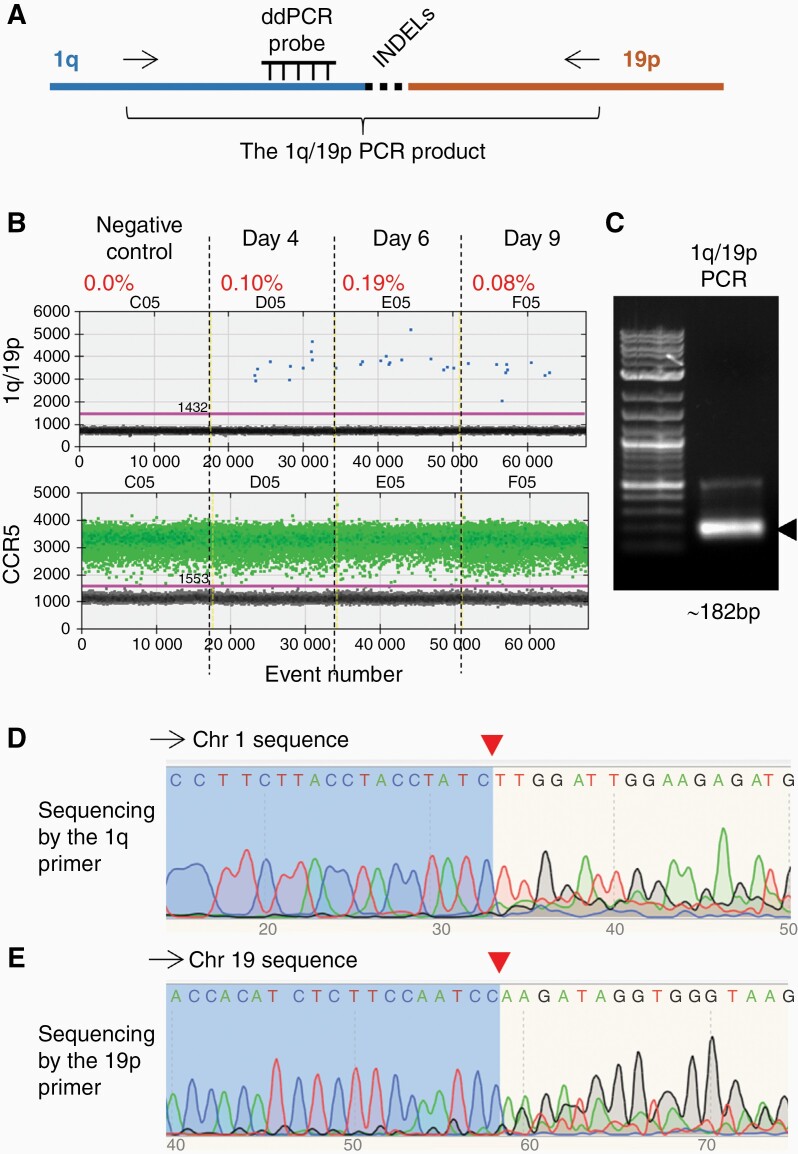
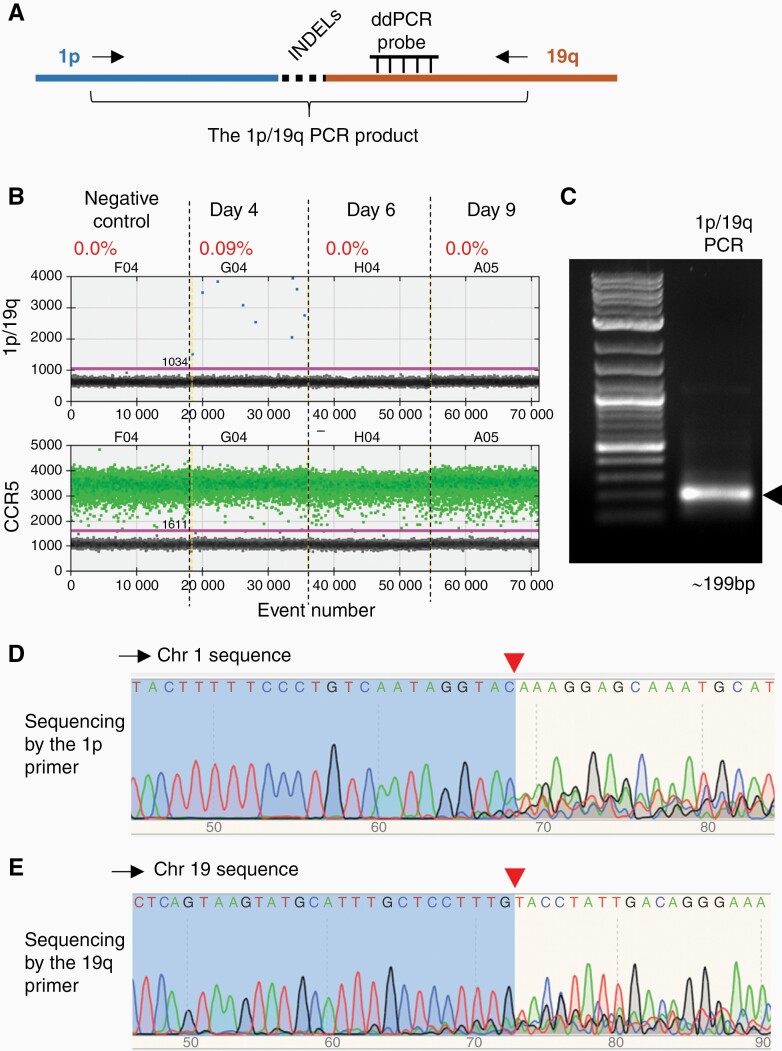
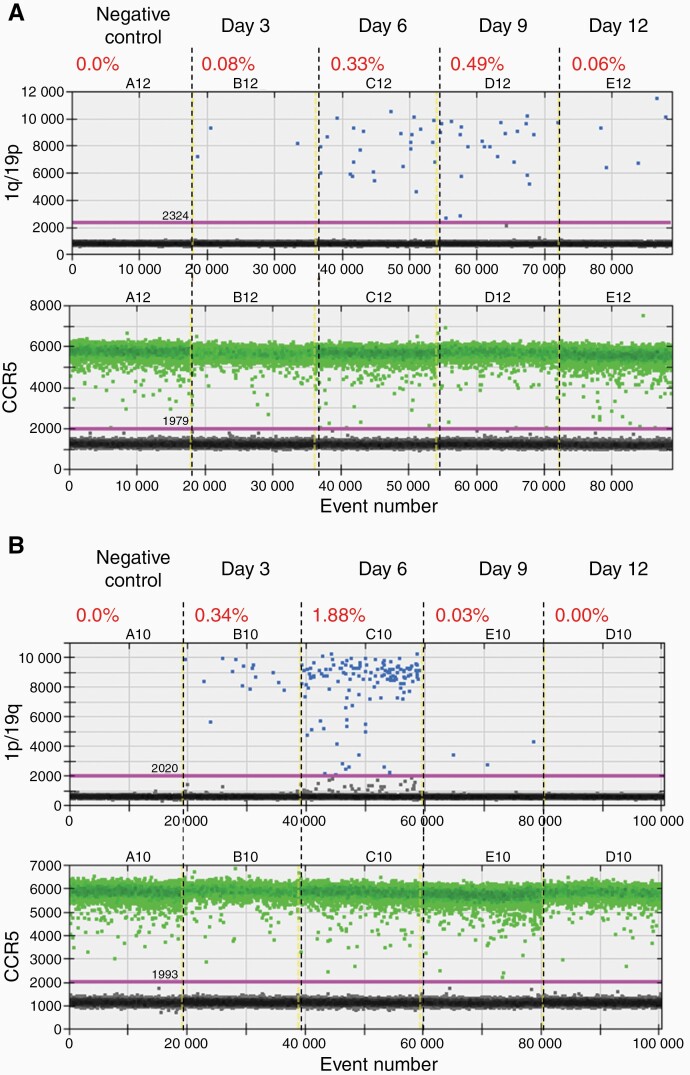
After translocation induction, we detected both 1p/19q and 1q/19p hybrid chromosomes by PCR amplification of the junction regions in HEK 293T, and U-251 and LN-229 glioblastoma cells. Sequencing analyses of the PCR products confirmed DNA sequences matching both chromosomes 1 and 19. Furthermore, the 1p/19q hybrid chromosome was rapidly lost in all tested cell lines. The 1q/19p hybrid chromosome also become undetectable over time likely due to cell survival disadvantage.
We demonstrated that t(1;19)(q10;p10) may be induced by CRISPR/Cas9-mediated genomic editing. This method represents an important step toward engineering the 1p/19q co-deletion to model oligodendrogliomas. This method may also be generalizable to engineering other cancer-relevant translocations, which may facilitate the understanding of translocation roles in cancer progression.
染色体易位在包括胶质瘤在内的多种人类癌症中均有发现,被认为是肿瘤发生的驱动力。染色体臂1p和19q的共同缺失是少突胶质细胞瘤的一个标志。在分子水平上,1p/19q共同缺失是由t(1;19)(q10;p10)导致的,这会导致同时形成一条包含1q和19p臂的杂合染色体。目前缺乏一种产生1p/19q共同缺失的方法,这阻碍了对1p/19q共同缺失如何促进胶质瘤发生的研究。
我们假设,染色体易位,如导致1p/19q共同缺失的t(1;19)(q10;p10),可能是通过使用CRISPR/Cas9同时在染色体1p和19q中引入DNA双链断裂(DSB)来诱导的。我们开发了一种基于CRISPR/Cas9的策略来诱导t(1;19)(q10;p10),并采用液滴数字PCR(ddPCR)检测来检测杂合的1q/19p和1p/19q染色体。
在易位诱导后,我们通过对HEK 293T、U - 251和LN - 229胶质母细胞瘤细胞中连接区域的PCR扩增检测到了1p/19q和1q/19p杂合染色体。对PCR产物的测序分析证实了与染色体1和19均匹配的DNA序列。此外,1p/19q杂合染色体在所有测试细胞系中迅速丢失。随着时间的推移,1q/19p杂合染色体也可能由于细胞生存劣势而变得无法检测到。
我们证明了t(1;19)(q10;p10)可能由CRISPR/Cas9介导的基因组编辑诱导产生。该方法是朝着构建1p/19q共同缺失以模拟少突胶质细胞瘤迈出的重要一步。该方法也可能推广到构建其他与癌症相关的易位,这可能有助于理解易位在癌症进展中的作用。