Department of Internal Medicine, Morsani College of Medicine, University of South Florida, Tampa, Florida.
Mahidol Vivax Research Unit, Mahidol University, Bangkok, Thailand.
Am J Trop Med Hyg. 2022 Oct 11;107(4_Suppl):138-151. doi: 10.4269/ajtmh.21-1267.
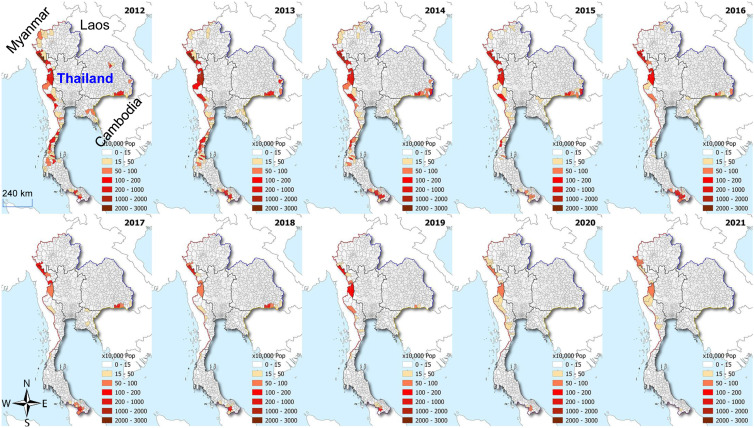
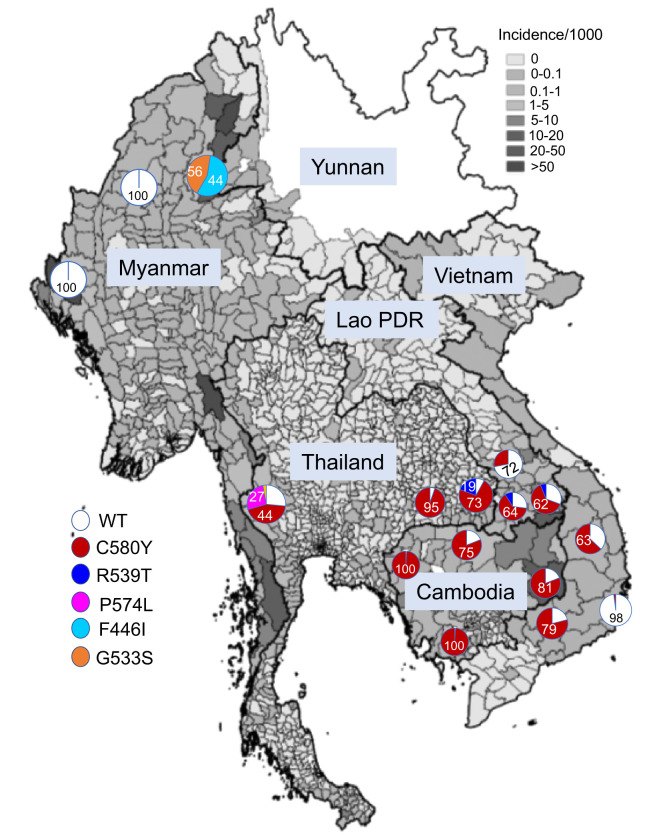
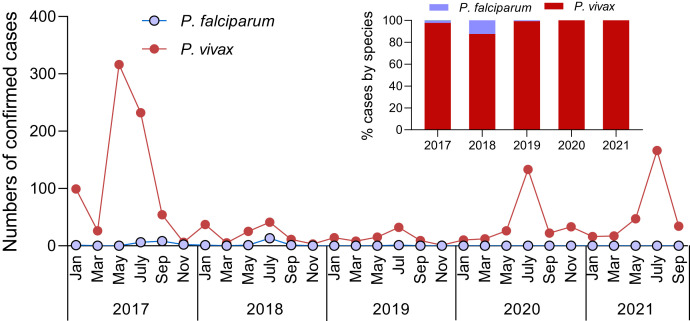
In the course of malaria elimination in the Greater Mekong Subregion (GMS), malaria epidemiology has experienced drastic spatiotemporal changes with residual transmission concentrated along international borders and the rising predominance of Plasmodium vivax. The emergence of Plasmodium falciparum parasites resistant to artemisinin and partner drugs renders artemisinin-based combination therapies less effective while the potential spread of multidrug-resistant parasites elicits concern. Vector behavioral changes and insecticide resistance have reduced the effectiveness of core vector control measures. In recognition of these problems, the Southeast Asian International Center of Excellence for Malaria Research (ICEMR) has been conducting multidisciplinary research to determine how human migration, antimalarial drug resistance, vector behavior, and insecticide resistance sustain malaria transmission at international borders. These efforts allow us to comprehensively understand the ecology of border malaria transmission and develop population genomics tools to identify and track parasite introduction. In addition to employing in vivo, in vitro, and molecular approaches to monitor the emergence and spread of drug-resistant parasites, we also use genomic and genetic methods to reveal novel mechanisms of antimalarial drug resistance of parasites. We also use omics and population genetics approaches to study insecticide resistance in malaria vectors and identify changes in mosquito community structure, vectorial potential, and seasonal dynamics. Collectively, the scientific findings from the ICEMR research activities offer a systematic view of the factors sustaining residual malaria transmission and identify potential solutions to these problems to accelerate malaria elimination in the GMS.
在大湄公河次区域(GMS)消除疟疾的过程中,疟疾流行病学经历了剧烈的时空变化,残留传播集中在边境地区,间日疟原虫的优势地位上升。恶性疟原虫对青蒿素和联合用药的抗药性的出现,使得青蒿素为基础的联合疗法效果降低,而多药耐药寄生虫的潜在传播令人担忧。病媒行为的变化和杀虫剂耐药性降低了核心病媒控制措施的效果。为了解决这些问题,东南亚疟疾国际卓越研究中心(ICEMR)一直在进行多学科研究,以确定人类迁移、抗疟药物耐药性、病媒行为和杀虫剂耐药性如何维持边境地区的疟疾传播。这些努力使我们能够全面了解边境疟疾传播的生态学,并开发种群基因组学工具来识别和追踪寄生虫的引入。除了采用体内、体外和分子方法来监测耐药寄生虫的出现和传播外,我们还利用基因组和遗传方法来揭示寄生虫抗疟药物耐药性的新机制。我们还利用组学和群体遗传学方法来研究疟疾媒介的杀虫剂耐药性,并确定蚊虫群落结构、媒介潜力和季节性动态的变化。总的来说,ICEMR 研究活动的科学发现提供了一个系统的视角,了解维持残留疟疾传播的因素,并确定解决这些问题的潜在方法,以加速 GMS 地区的疟疾消除。