College of Chemistry and Chemical Engineering, Xinyang key laboratory of functional nanomaterials for bioanalysis, Xinyang Normal University, 464000, Xinyang, P. R. China.
ChemistryOpen. 2022 Dec;11(12):e202200163. doi: 10.1002/open.202200163. Epub 2022 Oct 13.
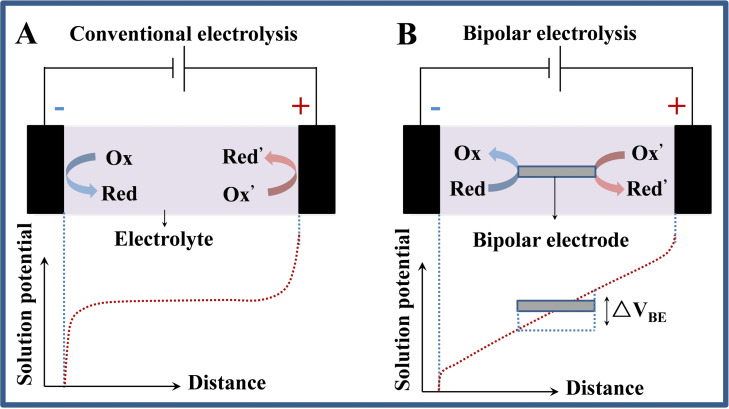
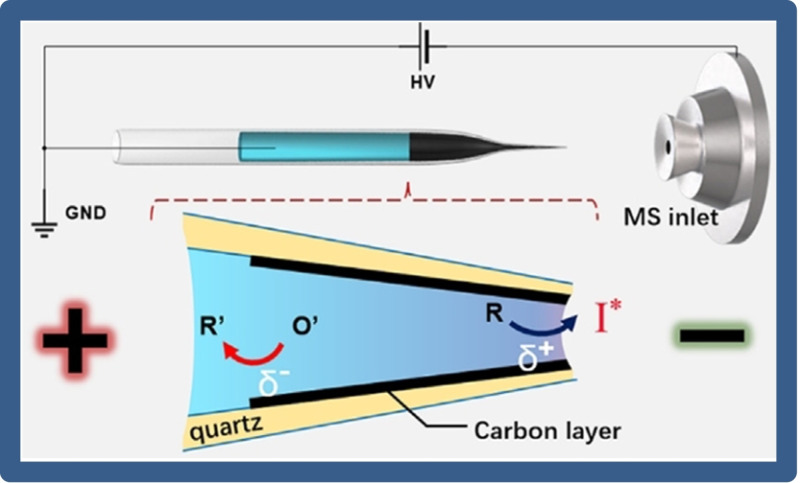
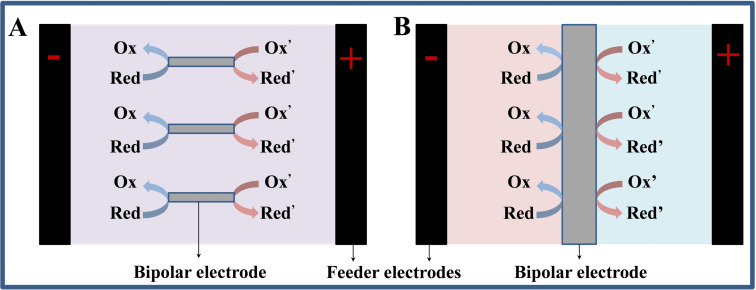
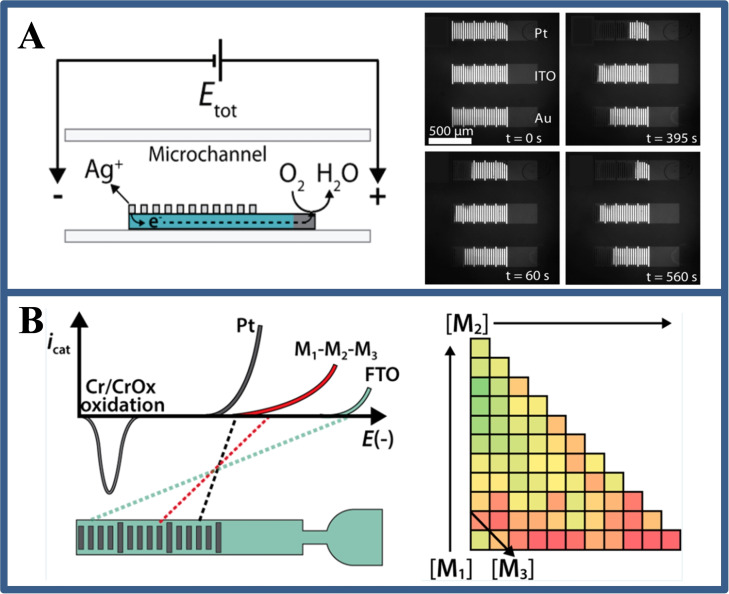
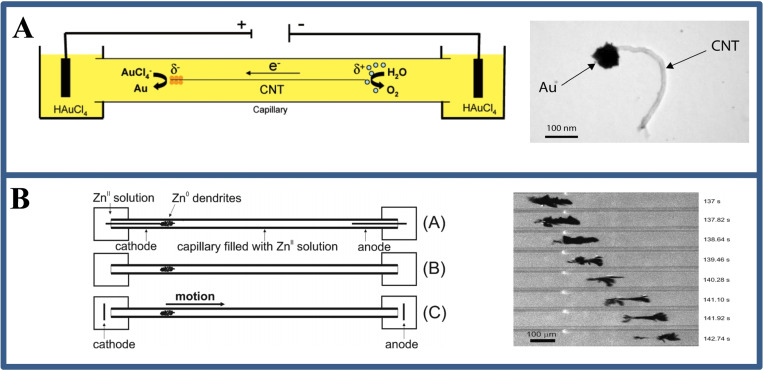
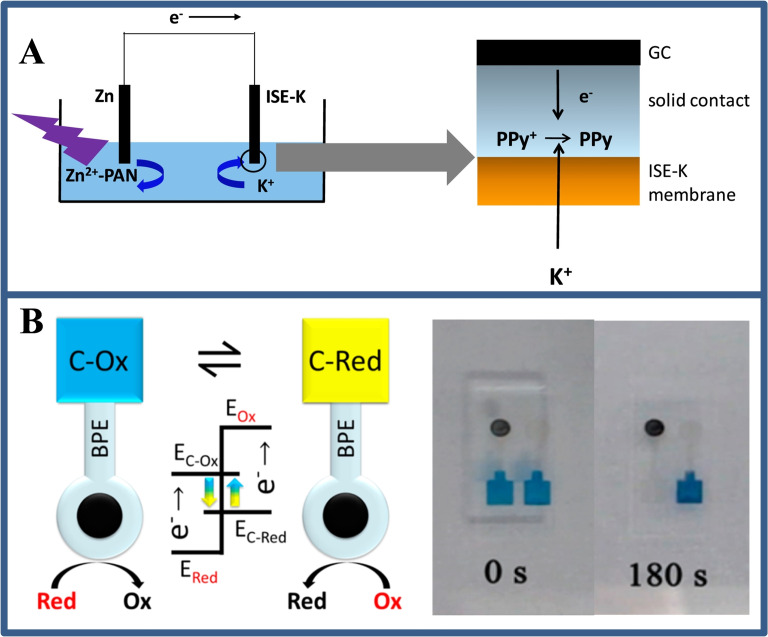
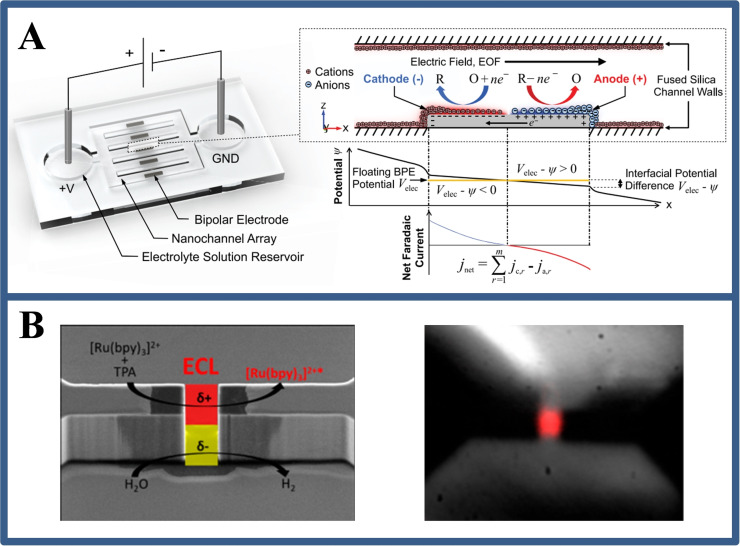
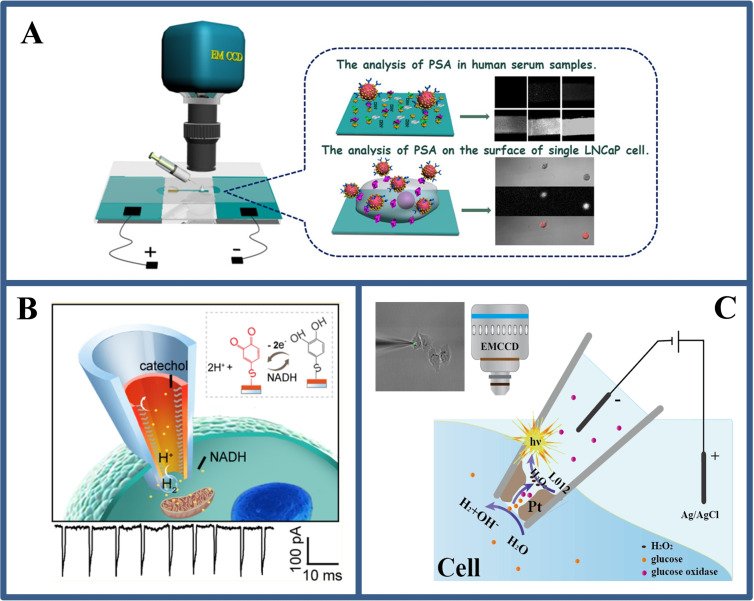
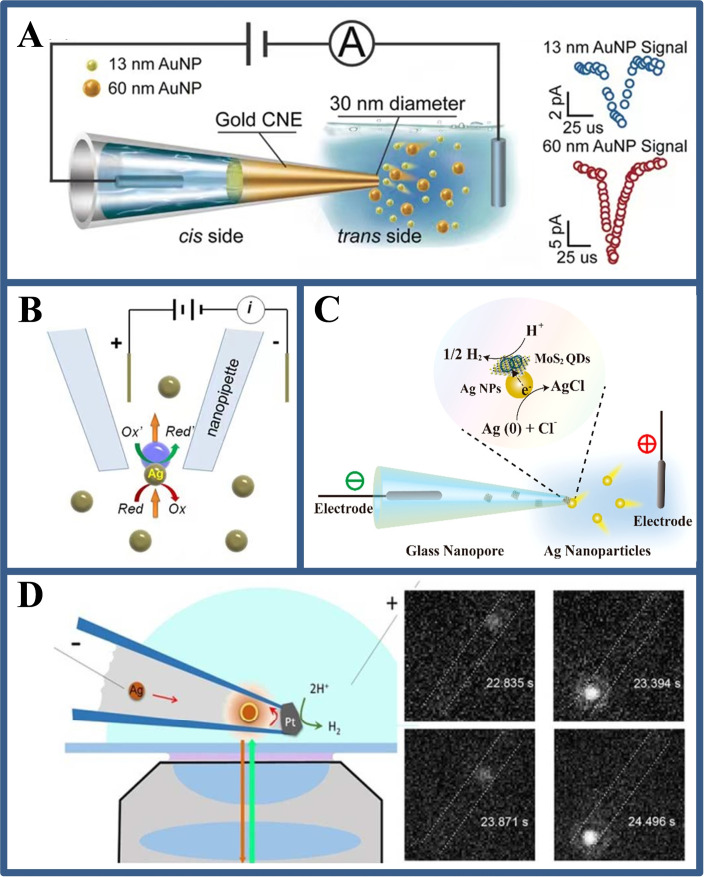
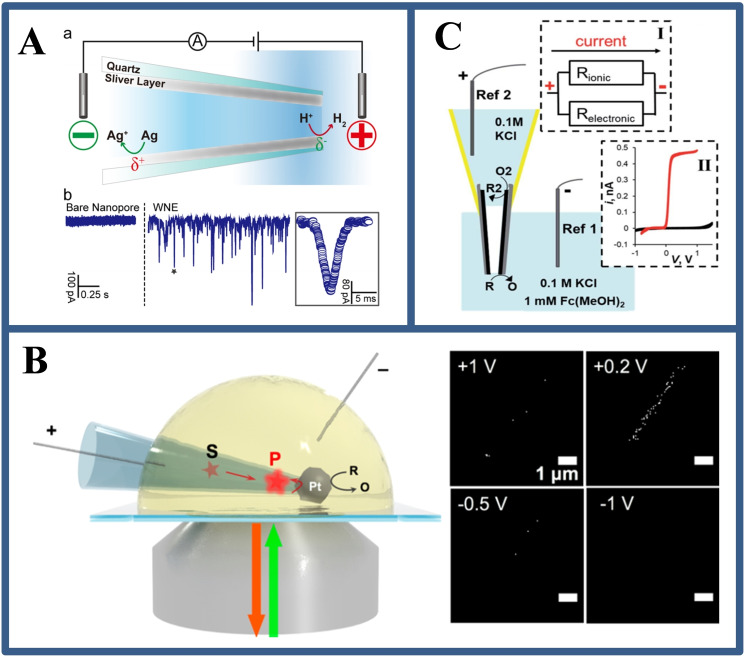
The understanding of areas for "classical" electrochemistry (including catalysis, electrolysis and sensing) and bio-electrochemistry at the micro/nanoscale are focus on the continued performance facilitations or the exploration of new features. In the recent 20 years, a different mode for driving electrochemistry has been proposed, which is called as bipolar electrochemistry (BPE). BPE has garnered attention owing to the interesting properties: (i) its wireless nature facilitates electrochemical sensing and high throughput analysis; (ii) the gradient potential distribution on the electrodes surface is a useful tool for preparing gradient surfaces and materials. These permit BPE to be used for modification and analytical applications on a micro/nanoscale surface. This review aims to introduce the principle and classification of BPE and BPE at micro/nanoscale; sort out its applications in electrocatalysis, electrosynthesis, electrophoresis, power supply and so on; explain the confined BPE and summarize its analytical application for single entities (single cells, single particles and single molecules), and discuss finally the important direction of micro/nanoscale BPE.
对微纳尺度“经典”电化学(包括催化、电解和传感)和生物电化学领域的理解,重点是不断促进性能或探索新功能。在最近的 20 年中,提出了一种驱动电化学的不同模式,称为双极电化学(BPE)。BPE 因其有趣的特性而受到关注:(i)其无线性质有利于电化学传感和高通量分析;(ii)电极表面的梯度电势分布是制备梯度表面和材料的有用工具。这些使得 BPE 可用于微纳尺度表面的修饰和分析应用。本文旨在介绍 BPE 和微纳尺度 BPE 的原理和分类;梳理其在电催化、电合成、电泳、电源等方面的应用;解释受限 BPE,并总结其对单个实体(单细胞、单颗粒和单分子)的分析应用,最后讨论微纳尺度 BPE 的重要方向。