Choi So-Young, Choi Bong-Hwan, Cha Ji-Hye, Lim Yeong-Jo, Sheet Sunirmal, Song Min-Ji, Ko Min-Jeong, Kim Na-Yeon, Kim Jong-Seok, Lee Seung-Jin, Oh Seok-Il, Park Won-Cheoul
Animal Genome and Bioinformatics, National Institute of Animal Science, Rural Development Administration, Iseo-myeon, Wanju-gun 55365, Korea.
Animal Genetic Resources Research Center, National Institute of Animal Science, Rural Development Administration, Hamyang 50000, Korea.
Animals (Basel). 2022 Sep 20;12(19):2499. doi: 10.3390/ani12192499.
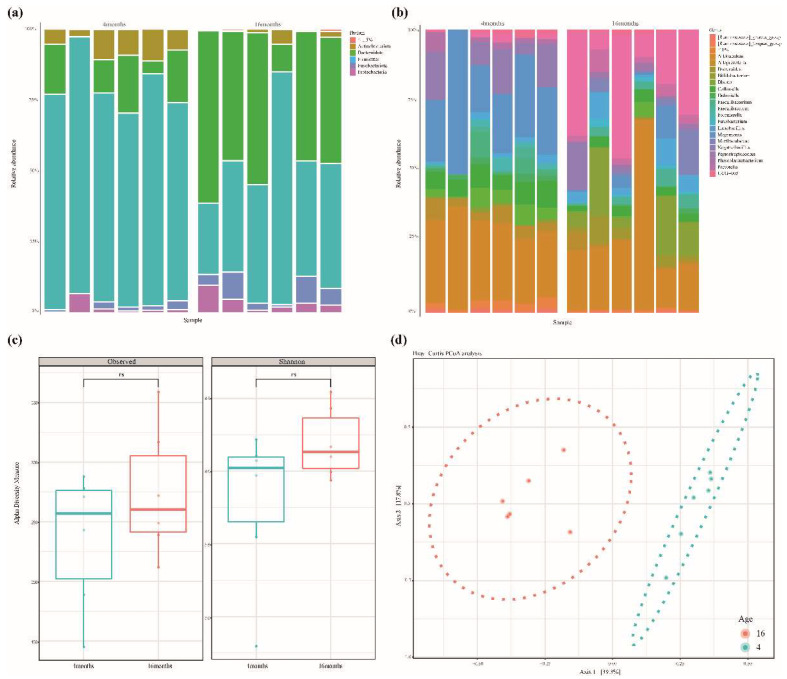
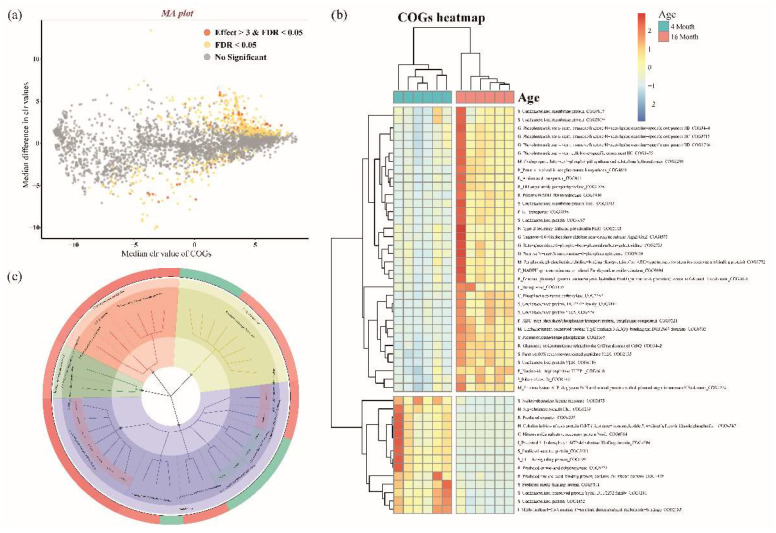
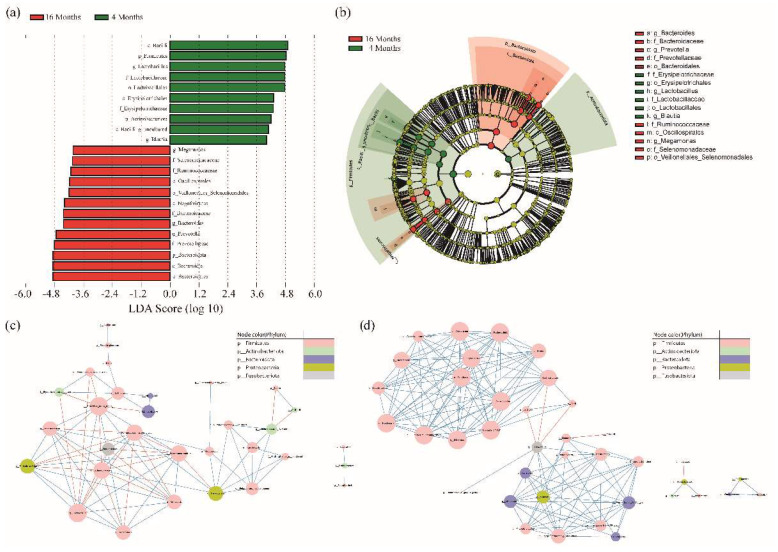
Gut microbiomes are well recognized to serve a variety of roles in health and disease, even though their functions are not yet completely understood. Previous studies have demonstrated that the microbiomes of juvenile and adult dogs have significantly different compositions and characteristics. However, there is still a scarcity of basic microbiome research in dogs. In this study, we aimed to advance our understanding by confirming the difference in fecal microbiome between young and adult dogs by analyzing the feces of 4-month and 16-month-old Jindo dogs, a domestic Korean breed. Microbiome data were generated and examined for the two age groups using 16S rRNA analysis. Comparison results revealed that the 16-month-old group presented a relatively high distribution of , whereas the 4-month-old group presented a comparatively high distribution of the genus. Microbial function prediction analyses confirmed the relative abundance of lipid metabolism in 4-month-old dogs. In 16-month-old dogs, glucose metabolism was determined using microbial function prediction analyses. This implies that the functional microbiome changes similarly to the latter in adults compared with childhood. Overall, we discovered compositional and functional variations between genes of the gut microbial population in juveniles and adults. These microbial community profiles can be used as references for future research on the microbiome associated with health and development in the canine population.
肠道微生物群在健康和疾病中发挥着多种作用,这一点已得到广泛认可,尽管其功能尚未完全明确。先前的研究表明,幼犬和成年犬的微生物群在组成和特征上存在显著差异。然而,犬类的基础微生物群研究仍然匮乏。在本研究中,我们旨在通过分析韩国本土品种珍岛犬4个月和16个月大时的粪便,确认幼犬和成年犬粪便微生物群的差异,从而增进我们的理解。使用16S rRNA分析为两个年龄组生成并检查微生物群数据。比较结果显示,16个月大的组呈现出相对较高的 分布,而4个月大的组呈现出相对较高的 属分布。微生物功能预测分析证实4个月大的犬类中脂质代谢的相对丰度较高。在16个月大的犬类中,通过微生物功能预测分析确定了葡萄糖代谢情况。这意味着与幼年相比,成年犬的功能性微生物群变化与后者相似。总体而言,我们发现了幼犬和成年犬肠道微生物种群基因在组成和功能上的差异。这些微生物群落概况可作为未来犬类种群中与健康和发育相关的微生物群研究的参考。