Departamento de Neurodesarrollo y Fisiología, División de Neurociencias, Instituto de Fisiología Celular, UNAM, Mexico City 04510, Mexico.
Departamento de Biología Celular y Tisular, Facultad de Medicina, UNAM, Mexico City 04510, Mexico.
Cells. 2022 Oct 7;11(19):3153. doi: 10.3390/cells11193153.
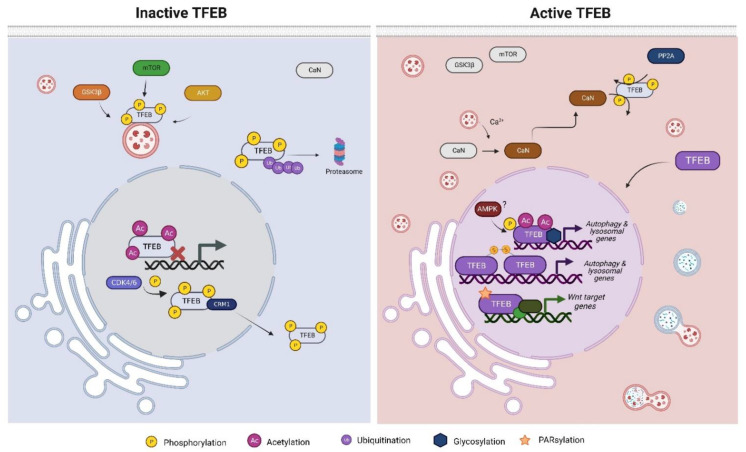
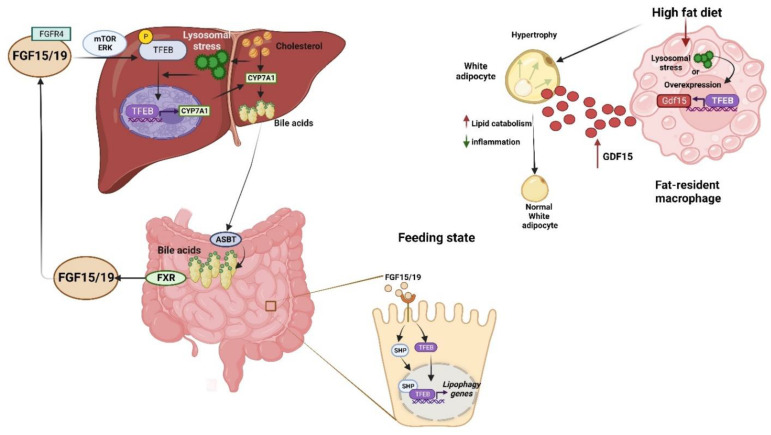
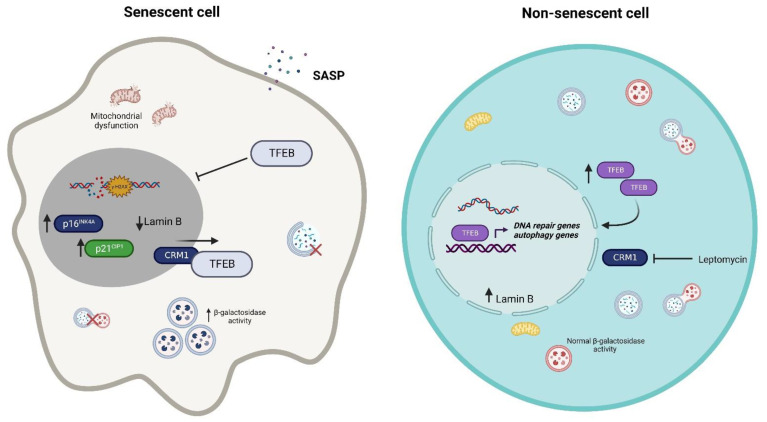
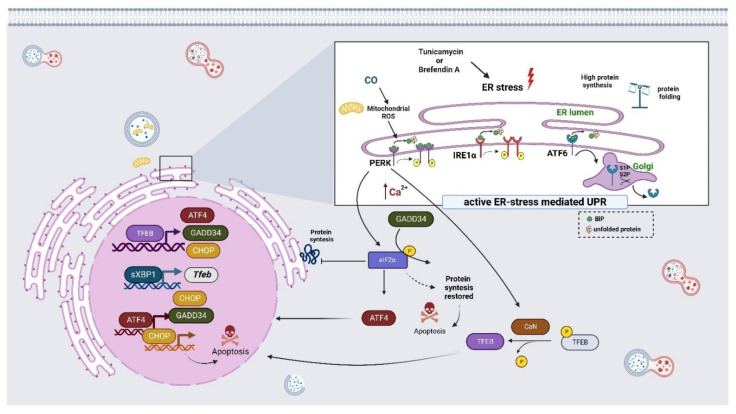
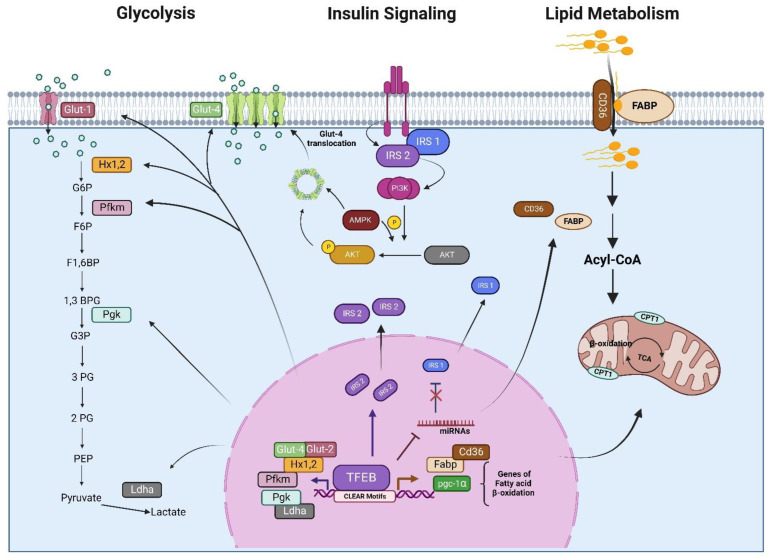
Transcription factor EB (TFEB) is considered the master transcriptional regulator of autophagy and lysosomal biogenesis, which regulates target gene expression through binding to CLEAR motifs. TFEB dysregulation has been linked to the development of numerous pathological conditions; however, several other lines of evidence show that TFEB might be a point of convergence of diverse signaling pathways and might therefore modulate other important biological processes such as cellular senescence, DNA repair, ER stress, carbohydrates, and lipid metabolism and WNT signaling-related processes. The regulation of TFEB occurs predominantly at the post-translational level, including phosphorylation, acetylation, SUMOylating, PARsylation, and glycosylation. It is noteworthy that TFEB activation is context-dependent; therefore, its regulation is subjected to coordinated mechanisms that respond not only to nutrient fluctuations but also to stress cell programs to ensure proper cell homeostasis and organismal health. In this review, we provide updated insights into novel post-translational modifications that regulate TFEB activity and give an overview of TFEB beyond its widely known role in autophagy and the lysosomal pathway, thus opening the possibility of considering TFEB as a potential therapeutic target.
转录因子 EB(TFEB)被认为是自噬和溶酶体生物发生的主要转录调控因子,通过与 CLEAR 基序结合来调节靶基因的表达。TFEB 的失调与许多病理状况的发展有关;然而,其他几条证据表明,TFEB 可能是多种信号通路的汇聚点,因此可能调节其他重要的生物学过程,如细胞衰老、DNA 修复、内质网应激、碳水化合物和脂质代谢以及 WNT 信号相关过程。TFEB 的调节主要发生在翻译后水平,包括磷酸化、乙酰化、SUMO 化、PARsylation 和糖基化。值得注意的是,TFEB 的激活是上下文依赖的;因此,它的调节受到协调机制的控制,这些机制不仅对营养波动做出反应,而且对应激细胞程序做出反应,以确保适当的细胞内稳态和生物体健康。在这篇综述中,我们提供了对调节 TFEB 活性的新的翻译后修饰的最新见解,并概述了 TFEB 除了其在自噬和溶酶体途径中广泛已知的作用之外的作用,从而为将 TFEB 视为潜在的治疗靶点开辟了可能性。