NHC Key Laboratory of Human Disease Comparative Medicine, Beijing Engineering Research Center for Experimental Animal Models of Human Critical Diseases, International Center for Technology and Innovation of Animal Model, Comparative Medicine Center, Institute of Laboratory Animal Sciences, Chinese Academy of Medical Sciences (CAMS) & Peking Union Medical College (PUMC), Beijing 100006, China.
Changping National Laboratory (CPNL), Beijing 102206, China.
Int J Mol Sci. 2022 Sep 30;23(19):11560. doi: 10.3390/ijms231911560.
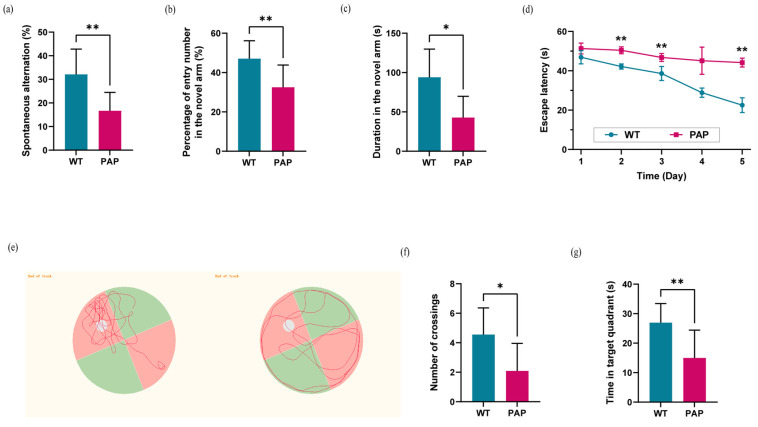
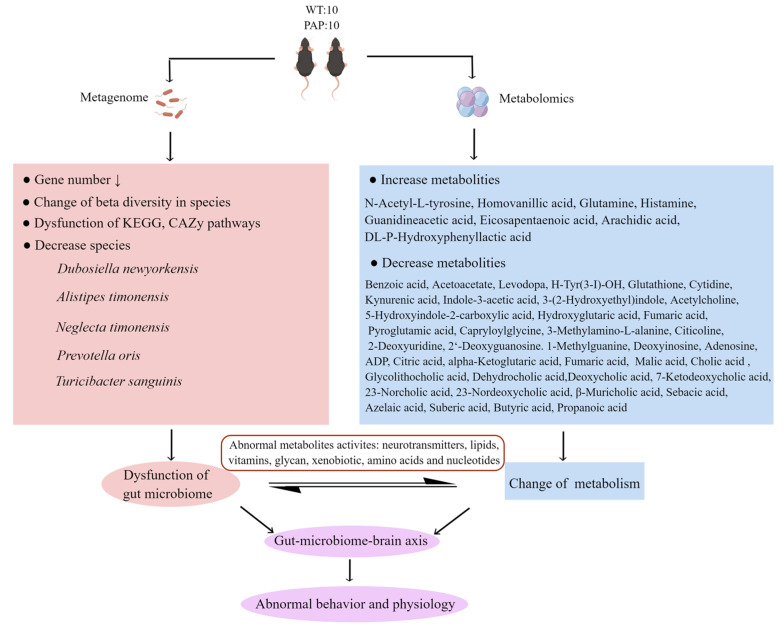
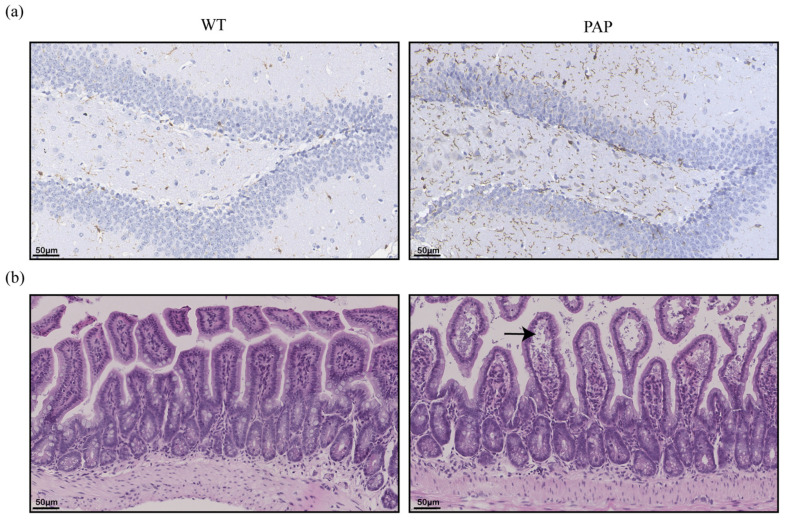
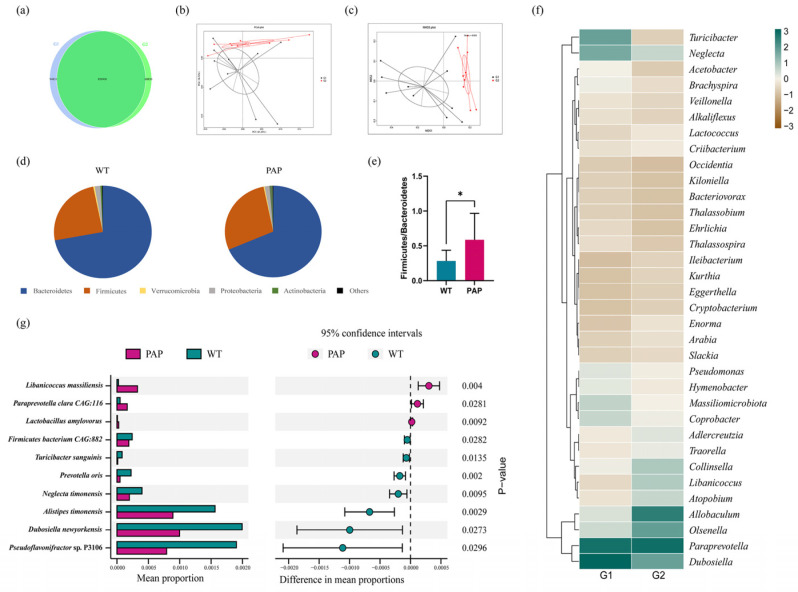
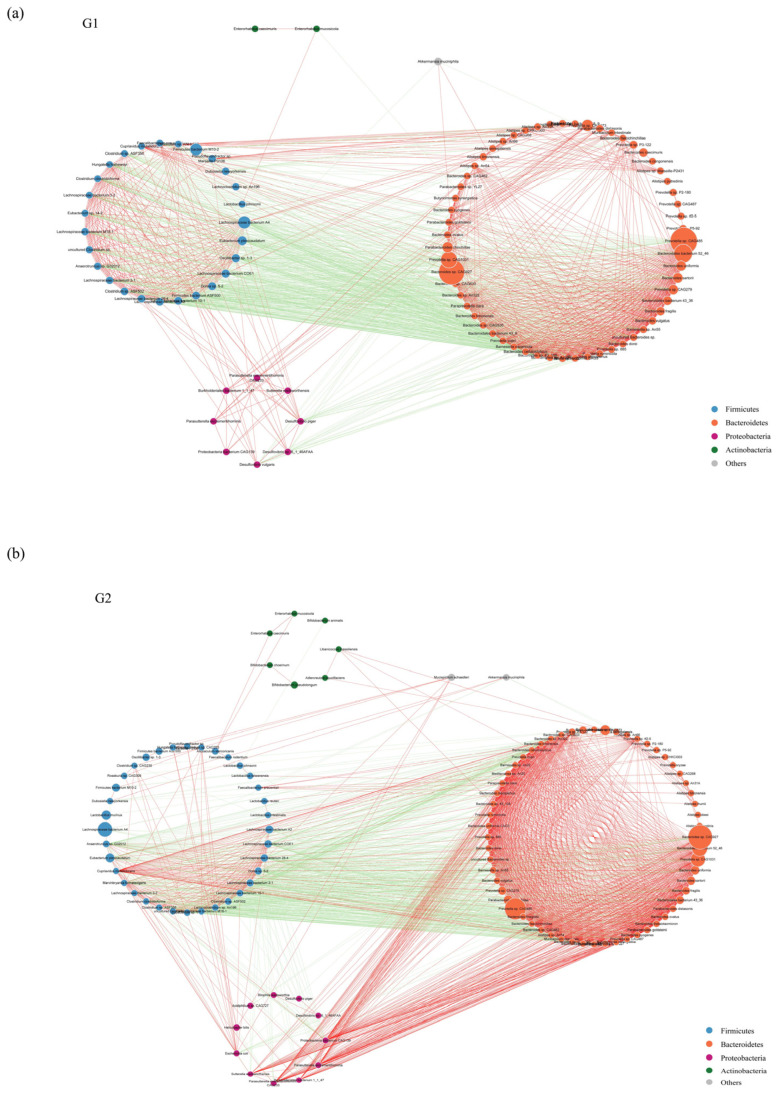
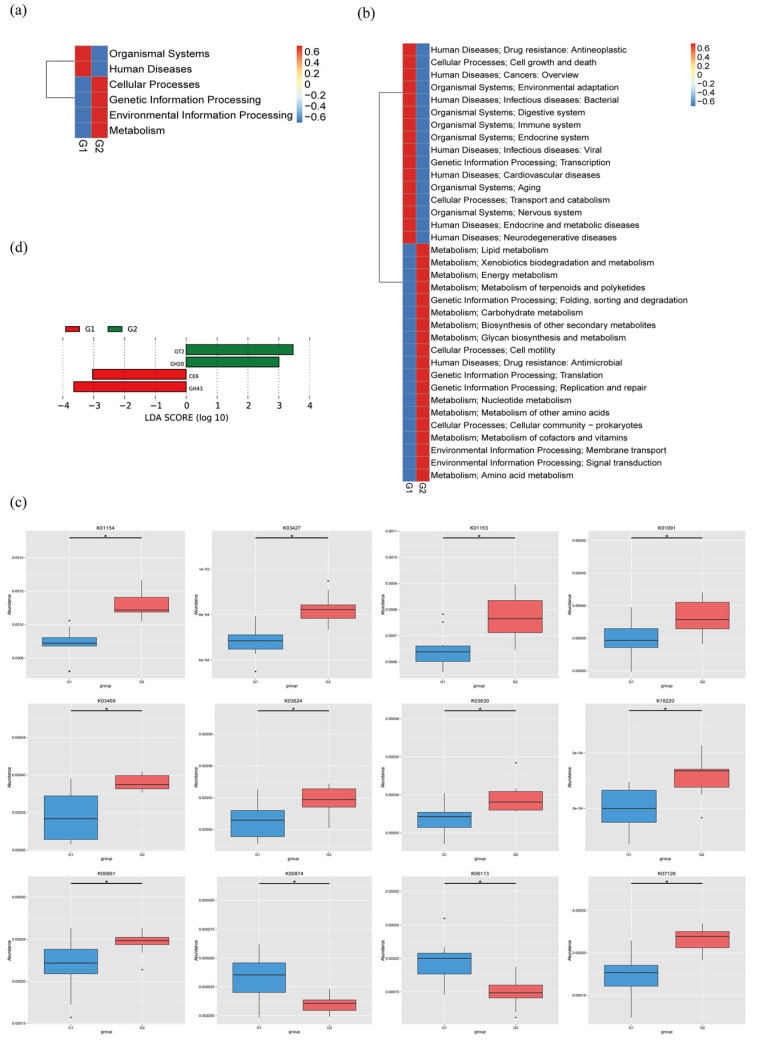
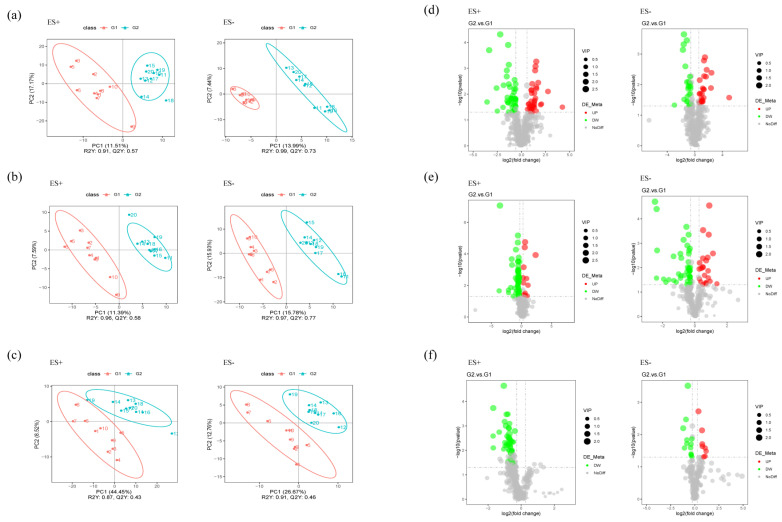
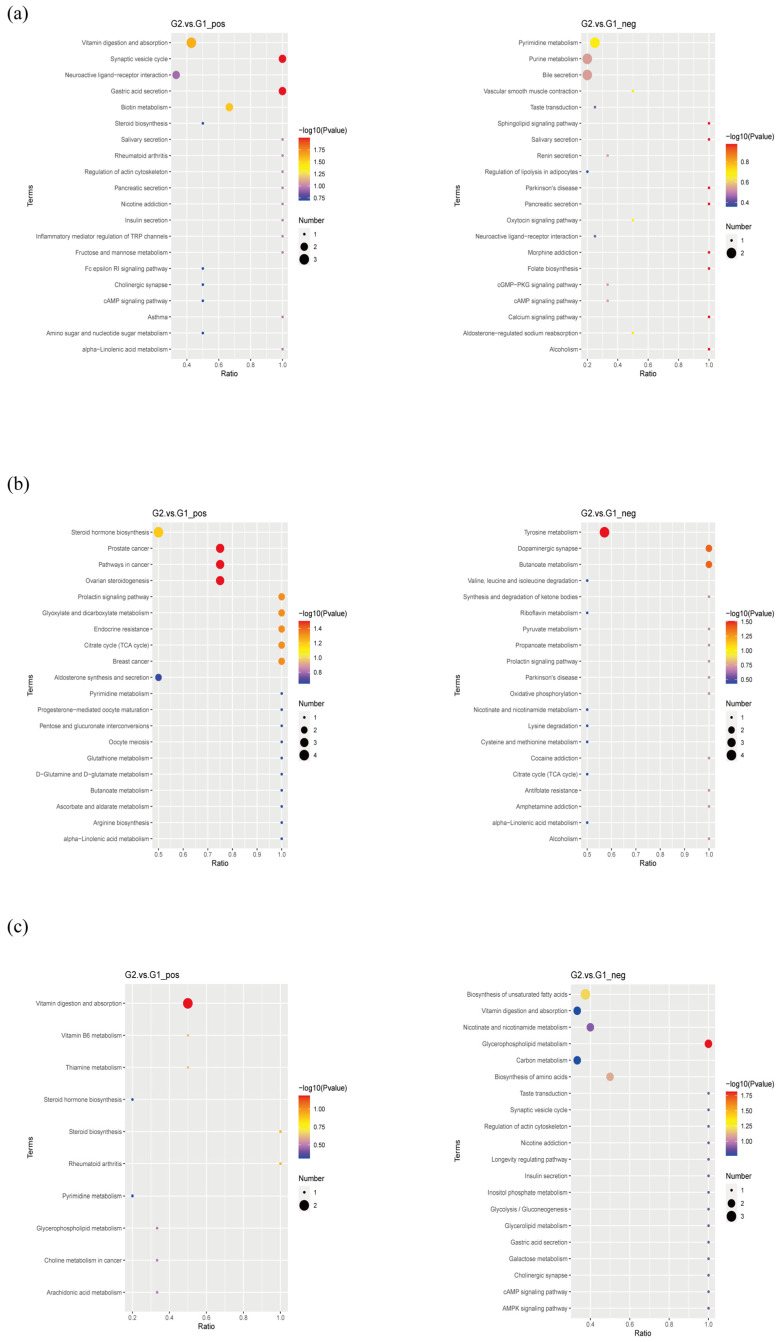
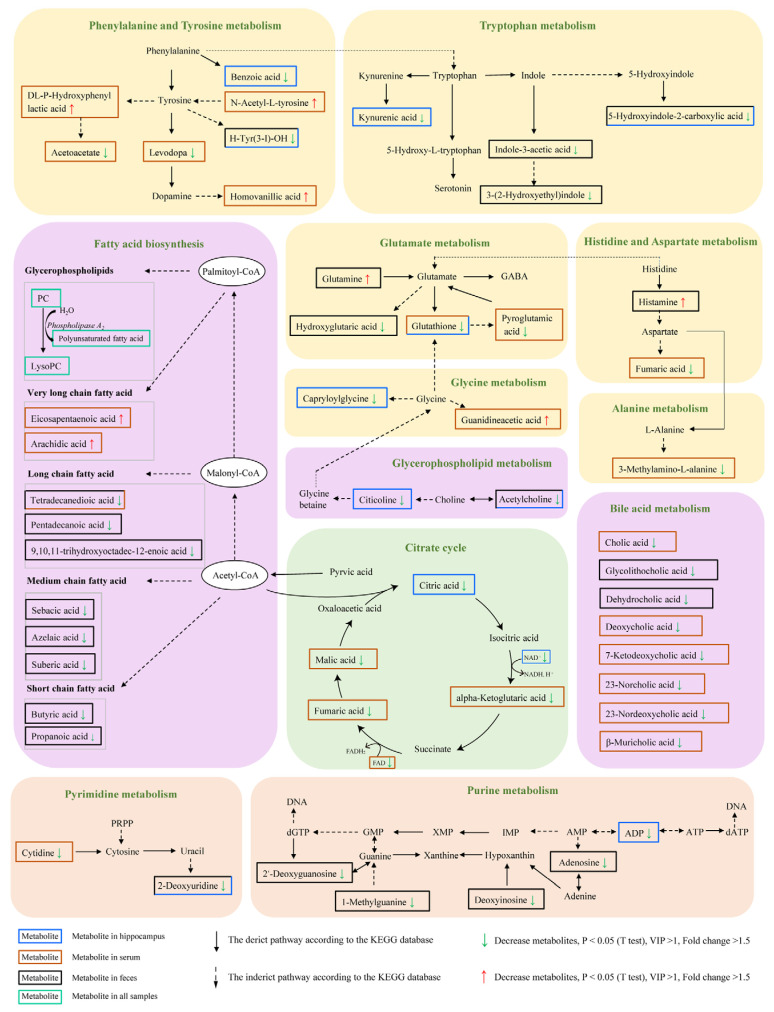
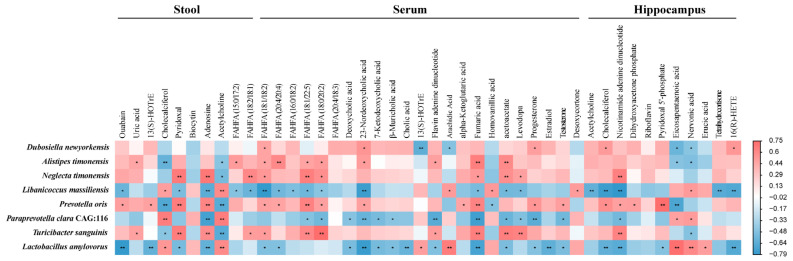
A common symptom in Alzheimer's disease (AD) is cognitive decline, of which the potential pathogenesis remains unclear. In order to understand the mechanism of gut microbiota in AD, it is necessary to clarify the relationship between gut microbiota and metabolites. Behavioral tests, pathological examination, metagenomics, and metabolomics were applied to analyze the difference of gut microbiota and metabolome between APP/PS1 (PAP) mice with cognitive decline and age-matched controls, and their possible correlations. Our results showed that PAP mice and health mice had different structures of the bacterial communities in the gut. The abundances and diversities of the bacterial communities in health mice were higher than in PAP mice by metagenomics analysis. The abundances of , , and were significantly increased in PAP mice, while the abundances of , , and were greatly reduced. Furthermore, PAP mice possessed peculiar metabolic phenotypes in stool, serum, and hippocampus relative to WT mice, as is demonstrated by alterations in neurotransmitters metabolism, lipid metabolism, aromatic amino acids metabolism, energy metabolism, vitamin digestion and absorption, and bile metabolism. Microbiota-host metabolic correlation analysis suggests that abnormal metabolism in stool, serum, and hippocampus of PAP mice may be modulated by the gut microbiota, especially , , and . Therefore, abnormal metabolism activity is associated with gut microbiota in Alzheimer's disease mice. Our results imply that modifying host metabolism through targeting gut microbiota may be a novel and viable strategy for the prevention and treatment of AD in the future.
阿尔茨海默病(AD)的一个常见症状是认知能力下降,其潜在发病机制尚不清楚。为了了解肠道微生物群在 AD 中的作用机制,有必要阐明肠道微生物群与代谢物之间的关系。应用行为学测试、病理学检查、宏基因组学和代谢组学分析认知下降的 APP/PS1(PAP)小鼠与年龄匹配对照之间肠道微生物群和代谢组的差异及其可能的相关性。我们的结果表明,PAP 小鼠和健康小鼠的肠道细菌群落结构存在差异。通过宏基因组学分析,健康小鼠的细菌群落丰度和多样性高于 PAP 小鼠。PAP 小鼠中 、 、 的丰度显著增加,而 、 、 的丰度则大大降低。此外,与 WT 小鼠相比,PAP 小鼠在粪便、血清和海马体中具有独特的代谢表型,表现为神经递质代谢、脂质代谢、芳香族氨基酸代谢、能量代谢、维生素消化吸收和胆汁代谢的改变。微生物群-宿主代谢相关性分析表明,PAP 小鼠粪便、血清和海马体中的异常代谢可能受肠道微生物群的调节,特别是 、 、 。因此,AD 小鼠的异常代谢活动与肠道微生物群有关。我们的研究结果表明,通过靶向肠道微生物群来调节宿主代谢可能是预防和治疗 AD 的一种新的可行策略。