UNH, INRAE, Université Clermont Auvergne, 63000 Clermont-Ferrand, France.
Faculty of Mathematics and Natural Sciences, University of Wuppertal, 42119 Wuppertal, Germany.
Int J Mol Sci. 2022 Oct 2;23(19):11688. doi: 10.3390/ijms231911688.
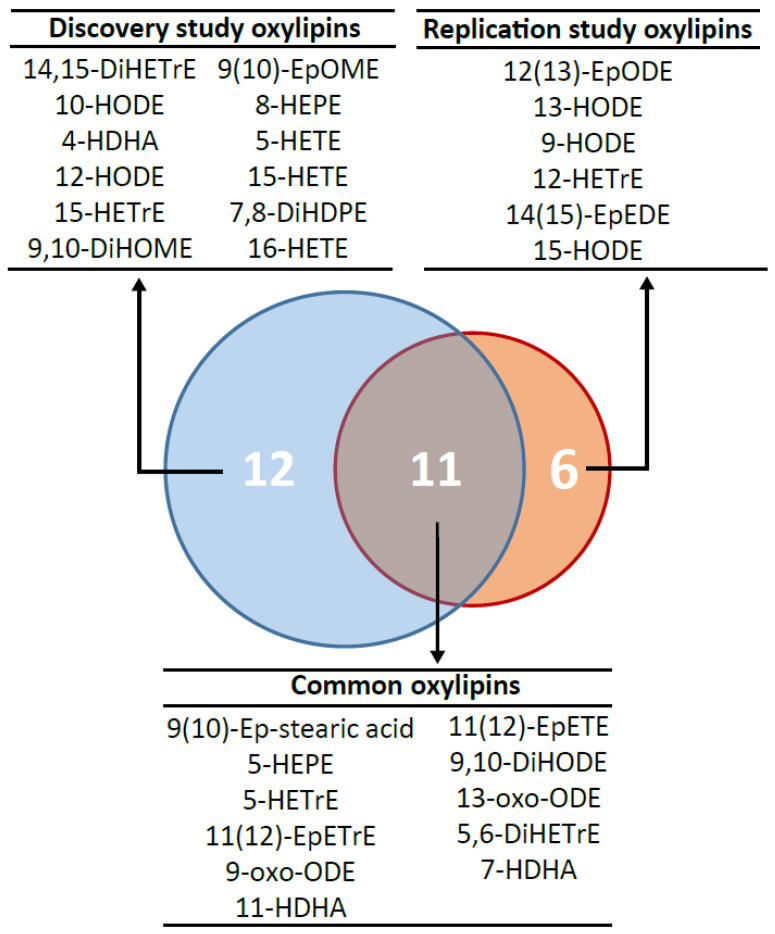
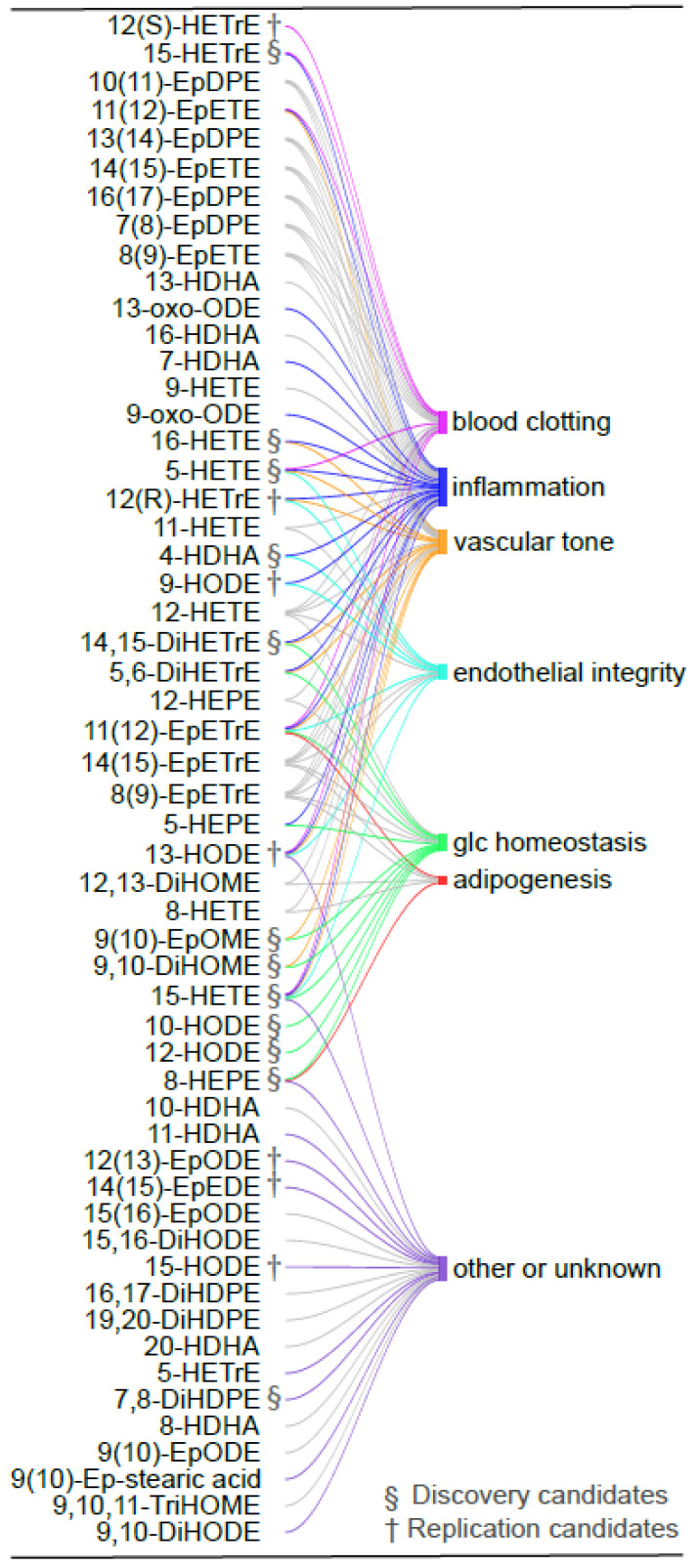
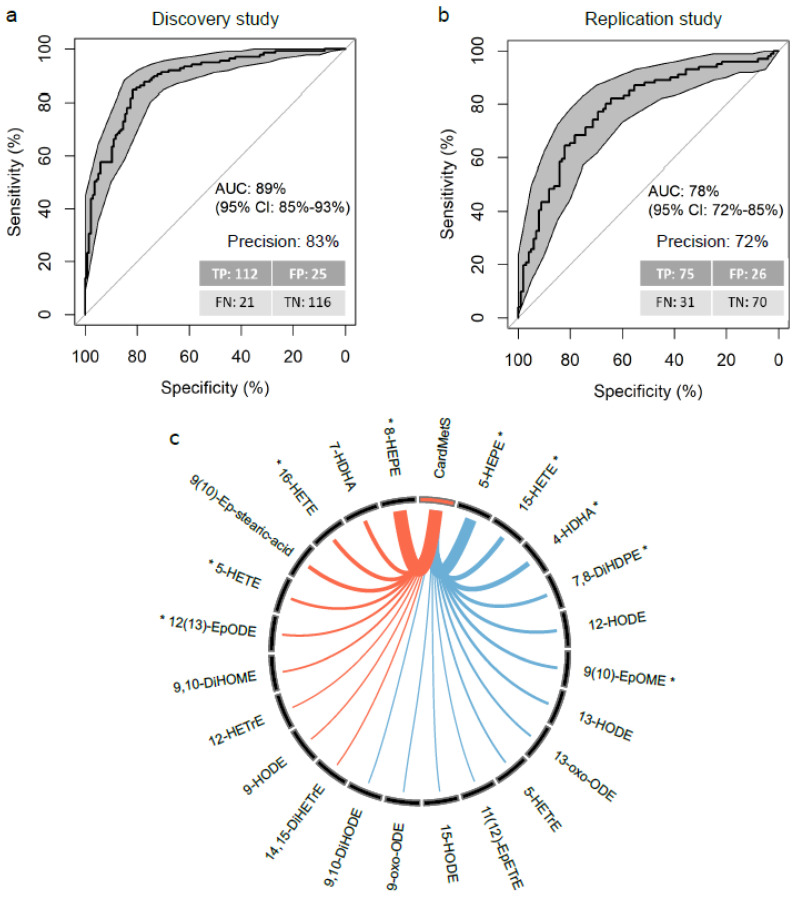
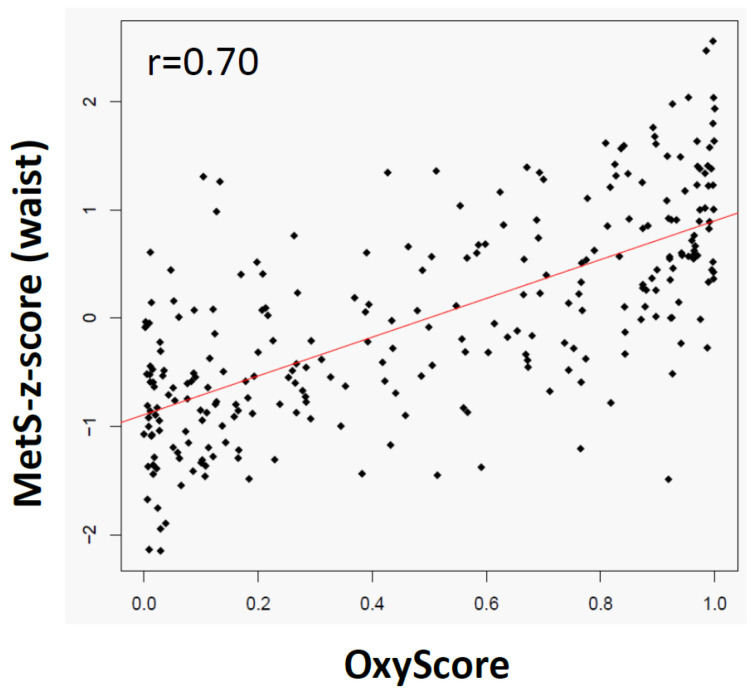
Metabolic syndrome (MetS) is a complex condition encompassing a constellation of cardiometabolic abnormalities. Oxylipins are a superfamily of lipid mediators regulating many cardiometabolic functions. Plasma oxylipin signature could provide a new clinical tool to enhance the phenotyping of MetS pathophysiology. A high-throughput validated mass spectrometry method, allowing for the quantitative profiling of over 130 oxylipins, was applied to identify and validate the oxylipin signature of MetS in two independent nested case/control studies involving 476 participants. We identified an oxylipin signature of MetS (coined OxyScore), including 23 oxylipins and having high performances in classification and replicability (cross-validated AUC of 89%, 95% CI: 85-93% and 78%, 95% CI: 72-85% in the Discovery and Replication studies, respectively). Correlation analysis and comparison with a classification model incorporating the MetS criteria showed that the oxylipin signature brings consistent and complementary information to the clinical criteria. Being linked with the regulation of various biological processes, the candidate oxylipins provide an integrative phenotyping of MetS regarding the activation and/or negative feedback regulation of crucial molecular pathways. This may help identify patients at higher risk of cardiometabolic diseases. The oxylipin signature of patients with metabolic syndrome enhances MetS phenotyping and may ultimately help to better stratify the risk of cardiometabolic diseases.
代谢综合征(MetS)是一种包含多种心血管代谢异常的复杂病症。氧化脂类是调节许多心血管代谢功能的脂质介质超家族。血浆氧化脂类特征可提供一种新的临床工具,以增强代谢综合征病理生理学的表型分析。一种高通量验证的质谱方法,可定量分析超过 130 种氧化脂类,用于在涉及 476 名参与者的两项独立嵌套病例对照研究中识别和验证代谢综合征的氧化脂类特征。我们确定了代谢综合征的氧化脂类特征(命名为 OxyScore),包括 23 种氧化脂类,具有较高的分类和可重复性(在发现和复制研究中,交叉验证 AUC 分别为 89%,95%CI:85-93%和 78%,95%CI:72-85%)。相关性分析和与包含代谢综合征标准的分类模型比较表明,氧化脂类特征为临床标准提供了一致且互补的信息。候选氧化脂类与各种生物过程的调节有关,为代谢综合征提供了一种综合表型,涉及关键分子途径的激活和/或负反馈调节。这可能有助于识别心血管代谢疾病风险较高的患者。代谢综合征患者的氧化脂类特征增强了代谢综合征的表型分析,最终可能有助于更好地分层心血管代谢疾病的风险。