Department of Obstetrics and Gynecology, Peking University First Hospital, No. 8 Xishiku Street, Beijing 100034, China.
School of Life Sciences, Tiangong University, Tianjin 300387, China.
Int J Mol Sci. 2022 Oct 6;23(19):11892. doi: 10.3390/ijms231911892.
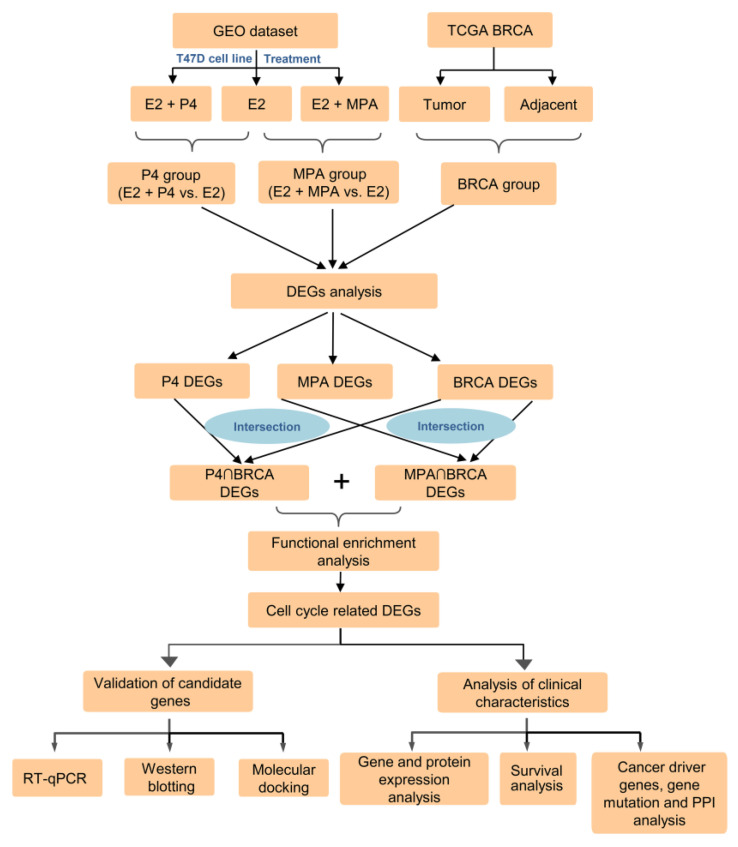
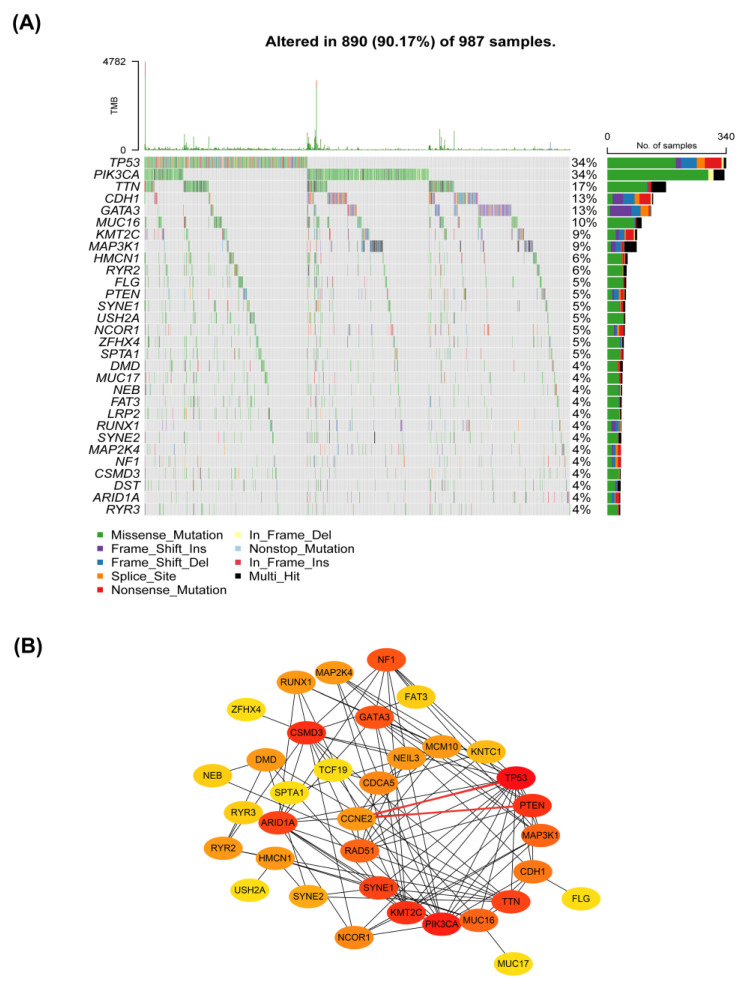
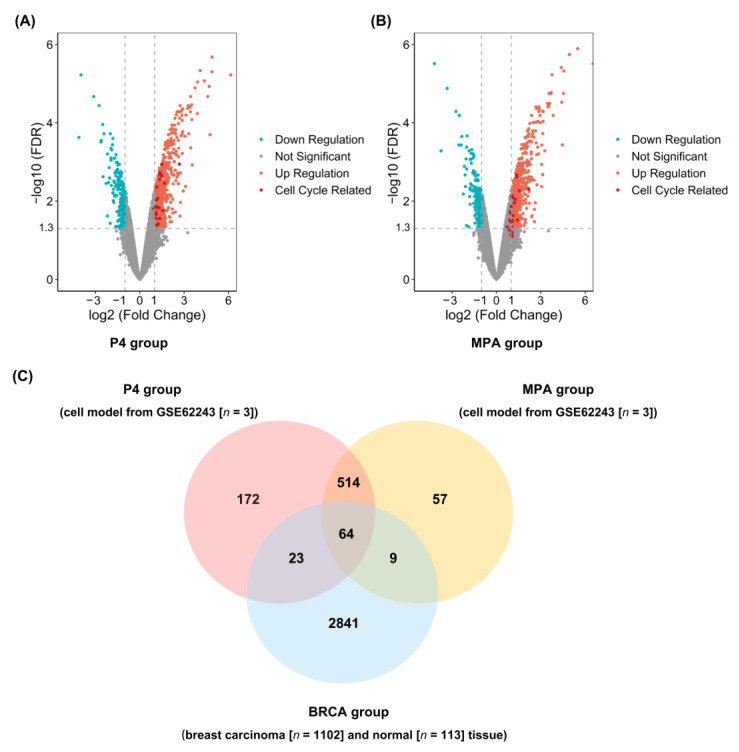
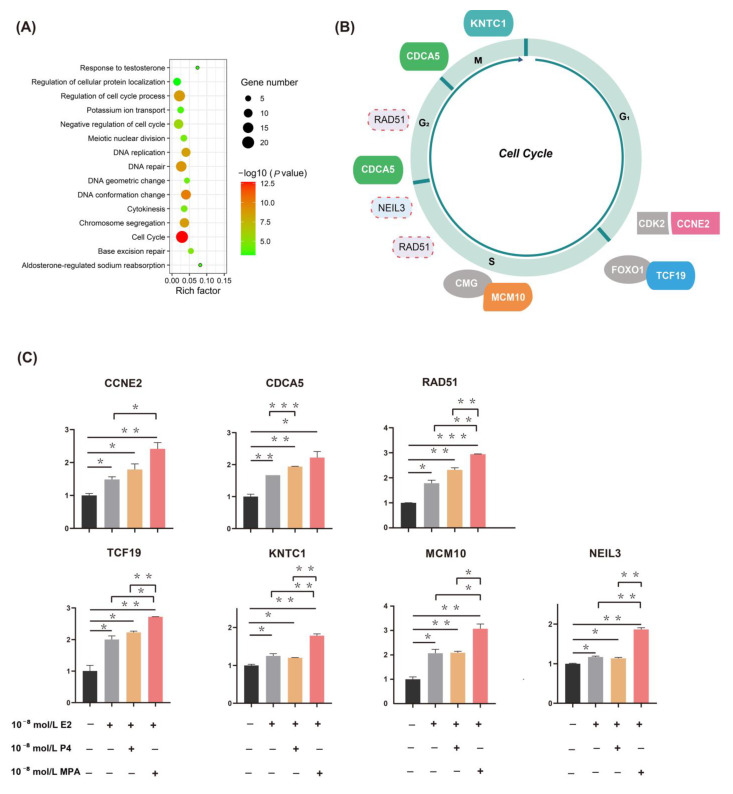
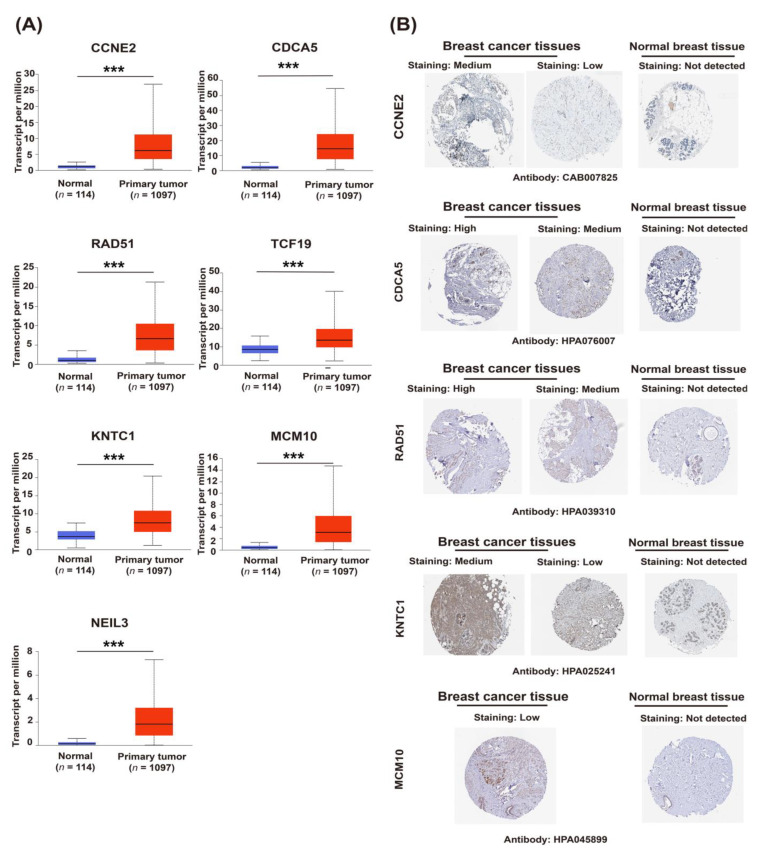
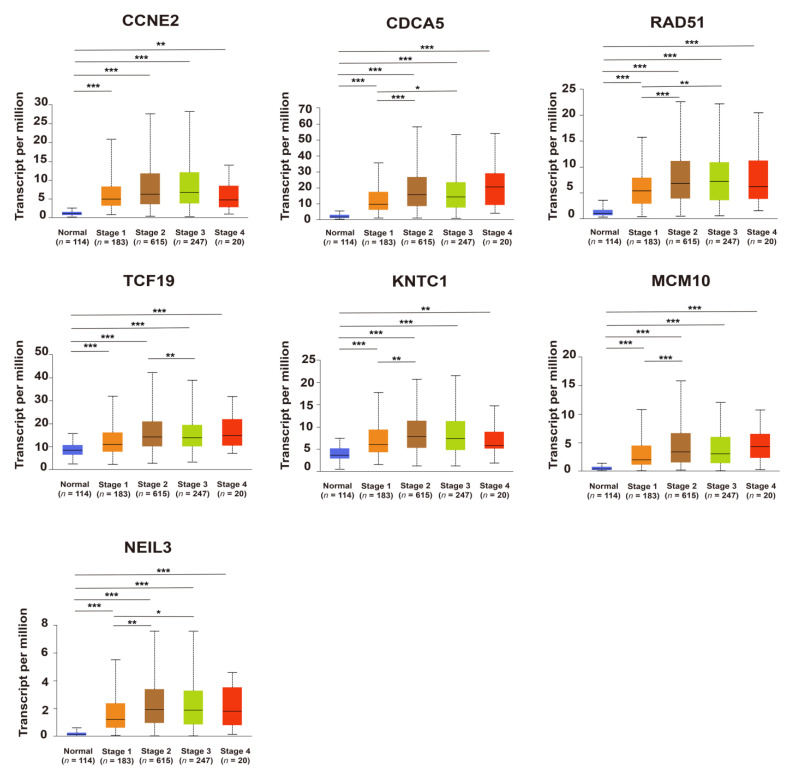
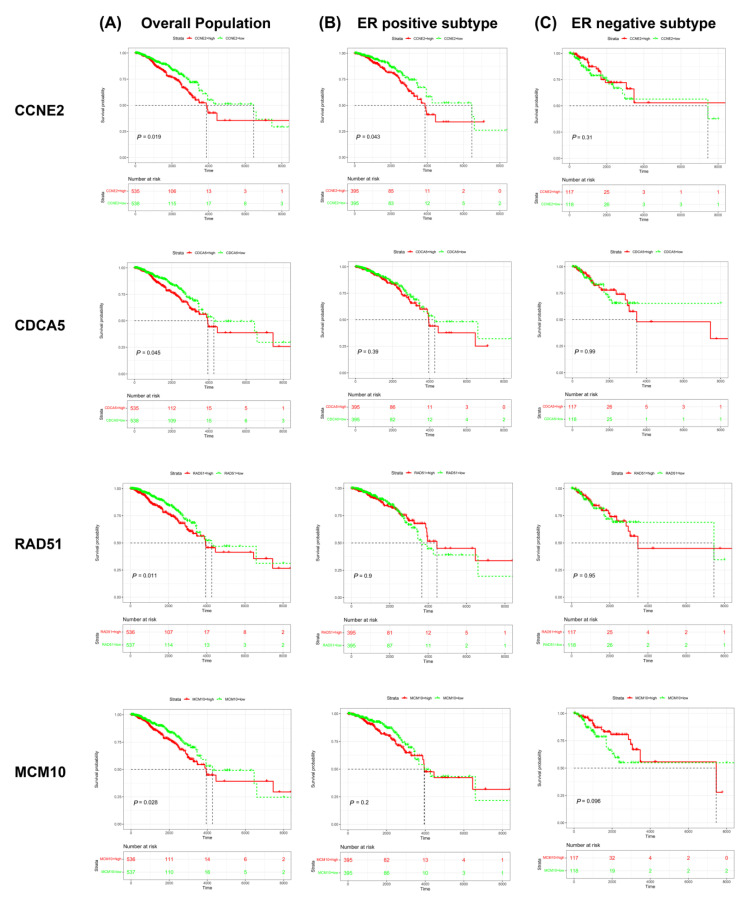
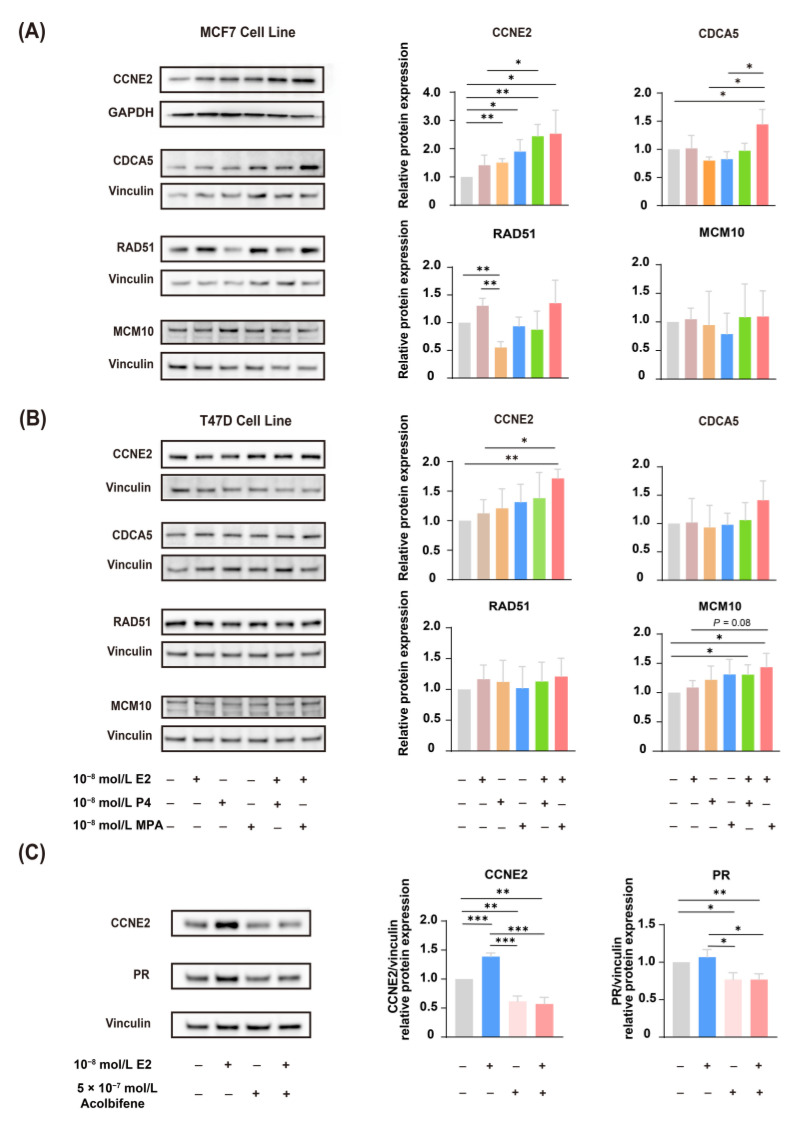
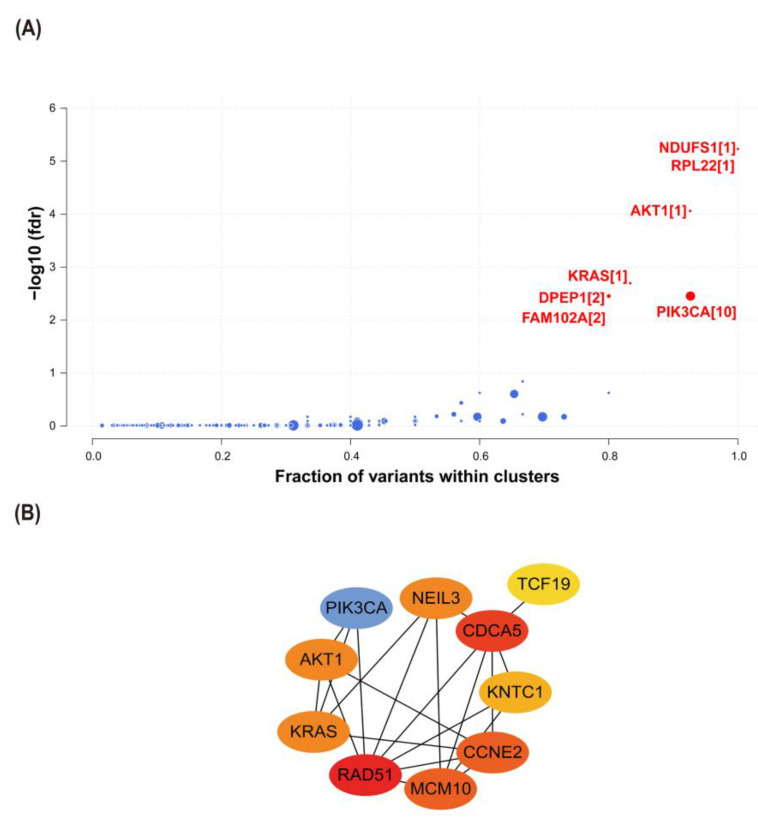
Menopausal hormone therapy (MHT) was widely used to treat menopause-related symptoms in menopausal women. However, MHT therapies were controversial with the increased risk of breast cancer because of different estrogen and progestogen combinations, and the molecular basis behind this phenomenon is currently not understood. To address this issue, we identified differentially expressed genes (DEGs) between the estrogen plus progestogens treatment (EPT) and estrogen treatment (ET) using the Gene Expression Omnibus (GEO) and The Cancer Genome Atlas (TCGA) data. As a result, a total of 96 upregulated DEGs were first identified. Seven DEGs related to the cell cycle (CCNE2, CDCA5, RAD51, TCF19, KNTC1, MCM10, and NEIL3) were validated by RT-qPCR. Specifically, these seven DEGs were increased in EPT compared to ET (p < 0.05) and had higher expression levels in breast cancer than adjacent normal tissues (p < 0.05). Next, we found that estrogen receptor (ER)-positive breast cancer patients with a higher CNNE2 expression have a shorter overall survival time (p < 0.05), while this effect was not observed in the other six DEGs (p > 0.05). Interestingly, the molecular docking results showed that CCNE2 might bind to 17β-estradiol (−6.791 kcal/mol), progesterone (−6.847 kcal/mol), and medroxyprogesterone acetate (−6.314 kcal/mol) with a relatively strong binding affinity, respectively. Importantly, CNNE2 protein level could be upregulated with EPT and attenuated by estrogen receptor antagonist, acolbifene and had interactions with cancer driver genes (AKT1 and KRAS) and high mutation frequency gene (TP53 and PTEN) in breast cancer patients. In conclusion, the current study showed that CCNE2, CDCA5, RAD51, TCF19, KNTC1, MCM10, and NEIL3 might contribute to EPT-related tumorigenesis in breast cancer, with CCNE2 might be a sensitive risk indicator of breast cancer risk in women using MHT.
绝经后激素治疗 (MHT) 广泛用于治疗绝经后妇女的绝经相关症状。然而,由于不同的雌激素和孕激素组合,MHT 治疗存在争议,并且这种现象的分子基础目前尚不清楚。为了解决这个问题,我们使用基因表达综合数据库 (GEO) 和癌症基因组图谱 (TCGA) 数据,鉴定了雌激素加孕激素治疗 (EPT) 和雌激素治疗 (ET) 之间差异表达的基因 (DEGs)。结果,首先鉴定了总共 96 个上调的 DEGs。通过 RT-qPCR 验证了 7 个与细胞周期相关的 DEGs(CCNE2、CDCA5、RAD51、TCF19、KNTC1、MCM10 和 NEIL3)。具体来说,与 ET 相比,EPT 中这 7 个 DEGs 的表达增加(p < 0.05),并且在乳腺癌中比相邻正常组织的表达水平更高(p < 0.05)。接下来,我们发现,与 ER 阳性乳腺癌患者相比,CCNE2 表达较高的患者总生存期较短(p < 0.05),而其他 6 个 DEGs 则没有观察到这种影响(p > 0.05)。有趣的是,分子对接结果表明,CCNE2 可能与 17β-雌二醇(-6.791 kcal/mol)、孕酮(-6.847 kcal/mol)和醋酸甲地孕酮(-6.314 kcal/mol)具有较强的结合亲和力,分别。重要的是,EPT 可上调 CNNE2 蛋白水平,并被雌激素受体拮抗剂 acolbifene 减弱,并且与乳腺癌患者中的癌症驱动基因(AKT1 和 KRAS)和高突变频率基因(TP53 和 PTEN)相互作用。总之,本研究表明,CCNE2、CDCA5、RAD51、TCF19、KNTC1、MCM10 和 NEIL3 可能有助于乳腺癌中 EPT 相关的肿瘤发生,CCNE2 可能是接受 MHT 的女性乳腺癌风险的敏感风险指标。