Department of Epidemiology and Health Statistics, School of Public Health, Chongqing Medical University, Yixue Road, Chongqing 400016, China.
Int J Mol Sci. 2022 Oct 9;23(19):11971. doi: 10.3390/ijms231911971.
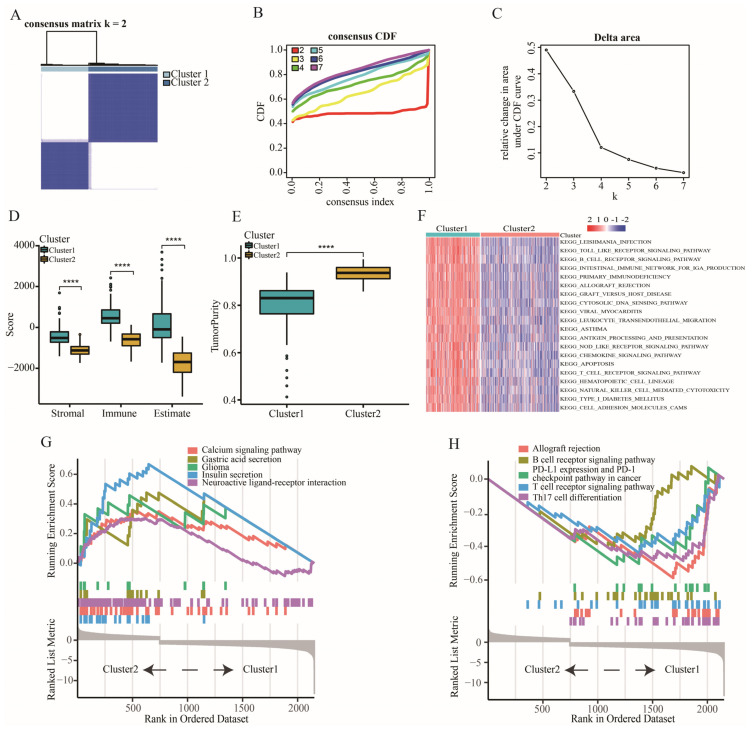
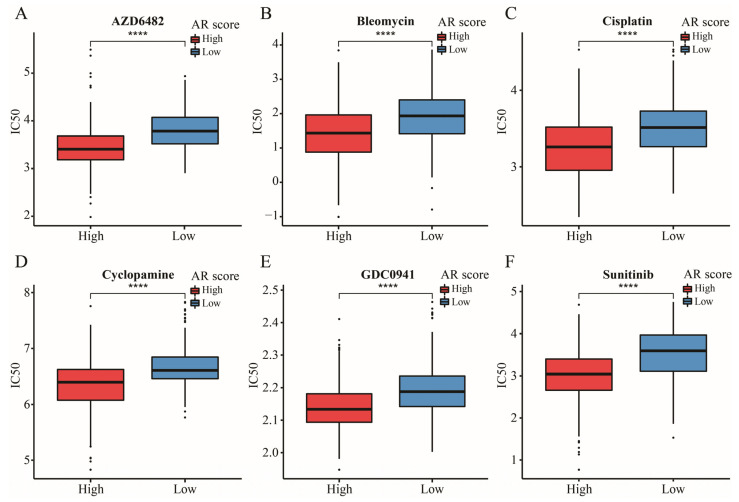
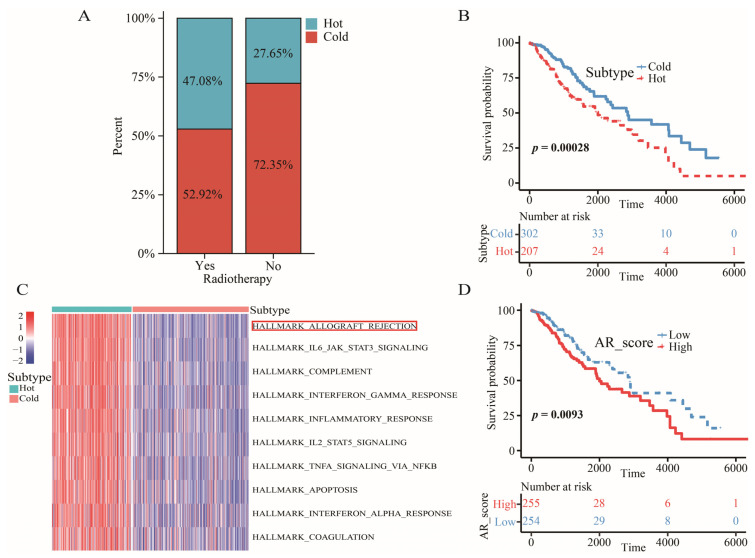
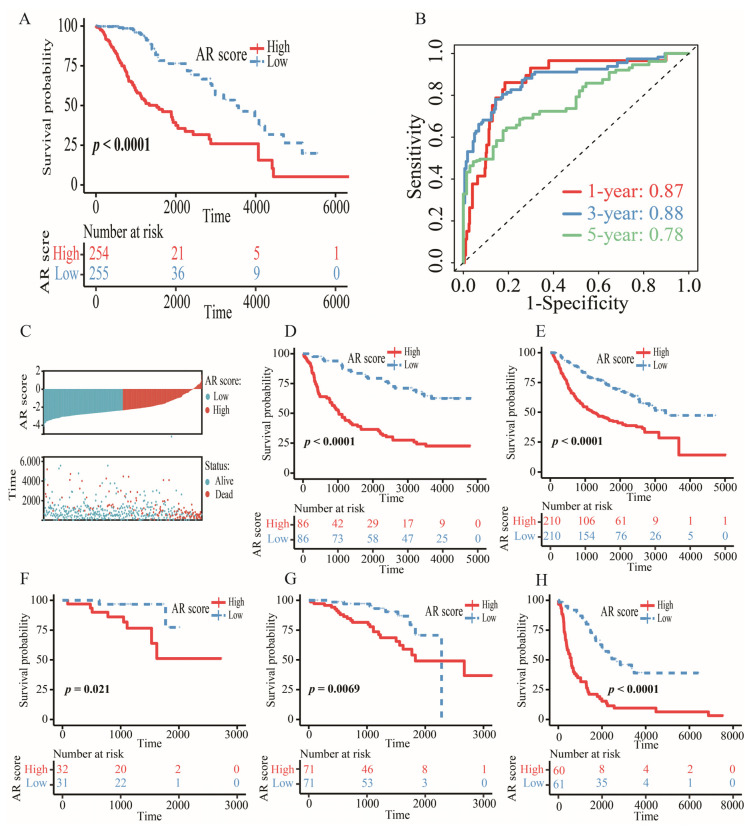
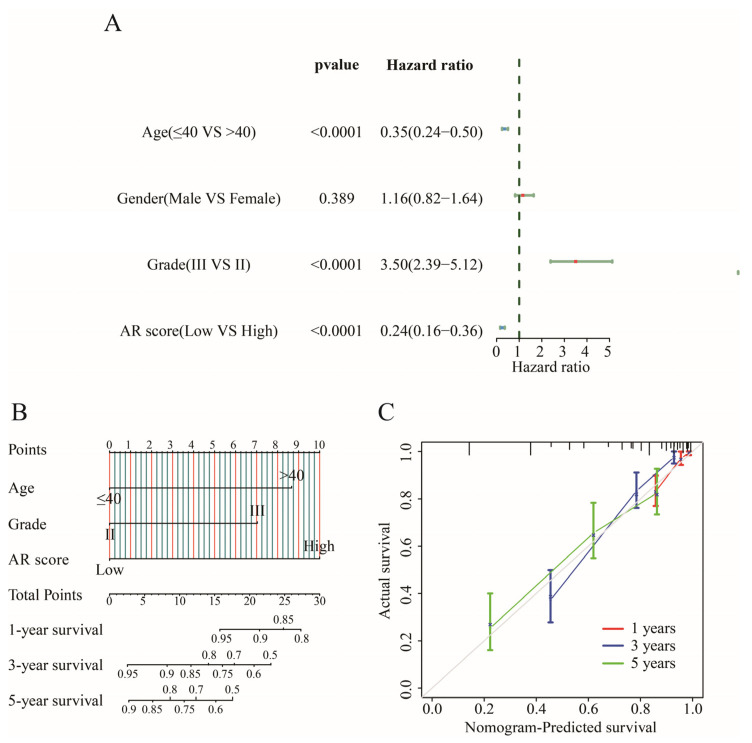
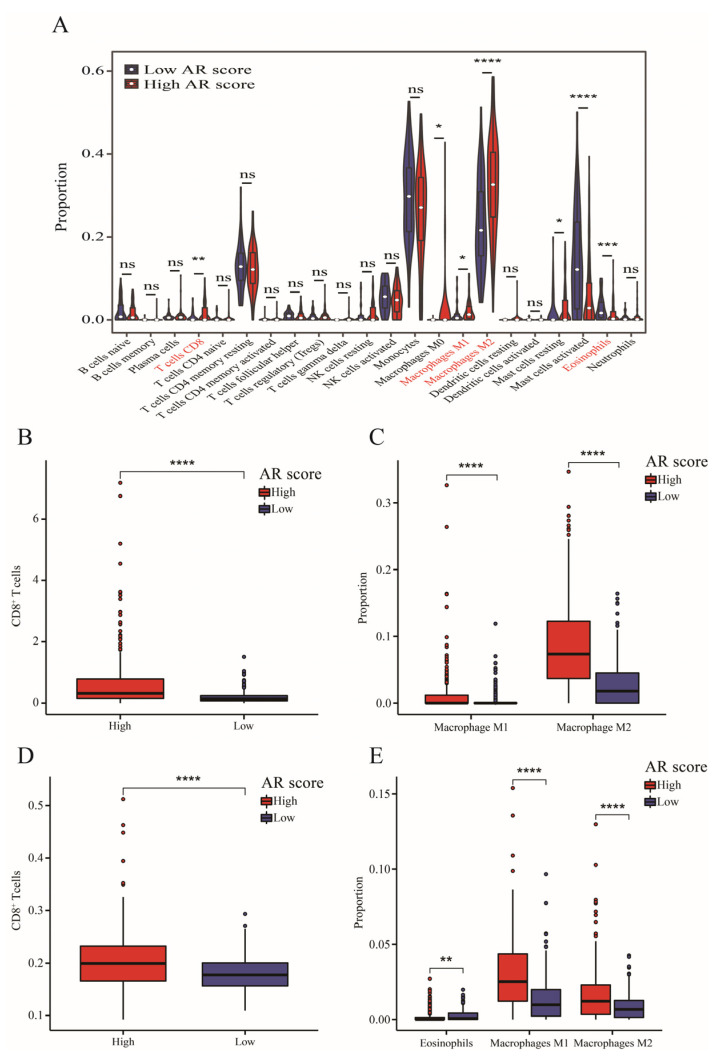
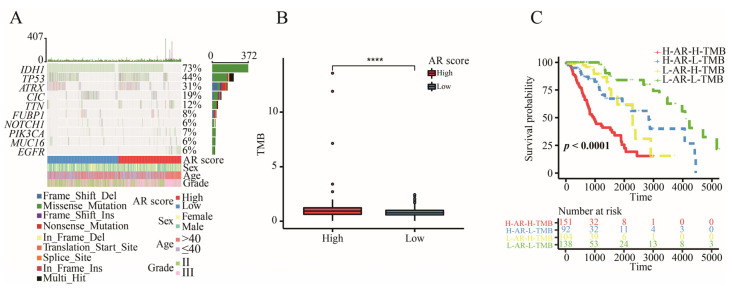
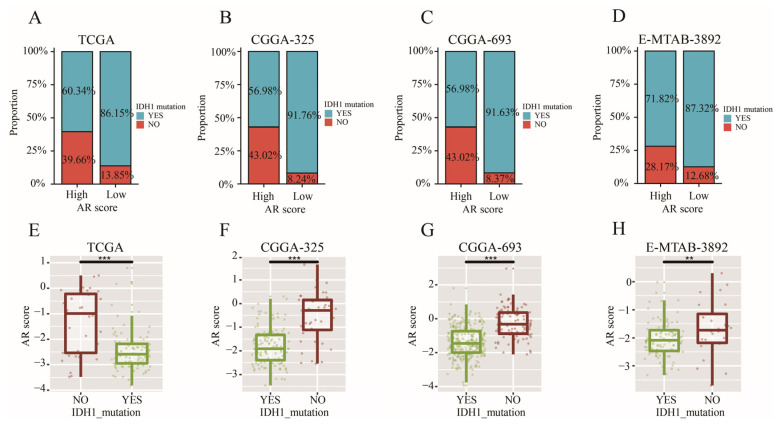
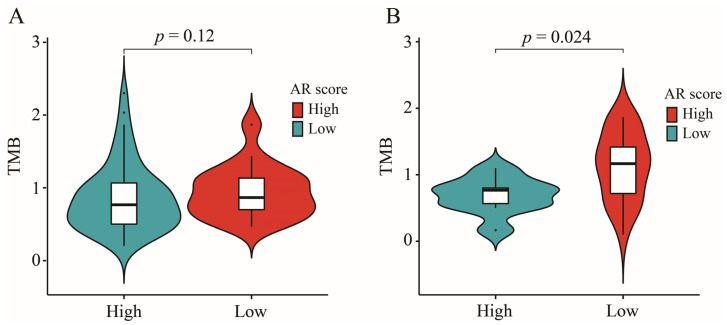
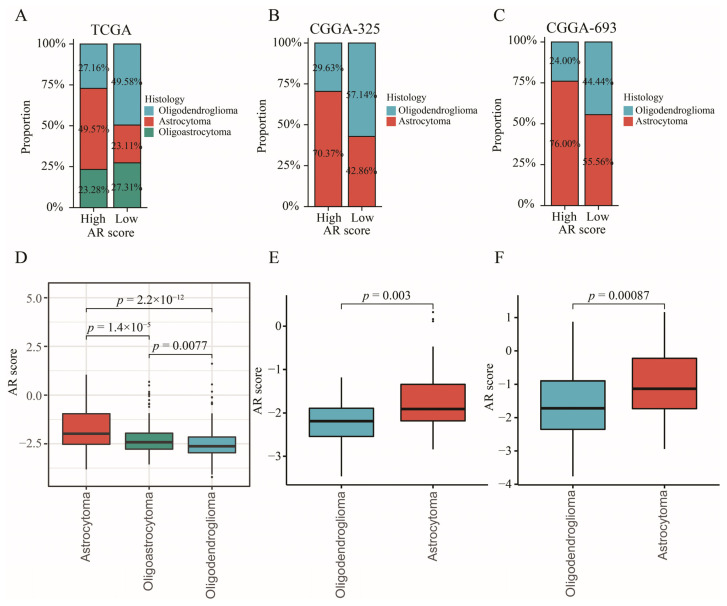
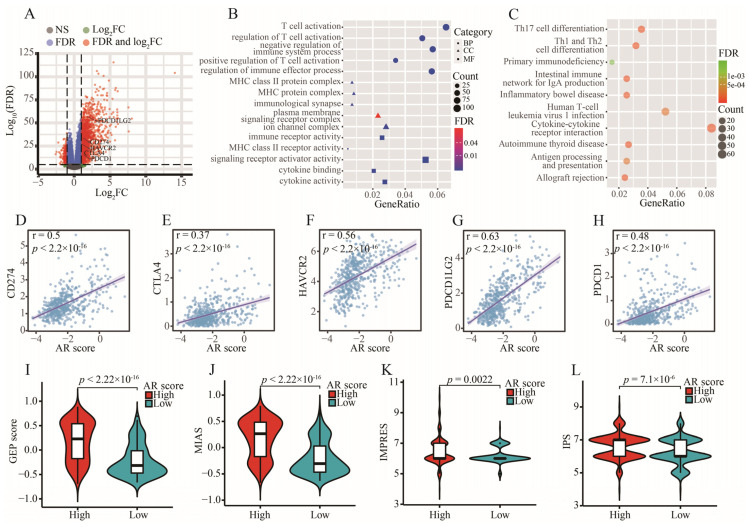
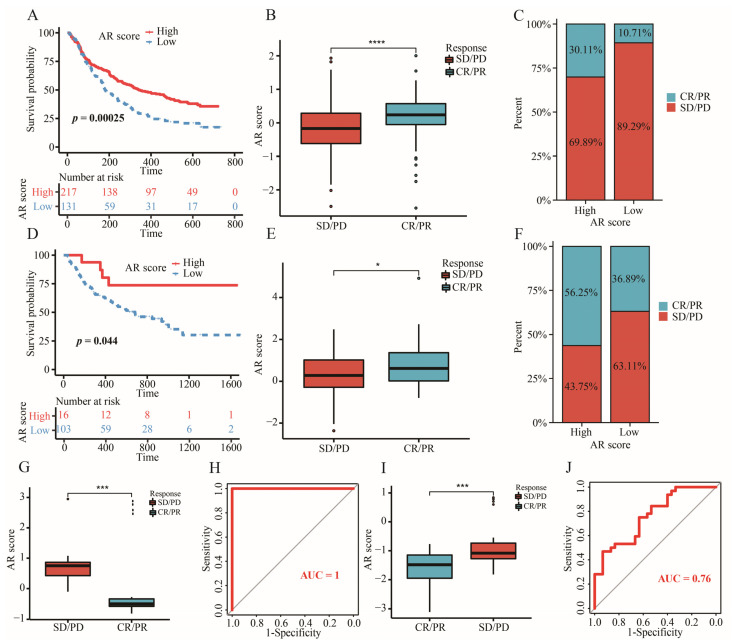
Although some biomarkers have been used to predict prognosis of lower-grade gliomas (LGGs), a pathway-related signature associated with immune response has not been developed. A key signaling pathway was determined according to the lowest adjusted p value among 50 hallmark pathways. The least absolute shrinkage and selection operator (LASSO) and stepwise multivariate Cox analyses were performed to construct a pathway-related gene signature. Somatic mutation, drug sensitivity and prediction of immunotherapy analyses were conducted to reveal the value of this signature in targeted therapies. In this study, an allograft rejection (AR) pathway was considered as a crucial signaling pathway, and we constructed an AR-related five-gene signature, which can independently predict the prognosis of LGGs. High-AR LGG patients had higher tumor mutation burden (TMB), Immunophenscore (IPS), IMmuno-PREdictive Score (IMPRES), T cell-inflamed gene expression profile (GEP) score and MHC I association immunoscore (MIAS) than low-AR patients. Most importantly, our signature can be validated in four immunotherapy cohorts. Furthermore, IC50 values of the six classic chemotherapeutic drugs were significantly elevated in the low-AR group compared with the high-AR group. This signature might be regarded as an underlying biomarker in predicting prognosis for LGGs, possibly providing more therapeutic strategies for future clinical research.
尽管已经有一些生物标志物被用于预测低级别胶质瘤(LGG)的预后,但尚未开发出与免疫反应相关的通路特征。根据 50 个标志性通路中调整后最小的 p 值确定关键信号通路。采用最小绝对收缩和选择算子(LASSO)和逐步多元 Cox 分析构建通路相关基因特征。进行体细胞突变、药物敏感性和免疫治疗预测分析,以揭示该特征在靶向治疗中的价值。在这项研究中,同种异体移植排斥(AR)途径被认为是一个关键的信号通路,我们构建了一个与 AR 相关的五个基因特征,可以独立预测 LGG 的预后。高 AR LGG 患者的肿瘤突变负担(TMB)、免疫表型评分(IPS)、免疫预测评分(IMPRES)、T 细胞炎症基因表达谱(GEP)评分和 MHC I 相关免疫评分(MIAS)均高于低 AR 患者。最重要的是,我们的特征可以在四个免疫治疗队列中得到验证。此外,与高 AR 组相比,低 AR 组六种经典化疗药物的 IC50 值显著升高。该特征可能被视为预测 LGG 预后的潜在生物标志物,可能为未来的临床研究提供更多的治疗策略。