School of Biotechnology, Jawaharlal Nehru University, New Delhi 110067, India.
Department of Energy and Environment, TERI School of Advanced Studies, New Delhi 110067, India.
Molecules. 2022 Oct 9;27(19):6727. doi: 10.3390/molecules27196727.
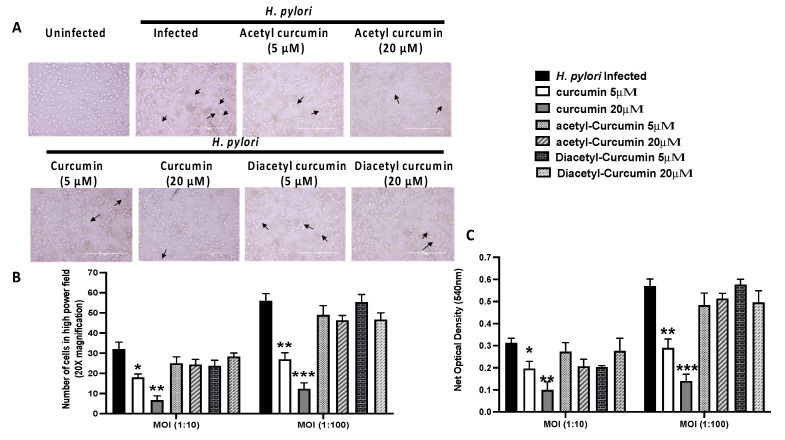
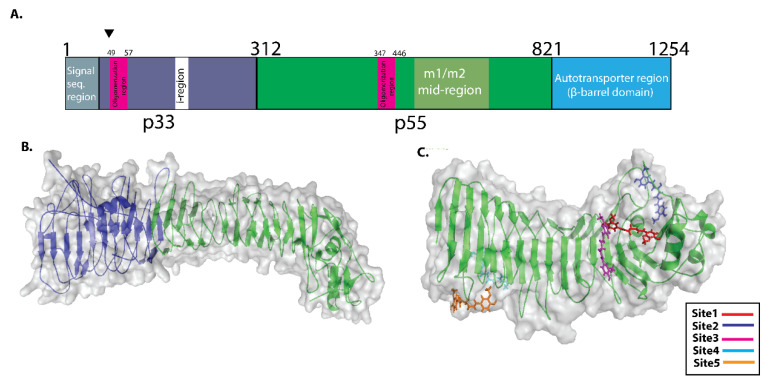
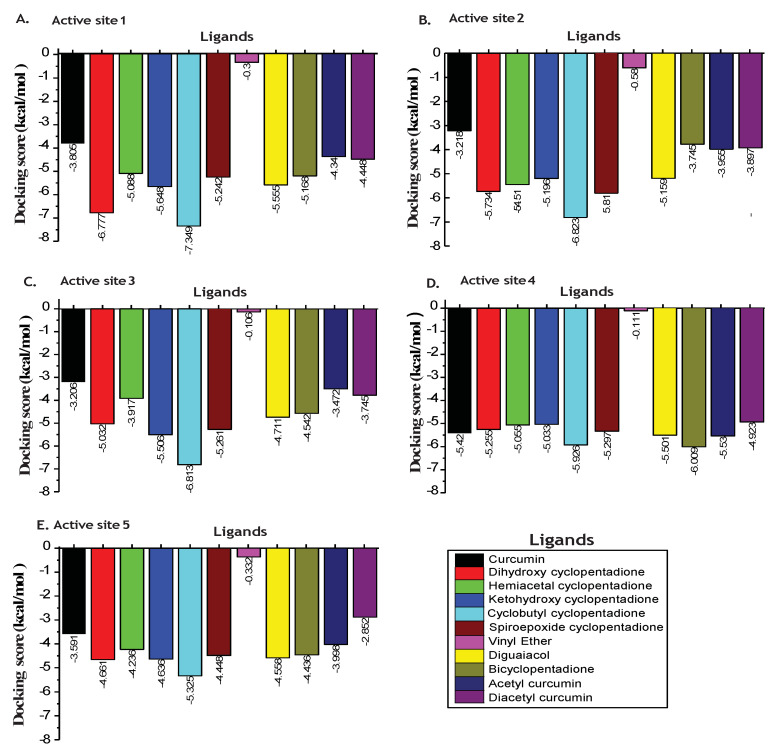
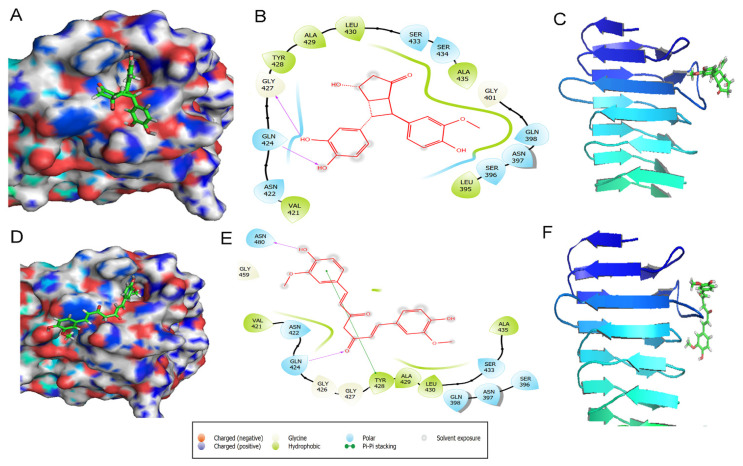
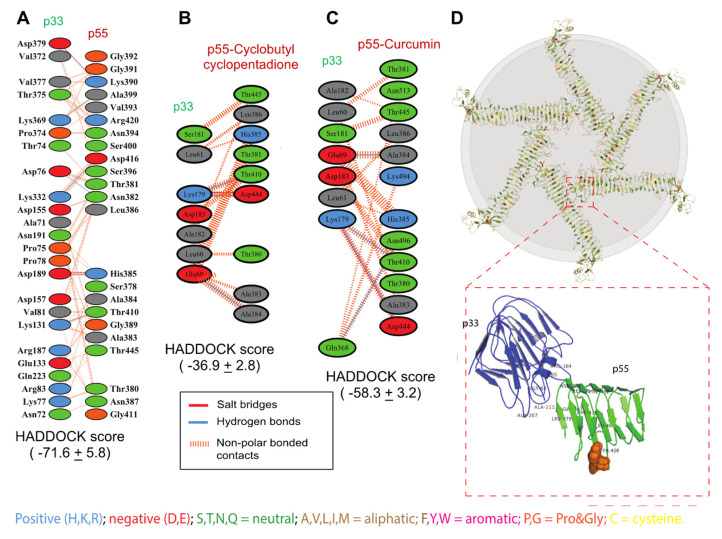
Curcumin is a hydrophobic polyphenol derived from turmeric with potent anti-oxidant, anti-microbial, anti-inflammatory and anti-carcinogenic effects. Curcumin is degraded into various derivatives under in vitro and in vivo conditions, and it appears that its degradation may be responsible for the pharmacological effects of curcumin. The primary risk factor for the cause of gastric cancer is . A virulence factor vacuolating cytotoxic A (VacA) is secreted by as a 88 kDa monomer (p88), which can be fragmented into a 33 kDa N-terminal domain (p33) and a 55 kDa C-terminal domain (p55). Recently it has been reported that curcumin oxidation is required to inhibit the activity of another major toxin CagA. We performed molecular docking of curcumin and its oxidative derivatives with p33 and p55 domains of VacA. Further, we have examined the effect of the oxidation of curcumin on the vacuolation activity of VacA protein. We observed the binding of curcumin to the p55 domain of VacA at five different sites with moderate binding affinities. Curcumin did not bind to p33 domain of VacA. Remarkably, cyclobutyl cyclopentadione and dihydroxy cyclopentadione, which are oxidized products of curcumin, showed a higher binding affinity with VacA protein at all sites except one as compared to parent curcumin itself. However, cyclobutyl cyclopentadione showed a significant binding affinity for the active site 5 of the p55 protein. Active site five (312-422) of p55 domain of VacA plays a crucial role in VacA-mediated vacuole formation. Invitro experiments showed that curcumin inhibited the vacuolation activity of in human gastric cell line AGS cells whereas acetyl and diacetyl curcumin, which cannot be oxidized, failed to inhibit the vacuolation in AGS cells after infection. Here our data showed that oxidation is essential for the activity of curcumin in inhibiting the vacuolation activity of . Synthesis of these oxidized curcumin derivatives could potentially provide new therapeutic drug molecules for inhibiting -mediated pathogenesis.
姜黄素是一种源自姜黄的疏水性多酚,具有强大的抗氧化、抗菌、抗炎和抗癌作用。姜黄素在体外和体内条件下会降解为各种衍生物,其降解似乎是姜黄素药理作用的原因。胃癌的主要危险因素是 。一种毒力因子空泡细胞毒素 A(VacA)由 分泌为 88 kDa 单体(p88),可被断裂为 33 kDa N 端结构域(p33)和 55 kDa C 端结构域(p55)。最近有报道称,姜黄素氧化是抑制另一种主要 毒素 CagA 活性所必需的。我们对姜黄素及其氧化衍生物与 VacA 的 p33 和 p55 结构域进行了分子对接。此外,我们还研究了姜黄素氧化对 VacA 蛋白空泡形成活性的影响。我们观察到姜黄素与 VacA 的 p55 结构域在五个不同的部位结合,具有中等的结合亲和力。姜黄素与 VacA 的 p33 结构域不结合。值得注意的是,与母体姜黄素本身相比,姜黄素的氧化产物环丁基环戊二酮和二羟基环戊二酮在所有部位(除一个部位外)与 VacA 蛋白的结合亲和力更高。然而,环丁基环戊二酮与 p55 蛋白的活性部位 5 具有显著的结合亲和力。p55 结构域的活性部位 5(312-422)在 VacA 介导的空泡形成中起着至关重要的作用。体外实验表明,姜黄素抑制了人胃细胞系 AGS 细胞中 的空泡形成活性,而乙酰基和二乙酰基姜黄素不能被氧化,在 感染后不能抑制 AGS 细胞中的空泡形成。我们的数据表明,氧化对于姜黄素抑制 的空泡形成活性是必需的。这些氧化姜黄素衍生物的合成可能为抑制 介导的发病机制提供新的治疗药物分子。