Faculty of Economics and Business, University of Groningen, Groningen, The Netherlands.
Accare, Groningen, The Netherlands.
Health Econ. 2023 Jan;32(1):155-174. doi: 10.1002/hec.4614. Epub 2022 Oct 13.
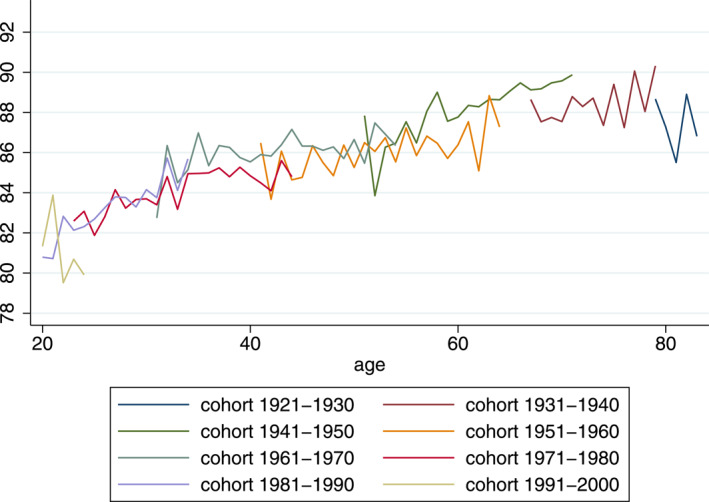
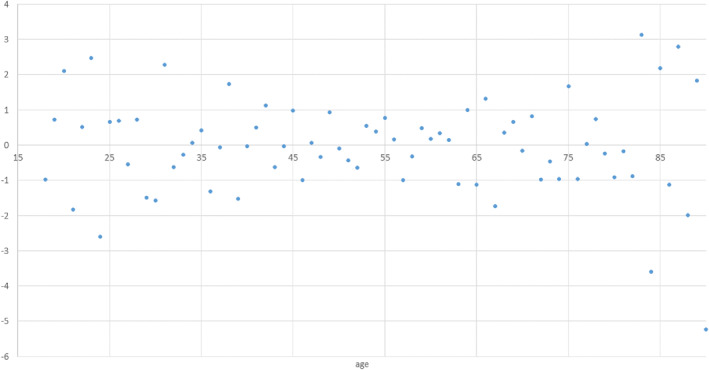
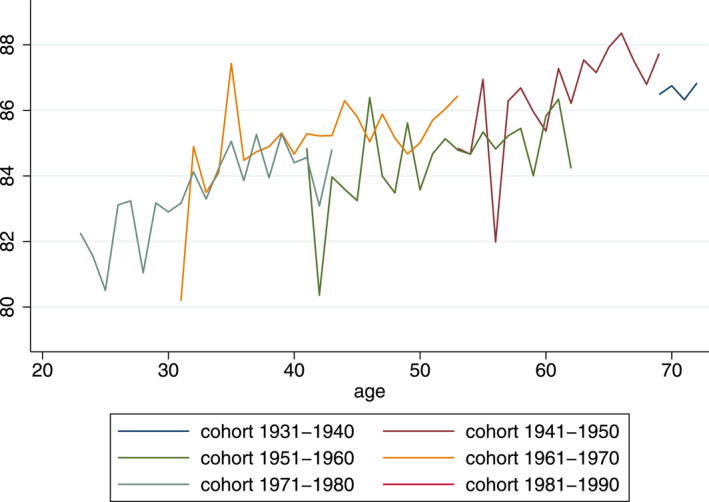
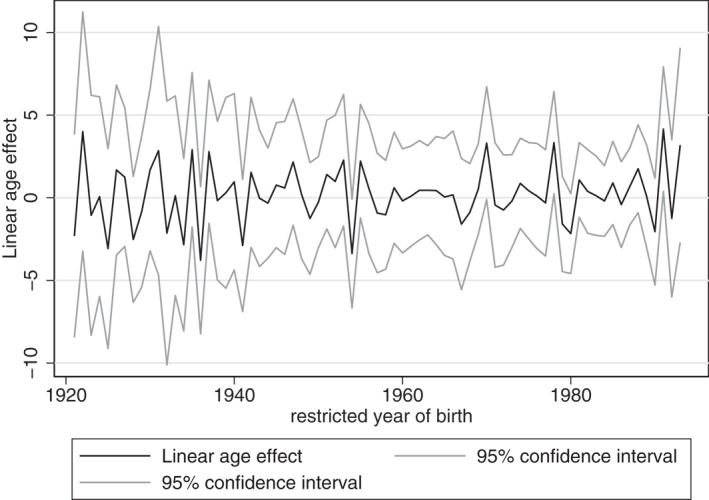
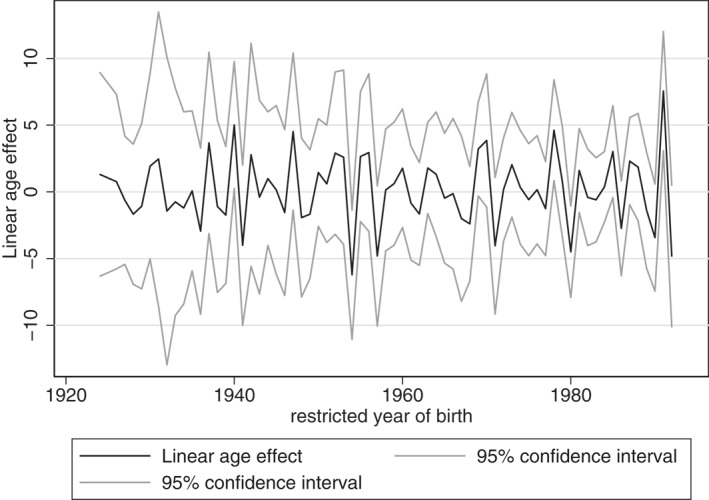
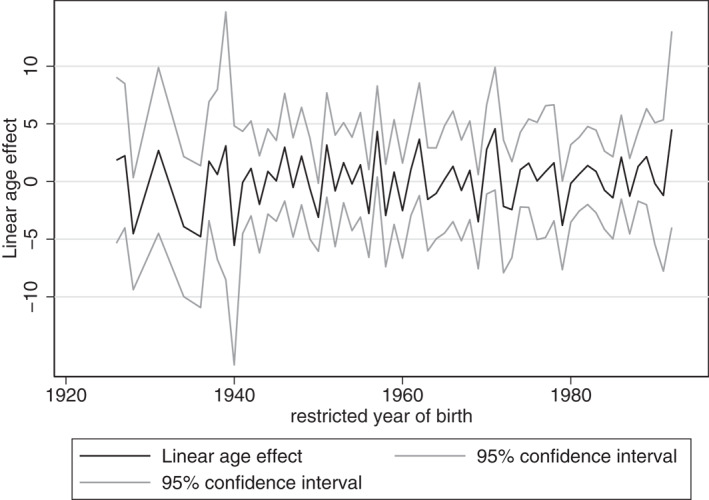
Mental health problems impose substantial individual and societal costs over the life-cycle. The age-profile of mental health problems is, however, not well understood. Hence, we study the age-profile of mental health while introducing minimal bias to reach identification. Using mental health data from the United States Panel Study of Income Dynamics we apply first difference estimation to derive an unbiased estimate of the second derivative of the age effect as well as an estimate up to a linear period trend of the first derivative. Next, we use a battery of estimators with varying restrictions to approximate the first derivative. Our results suggest that the age profile of mental health in the US is not U-shaped and we find tentative evidence that the age-profile could follow an inverse U-shape where individuals experience a mental health high during their life course. Further analyses, using German and Dutch data, confirm that these results do not only apply to the US, but also to Germany and the Netherlands.
心理健康问题在生命周期中给个人和社会带来了巨大的成本。然而,心理健康问题的年龄分布情况并不为人所知。因此,我们在进行最小偏差识别的同时,研究心理健康的年龄分布情况。我们利用美国收入动态小组调查的心理健康数据,应用一阶差分估计,得出年龄效应二阶导数的无偏估计以及一阶导数线性周期趋势的估计。接下来,我们使用一系列具有不同限制的估计器来近似一阶导数。我们的结果表明,美国的心理健康年龄分布情况不是 U 型的,我们有初步的证据表明,年龄分布可能遵循反 U 型,即个体在其整个生命周期中会经历心理健康的高峰期。进一步使用德国和荷兰的数据进行分析,证实这些结果不仅适用于美国,也适用于德国和荷兰。