Lu Yongtao, Gong Tingxiang, Yang Zhuoyue, Zhu Hanxing, Liu Yadong, Wu Chengwei
Department of Engineering Mechanics, Dalian University of Technology, Dalian, China.
DUT-BSU Joint Institute, Dalian University of Technology, Dalian, China.
Front Bioeng Biotechnol. 2022 Sep 27;10:973275. doi: 10.3389/fbioe.2022.973275. eCollection 2022.
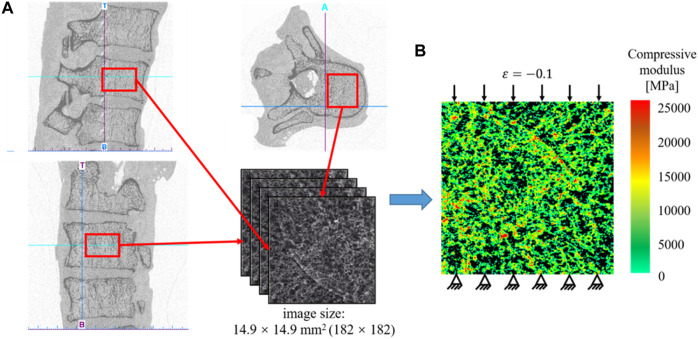
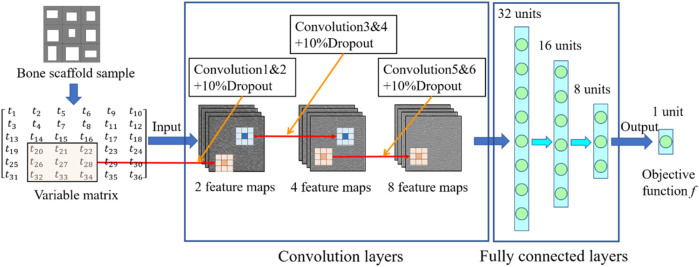
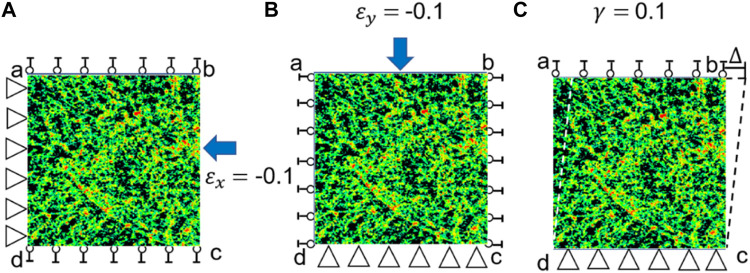
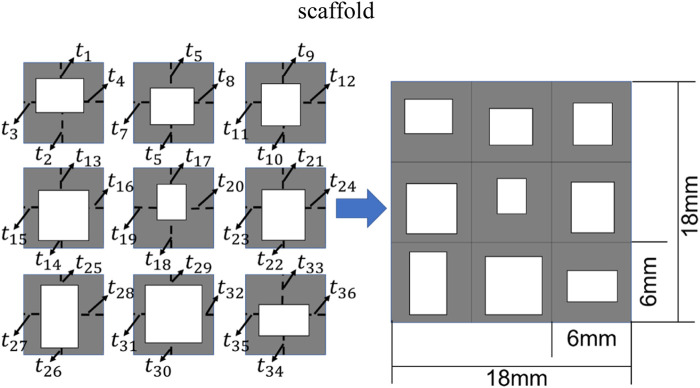
The design of bionic bone scaffolds to mimic the behaviors of native bone tissue is crucial in clinical application, but such design is very challenging due to the complex behaviors of native bone tissues. In the present study, bionic bone scaffolds with the anisotropic mechanical properties similar to those of native bone tissues were successfully designed using a novel self-learning convolutional neural network (CNN) framework. The anisotropic mechanical property of bone was first calculated from the CT images of bone tissues. The CNN model constructed was trained and validated using the predictions from the heterogonous finite element (FE) models. The CNN model was then used to design the scaffold with the elasticity matrix matched to that of the replaced bone tissues. For the comparison, the bone scaffold was also designed using the conventional method. The results showed that the mechanical properties of scaffolds designed using the CNN model are closer to those of native bone tissues. In conclusion, the self-learning CNN framework can be used to design the anisotropic bone scaffolds and has a great potential in the clinical application.
设计能够模拟天然骨组织行为的仿生骨支架在临床应用中至关重要,但由于天然骨组织行为复杂,这种设计极具挑战性。在本研究中,利用一种新型自学习卷积神经网络(CNN)框架成功设计出了具有与天然骨组织相似各向异性力学性能的仿生骨支架。首先从骨组织的CT图像计算出骨的各向异性力学性能。构建的CNN模型使用异质有限元(FE)模型的预测结果进行训练和验证。然后使用该CNN模型设计出弹性矩阵与被替换骨组织相匹配的支架。作为对比,也使用传统方法设计了骨支架。结果表明,使用CNN模型设计的支架力学性能更接近天然骨组织。总之,自学习CNN框架可用于设计各向异性骨支架,在临床应用中具有巨大潜力。