Department of General Surgery, Changzhou Wujin People's Hospital, Changzhou, Jiangsu, China.
Wujin Clinical College, Xuzhou Medical University, Changzhou, Jiangsu, China.
Comput Math Methods Med. 2022 Sep 30;2022:4899555. doi: 10.1155/2022/4899555. eCollection 2022.
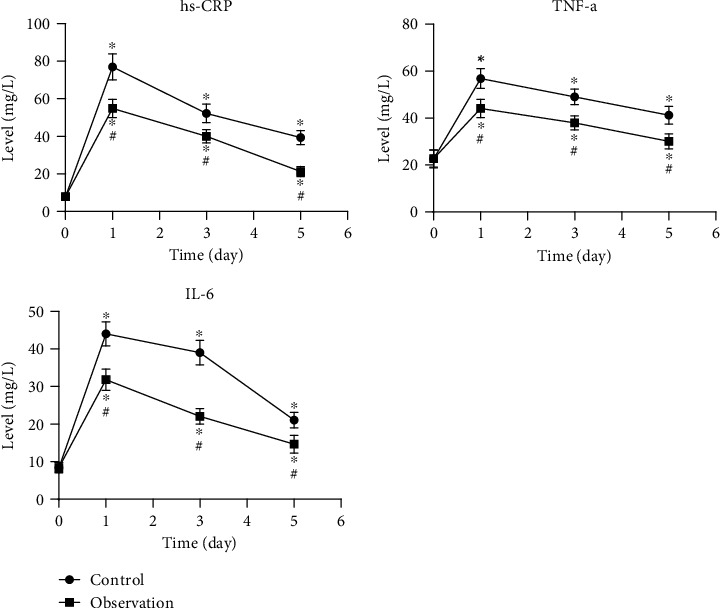
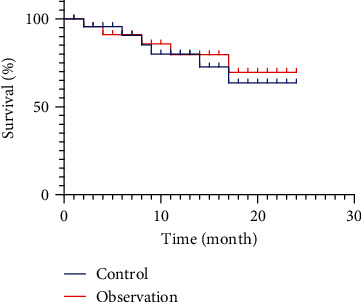
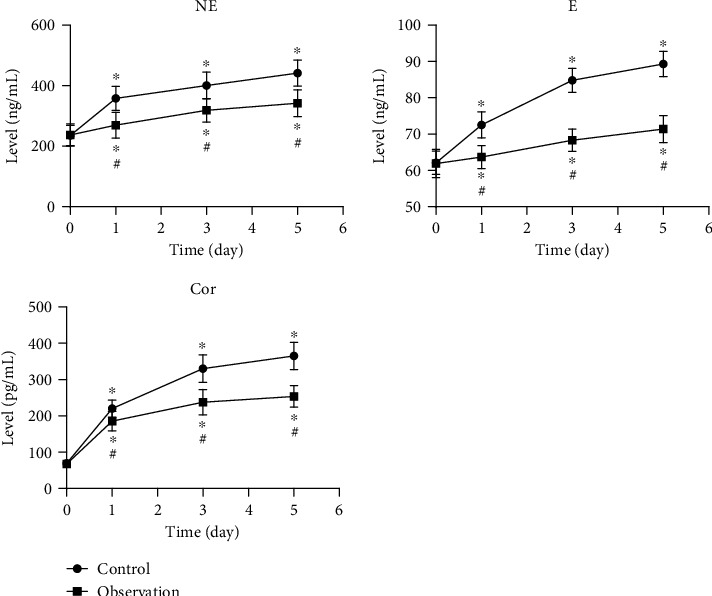
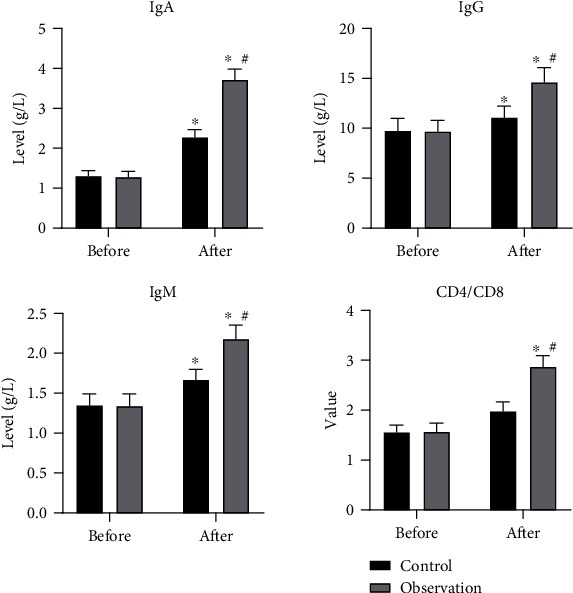
For patients with colorectal cancer, minimally invasive surgical methods, particularly laparoscopic methods, are now the preferred course of therapy. This research is performed to investigate the effects of laparoscopic radical resection on patients with colorectal cancer. A total of 100 colorectal cancer patients treated in our hospital from January 2017 to January 2019 were enrolled. The subjects were divided into observation ( = 50) and control ( = 50) groups and treated with laparoscopic surgery and laparotomy, respectively. As well as postoperative complications and survival rates, the levels of inflammatory substances, stress response, immunological function, and perioperative markers were compared between the two groups. There was no significant difference in the postoperative exhaust time between the two groups ( > 0.05). Compared with the control group, the observation group showed longer operation time, faster recovery of intestinal function, shorter hospital stay, and less intraoperative bleeding amount ( < 0.05). The serum contents of hs-CRP, TNF-, IL-6, norepinephrine, adrenaline, and cortisol at 1 d, 3 d, and 5 d after surgery were significantly higher than before in both groups ( < 0.05). Moreover, the serum contents of hs-CRP, TNF-, IL-6, norepinephrine, adrenaline, and cortisol in the observation group were significantly lower than that in the control group ( < 0.05). At 10 days following surgery, immune index levels had dramatically increased in both groups, with noticeably higher immune index levels in the observation group than in the control group ( < 0.05). There were no appreciable differences in the two groups' 2-year survival rates ( > 0.05), but the complication rate was much greater in the control group ( < 0.05). To sum up, after laparoscopic surgery, patients had fewer complications, shorter hospital stay, lower inflammatory factor expression, less stress response, better immune function, less trauma, faster recovery, and improved quality of life.
对于结直肠癌患者,微创外科方法,特别是腹腔镜方法,现在是首选的治疗方法。本研究旨在探讨腹腔镜根治性切除术对结直肠癌患者的影响。选取我院 2017 年 1 月至 2019 年 1 月收治的 100 例结直肠癌患者为研究对象,将其分为观察组(n=50)和对照组(n=50),分别行腹腔镜手术和开腹手术治疗。比较两组患者术后并发症发生情况、生存率及炎症物质水平、应激反应、免疫功能、围术期标志物水平。两组患者术后排气时间比较,差异无统计学意义(>0.05)。观察组手术时间长于对照组,肠道功能恢复快,住院时间短,术中出血量少,差异有统计学意义(<0.05)。两组患者术后 1、3、5 d 的 hs-CRP、TNF-α、IL-6、去甲肾上腺素、肾上腺素、皮质醇血清含量均明显高于术前,差异有统计学意义(<0.05);观察组术后各时间点 hs-CRP、TNF-α、IL-6、去甲肾上腺素、肾上腺素、皮质醇血清含量均明显低于对照组,差异有统计学意义(<0.05)。术后 10 d 两组免疫指标水平均明显升高,观察组免疫指标水平明显高于对照组,差异有统计学意义(<0.05)。两组患者 2 年生存率比较,差异无统计学意义(>0.05),但对照组并发症发生率明显高于观察组,差异有统计学意义(<0.05)。综上所述,腹腔镜手术后患者并发症少、住院时间短、炎症因子表达低、应激反应小、免疫功能好、创伤小、恢复快、生活质量高。