Mandal Ashok Kumar, Pandey Anisha, Sah Ranjit Kumar, Baral Adesh, Sah Phoolgen
Natural Product Research Laboratory, Thapathali, Kathmandu 44600, Nepal.
Department of Biotechnology, National College, Tribhuvan University, Naya Bazar, Kathmandu 44600, Nepal.
Evid Based Complement Alternat Med. 2022 Oct 7;2022:6790314. doi: 10.1155/2022/6790314. eCollection 2022.
The study aimed to evaluate the in vitro antioxidant and antimicrobial potency of found wildly in the Terai region of Nepal and assess its physicochemical properties, such as total phenolic content (TPC) and total flavonoid content (TFC).
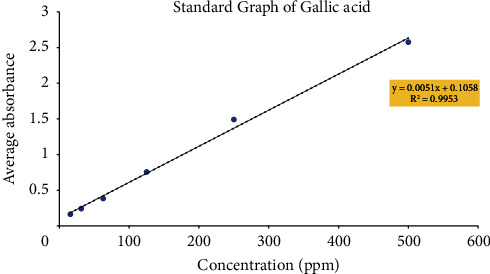
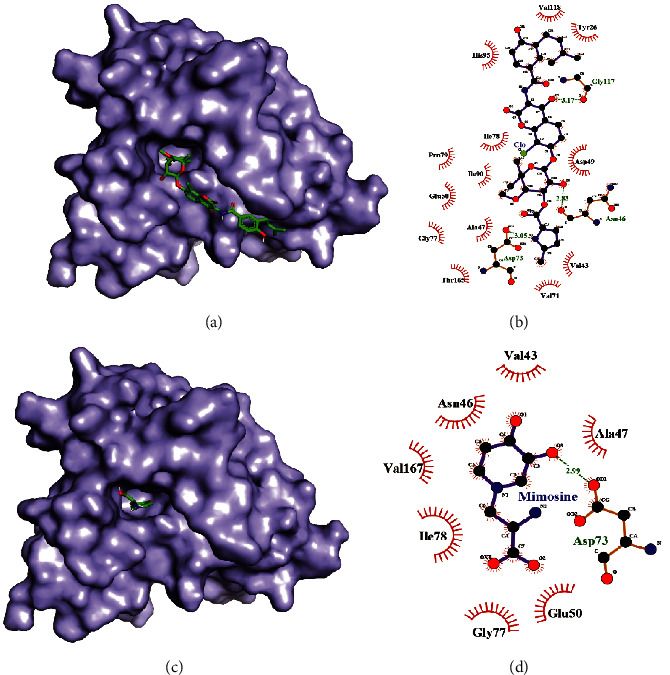
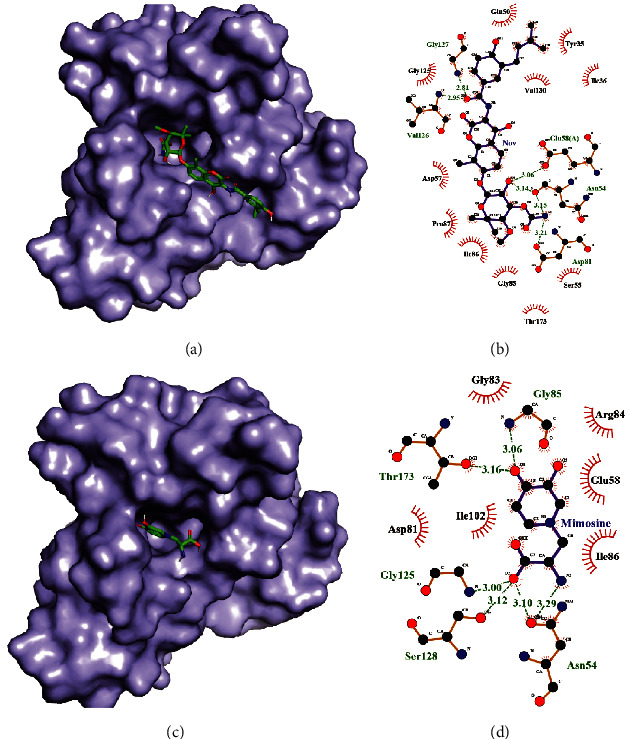
The physicochemical properties of ethyl acetate extract of (EAMP), such as extractive value, total ash content, loss on drying, and phytochemical screening, were calculated using standard protocols. The TPC was determined by using the Folin-Ciocalteu method taking gallic acid as standard, and TFC was conducted by using the AlCl colorimetric method, using a 96-well plate reader. The in vitro antibacterial activity of different concentrations of the extract against four bacterial ATCC strains was determined by the agar well diffusion method in the Mueller Hinton agar (MHA) medium. The in silico molecular docking model was used to ascertain the antibacterial potency of L-mimosine against the selected strains of bacteria used for the in vitro study by calculating the binding affinity towards the protein of bacteria.
The preliminary screening of the extract showed the presence of several phytochemicals. The total ash content (7.67%), loss on drying (2.30%), and extractive value (8.966%) were determined by analyzing the crude sample. The total phenolic and flavonoid contents were 418.640 ± 0.018 mg GAE/g (dried extract) and 14.126 ± 0.021 mg QE/g (dried extract), respectively. The extract showed a potent free radical scavenging activity with an IC50 value of 158.95 ± 1.12 g/mL. The plant extract also demonstrated the antibacterial activity against both Gram-positive bacteria (15 mm) and (22 mm) and Gram-negative bacteria (17 mm) and (16 mm) at 200 mg/mL concentration of extract. There was a noteworthy binding affinity of antibiotics with almost all selected bacterial proteins with binding energy against DNA gyrase subunit B (-5.7 kcal/mol), DNA gyrase subunit B (-6.1 kcal/mol), metallothiol transferase (-5.2 kcal/mol), and beta-lactamase (-6.1 kcal/mole), respectively, with the L-mimosine.
The findings of the current study suggest that from the Terai region of Nepal is rich in phenolic and flavonoid compounds, has a significant impact on bacterial growth inhibition, and has a notable potential to scavenge free radicals (DPPH). According to the in silico analysis, L-mimosine is a potent antibacterial compound that might be utilised to discover novel antibacterial drugs to combat antibiotic resistance.
本研究旨在评估在尼泊尔特莱地区广泛发现的[植物名称未给出]的体外抗氧化和抗菌能力,并评估其理化性质,如总酚含量(TPC)和总黄酮含量(TFC)。
使用标准方案计算[植物名称未给出]乙酸乙酯提取物(EAMP)的理化性质,如提取物值、总灰分含量、干燥失重和植物化学筛选。以没食子酸为标准,采用福林-西奥尔特法测定TPC,使用96孔板读数器通过氯化铝比色法测定TFC。在穆勒-欣顿琼脂(MHA)培养基中,采用琼脂孔扩散法测定不同浓度提取物对四种细菌ATCC菌株的体外抗菌活性。通过计算对细菌蛋白质的结合亲和力,利用计算机模拟分子对接模型确定L-含羞草碱对用于体外研究的所选细菌菌株的抗菌能力。
提取物的初步筛选显示存在几种植物化学物质。通过分析粗样品测定总灰分含量(7.67%)、干燥失重(2.30%)和提取物值(8.966%)。总酚和黄酮含量分别为418.640±0.018mg GAE/g(干燥提取物)和14.126±0.021mg QE/g(干燥提取物)。提取物表现出强大的自由基清除活性,IC50值为158.95±1.12g/mL。在提取物浓度为200mg/mL时,植物提取物对革兰氏阳性菌[细菌名称未给出](15mm)和[细菌名称未给出](22mm)以及革兰氏阴性菌[细菌名称未给出](17mm)和[细菌名称未给出](16mm)均表现出抗菌活性。L-含羞草碱与几乎所有所选细菌蛋白质具有显著的结合亲和力,对[细菌名称未给出]DNA回旋酶亚基B、[细菌名称未给出]DNA回旋酶亚基B、[细菌名称未给出]金属硫醇转移酶和β-内酰胺酶的结合能分别为-5.7kcal/mol、-6.1kcal/mol、-5.2kcal/mol和-6.1kcal/mol。
本研究结果表明,来自尼泊尔特莱地区的[植物名称未给出]富含酚类和黄酮类化合物,对细菌生长抑制有显著影响,具有清除自由基(DPPH)的显著潜力。根据计算机模拟分析,L-含羞草碱是一种有效的抗菌化合物,可用于发现新型抗菌药物以对抗抗生素耐药性。