Central Department of Chemistry, Tribhuvan University, Kirtipur, Kathmandu, Nepal.
ScientificWorldJournal. 2023 Oct 9;2023:6689271. doi: 10.1155/2023/6689271. eCollection 2023.
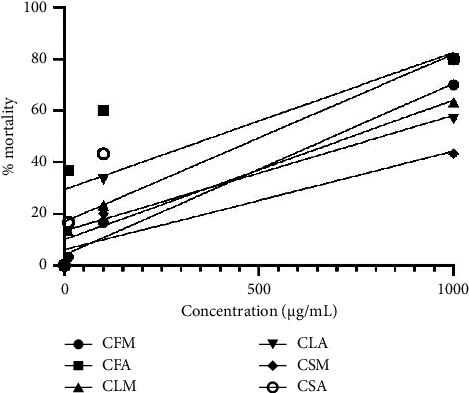
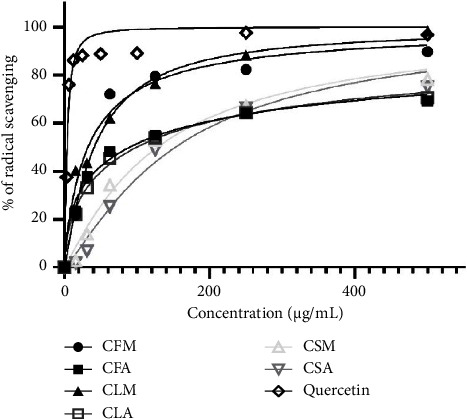
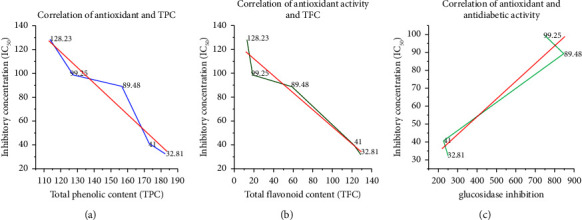
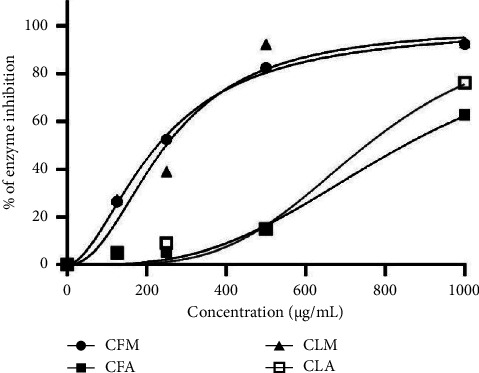
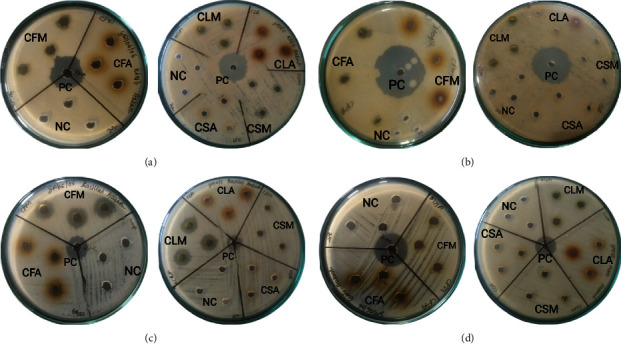
The medicinal plant is traditionally used by people living in different communities of Nepal and the globe against diabetes, soft tissue wounds, skin infections, diarrhea, malaria, and several other infectious diseases. The present study focuses on the qualitative and quantitative phytochemical analyses and antioxidant, antidiabetic, antibacterial, and toxicity of the plant for assessing its pharmacological potential. The extracts of flowers, leaves, and stems were prepared using methanol and distilled water as the extracting solvents. Total phenolic content (TPC) and total flavonoid content (TFC) were estimated by using the Folin-Ciocalteu phenol reagent method and the aluminum chloride colorimetric method. Antioxidant and antidiabetic activities were assessed using the DPPH assay and -glucosidase inhibition assay. A brine shrimp assay was performed to study the toxicity, and the antibacterial activity test was performed by the agar well diffusion method. Phytochemical analysis revealed the presence of phenols, flavonoids, quinones, terpenoids, and coumarins as secondary metabolites. The methanol extract of leaves and flowers displayed the highest phenolic and flavonoid content with 182.26 ± 1.99 mg GAE/g, 128.57 ± 7.62 mg QE/g and 172.65 ± 0.48 mg GAE/g, 121.74 ± 7.06 mg QE/g, respectively. The crude extracts showed the highest DPPH free radical scavenging activity with half maximal inhibitory concentration (IC) of 32.81 ± 5.26 g/mL and 41.00 ± 1.10 g/mL, respectively. The methanol extract of the leaves was found to be effective against bacterial strains such as (ZOI = 9.67 ± 0.32 mm), (ZOI = 15.00 ± 0 mm), and (7.3 ± 0.32 mm). The methanol extract of the flowers showed the most -glucosidase inhibitory activity (IC 227.63 ± 11.38 g/mL), followed by the methanol extract of leaves (IC 249.50 ± 0.97 g/mL). The aqueous extract of the flowers showed the toxic effect with LC 107.31 ± 49.04 g/mL against the brine shrimp nauplii. In conclusion, was found to be a rich source of plant secondary metabolites such as phenolics and flavonoids with potential effects against bacterial infection, diabetes, and oxidative stress in humans. The toxicity study showed that the aqueous extract of flowers possesses pharmacological activities. This study supports the traditional use of the plant against infectious diseases and diabetes and provides some scientific validation.
药用植物在尼泊尔和全球不同社区的人们中被传统用于治疗糖尿病、软组织伤口、皮肤感染、腹泻、疟疾和其他几种传染病。本研究侧重于定性和定量的植物化学分析以及植物的抗氧化、抗糖尿病、抗菌和毒性,以评估其药理学潜力。使用甲醇和蒸馏水作为提取溶剂制备花、叶和茎的提取物。使用福林-考尔法酚试剂法和铝氯化物比色法估计总酚含量(TPC)和总类黄酮含量(TFC)。使用 DPPH 测定法和 -葡萄糖苷酶抑制测定法评估抗氧化和抗糖尿病活性。进行盐水虾测定以研究毒性,并且通过琼脂孔扩散法进行抗菌活性测试。植物化学分析表明存在酚类、类黄酮、醌类、萜类和香豆素等次生代谢物。叶和花的甲醇提取物表现出最高的酚类和类黄酮含量,分别为 182.26±1.99mgGAE/g、128.57±7.62mgQE/g 和 172.65±0.48mgGAE/g、121.74±7.06mgQE/g。粗提取物表现出最高的 DPPH 自由基清除活性,半最大抑制浓度(IC)分别为 32.81±5.26g/mL 和 41.00±1.10g/mL。发现叶的甲醇提取物对细菌菌株有效,如 (ZOI=9.67±0.32mm)、 (ZOI=15.00±0mm)和 (7.3±0.32mm)。花的甲醇提取物表现出最强的 -葡萄糖苷酶抑制活性(IC 227.63±11.38g/mL),其次是叶的甲醇提取物(IC 249.50±0.97g/mL)。花的水提取物显示出毒性作用,LC 107.31±49.04g/mL 对盐水虾幼体。总之,发现 是植物次生代谢物的丰富来源,如酚类和类黄酮,具有对抗细菌感染、糖尿病和人类氧化应激的潜在作用。毒性研究表明,花的水提取物具有药理学活性。这项研究支持了该植物用于治疗传染病和糖尿病的传统用途,并提供了一些科学验证。