Graduate group of Molecular, Cellular, and Integrative Physiology, University of California, Davis, Davis, CA, United States.
USDA Western Human Nutrition Research Center, University of California, Davis, Davis, CA, United States.
Front Immunol. 2022 Sep 29;13:917966. doi: 10.3389/fimmu.2022.917966. eCollection 2022.
Tryptophan (Trp) metabolites from intestinal bacteria (indole, indole acetic acid [IAA] and indole propionic acid [IPA]), and the Trp metabolite kynurenine (Kyn) from the indoleamine 2,3-dioxygenase (IDO) pathway, are aryl hydrocarbon receptor (AhR) agonists and thus, can regulate immune activity the AhR pathway. We hypothesized that plasma concentrations of these metabolites would be associated with markers of immune activation in a cohort of healthy adults in a manner consistent with AhR-mediated immune-regulation. We also hypothesized that the plasma Kyn/Trp ratio, a marker of IDO activity, would be associated with immune markers reflecting IDO activation in innate immune cells. Finally, we hypothesized that some intestinal bacteria would be associated with plasma indole, IPA and IAA, and that these bacteria themselves would be associated with immune markers.
A novel set of 88 immune markers, and plasma Trp metabolites, were measured in 362 healthy adults. Bacterial taxa from stool were identified by 16S rRNA gene analysis. Multiple linear regression analysis was used to identify significant associations with immune markers.
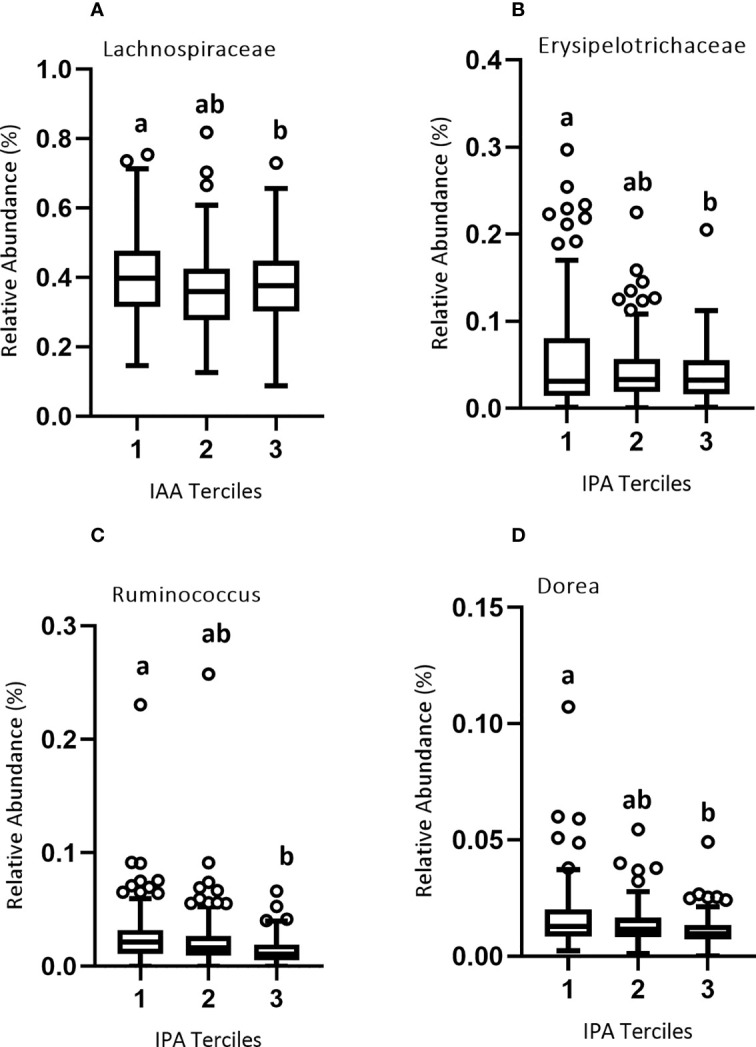
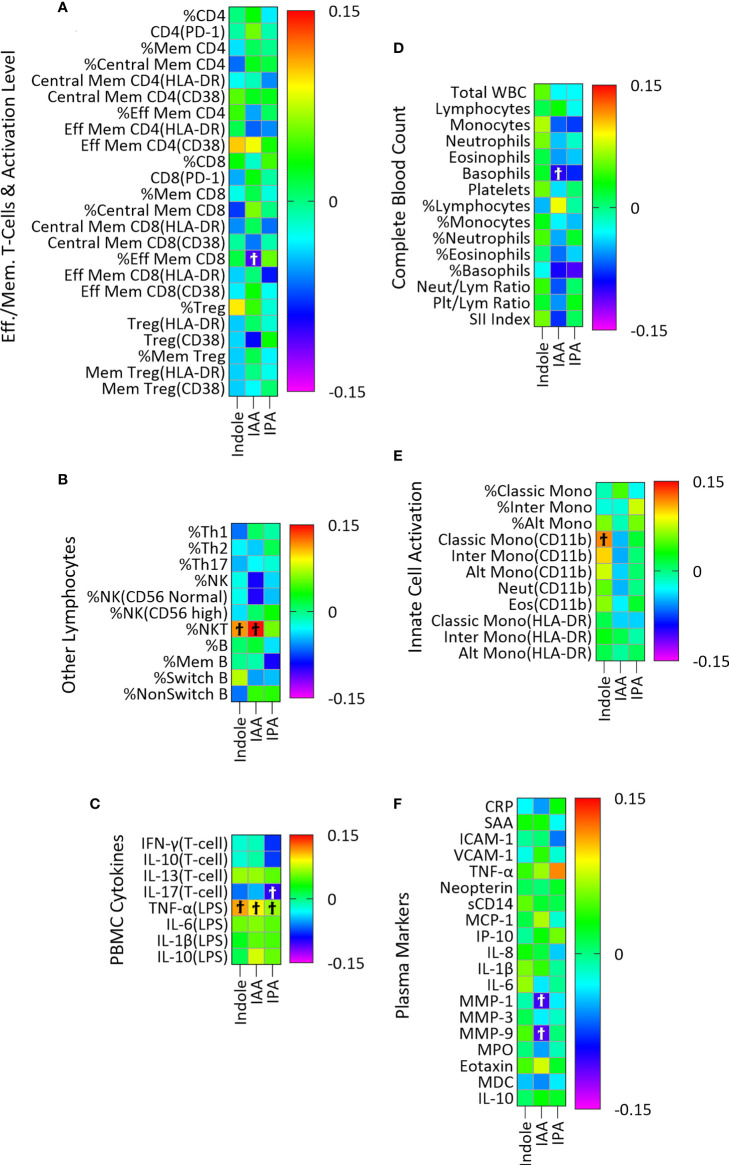
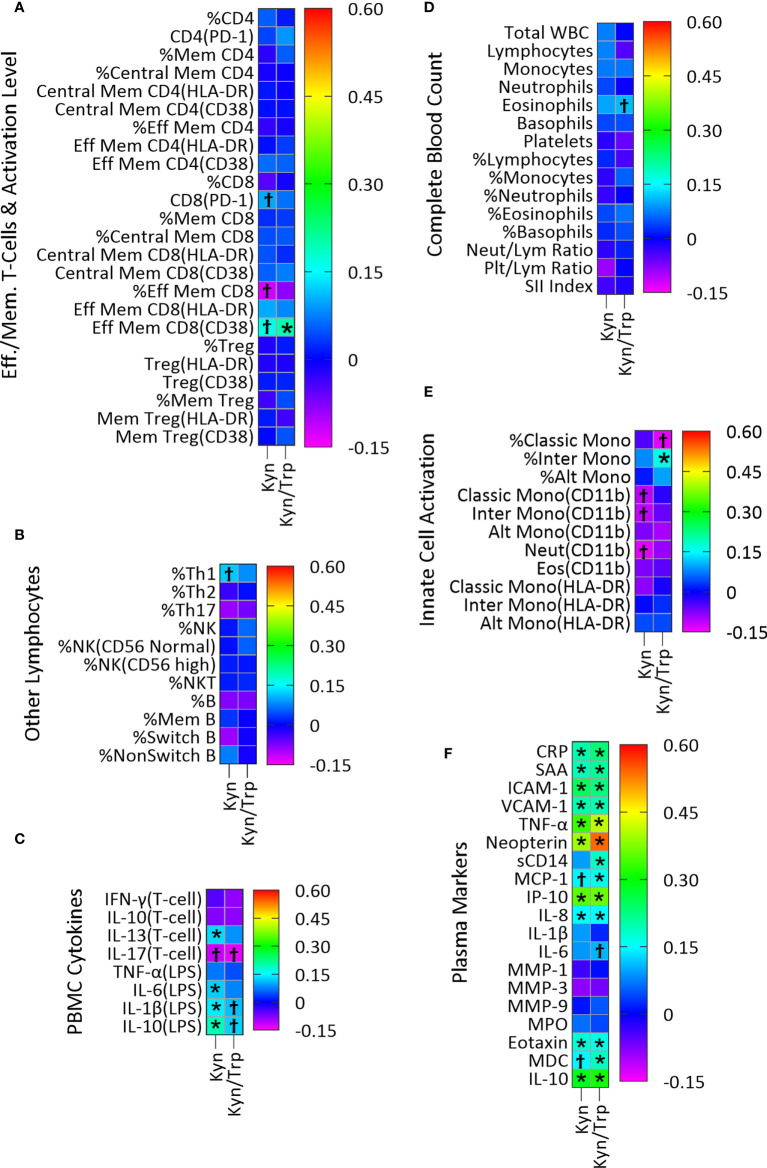
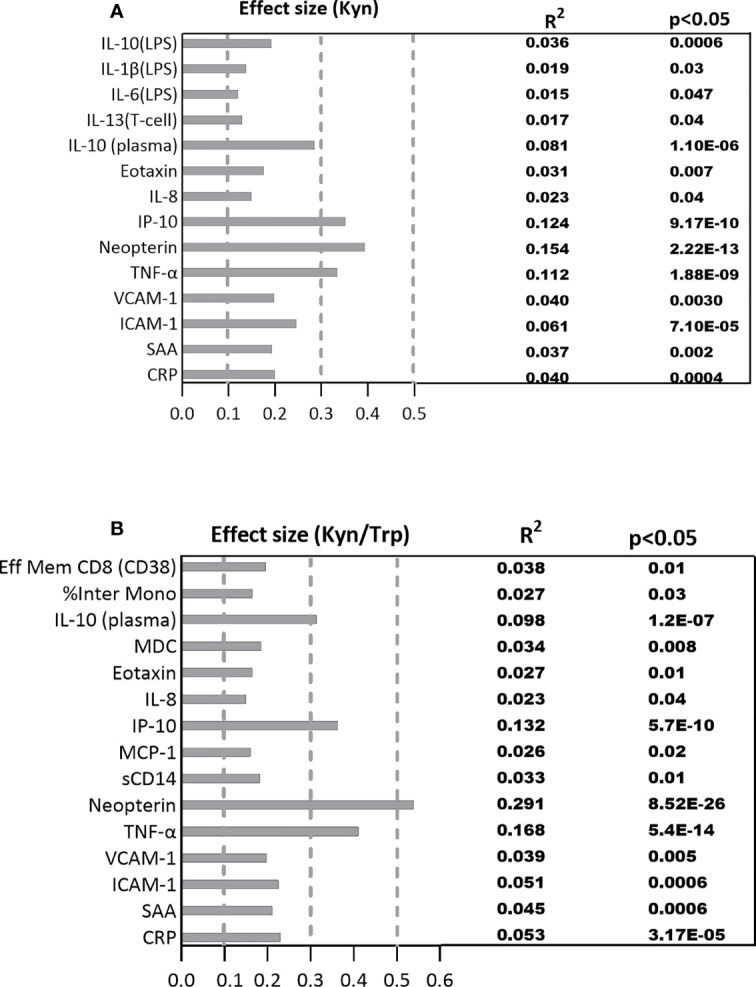
The sum of indole and IAA was positively associated with natural killer T-cells levels. Kyn and Kyn/Trp were positively associated with neopterin and IP-10, markers of type 1 immunity, and TNF-α and C-reactive protein (CRP), markers of the acute phase response, and the regulatory cytokine IL-10. Three bacteria negatively associated with Trp metabolites were associated with markers of immune activation: the family with higher lymphocyte counts but lower level of activated CD4 T-cells, the genus with higher production of IFN-γ by T-cells in PBMC cultures, and the genus with higher production IL-6 in PBMC cultures stimulated with bacterial lipopolysaccharide (LPS).
In this cohort of healthy adults bacterial Trp metabolites were not strongly associated with immune markers. Conversely, the Kyn/Trp ratio was strongly associated with markers of systemic inflammation and the acute phase response, consistent with IDO activation in innate immune cells. Finally, commensal bacteria associated with lower plasma (and perhaps intestinal) levels of bacterial Trp metabolites were associated with greater immune activation, possibly reflecting decreased regulatory immune activity related to lower intestinal levels of bacterial indole metabolites.
肠道细菌的色氨酸(Trp)代谢产物(吲哚、吲哚乙酸[IAA]和吲哚丙酸[IPA])和色氨酸代谢产物犬尿氨酸(Kyn)通过吲哚胺 2,3-双加氧酶(IDO)途径,是芳烃受体(AhR)激动剂,因此可以调节免疫活性 AhR 途径。我们假设,在健康成年人队列中,这些代谢物的血浆浓度与免疫激活标志物相关,这与 AhR 介导的免疫调节一致。我们还假设,血浆 Kyn/Trp 比值(IDO 活性的标志物)与反映固有免疫细胞中 IDO 激活的免疫标志物相关。最后,我们假设一些肠道细菌与血浆吲哚、IPA 和 IAA 相关,而这些细菌本身与免疫标志物相关。
在 362 名健康成年人中,我们测量了一组新的 88 种免疫标志物和血浆色氨酸代谢物。通过 16S rRNA 基因分析鉴定粪便中的细菌分类群。使用多元线性回归分析来鉴定与免疫标志物的显著关联。
吲哚和 IAA 的总和与自然杀伤 T 细胞水平呈正相关。Kyn 和 Kyn/Trp 与 1 型免疫的标志物,如 Neopterin 和 IP-10,以及 TNF-α 和 C-反应蛋白(CRP),即急性相反应的标志物,以及调节性细胞因子 IL-10 呈正相关。三种与 Trp 代谢物呈负相关的细菌与免疫激活标志物相关:具有更高淋巴细胞计数但更低活化 CD4 T 细胞水平的家族,在 PBMC 培养物中产生更高 IFN-γ的属,以及在刺激 PBMC 培养物的细菌脂多糖(LPS)时产生更高 IL-6 的属。
在本队列的健康成年人中,细菌色氨酸代谢物与免疫标志物没有很强的相关性。相反,Kyn/Trp 比值与全身性炎症和急性相反应的标志物密切相关,这与固有免疫细胞中的 IDO 激活一致。最后,与血浆(和可能的肠道)细菌色氨酸代谢物水平较低相关的共生细菌与更高的免疫激活相关,这可能反映了与肠道细菌吲哚代谢物水平较低相关的调节性免疫活性降低。