Ye Ziqi, Chen Jie, Huang Ping, Xuan Zixue, Zheng Shuilian
Department of Clinical Pharmacy, The First Affiliated Hospital, Zhejiang University School of Medicine, Hangzhou, China.
Zhejiang Provincial Key Laboratory for Drug Evaluation and Clinical Research, The First Affiliated Hospital, Zhejiang University School of Medicine, Hangzhou, China.
Front Oncol. 2022 Sep 28;12:990195. doi: 10.3389/fonc.2022.990195. eCollection 2022.
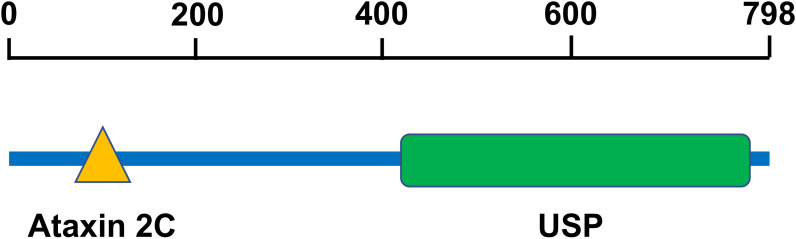
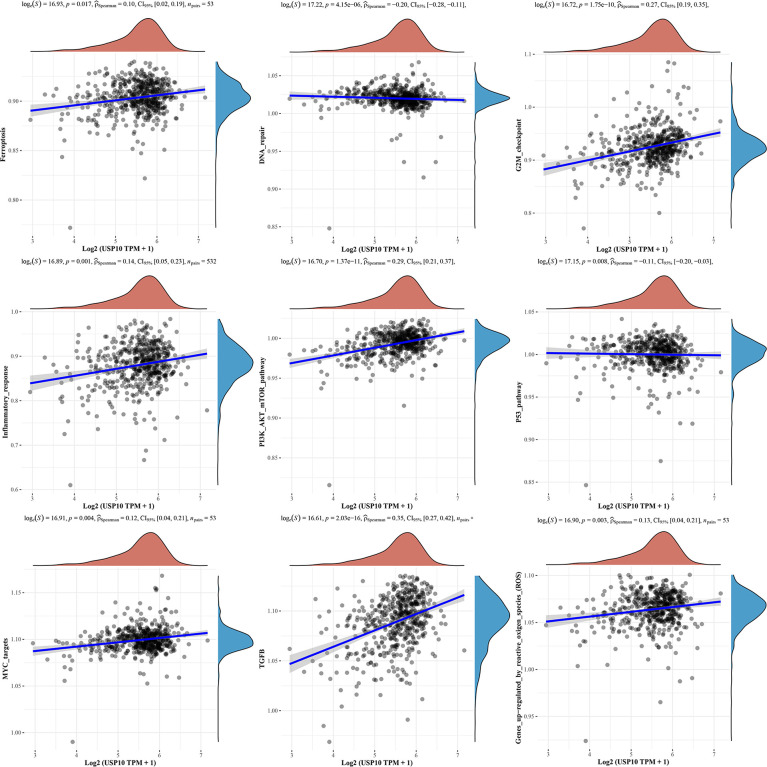
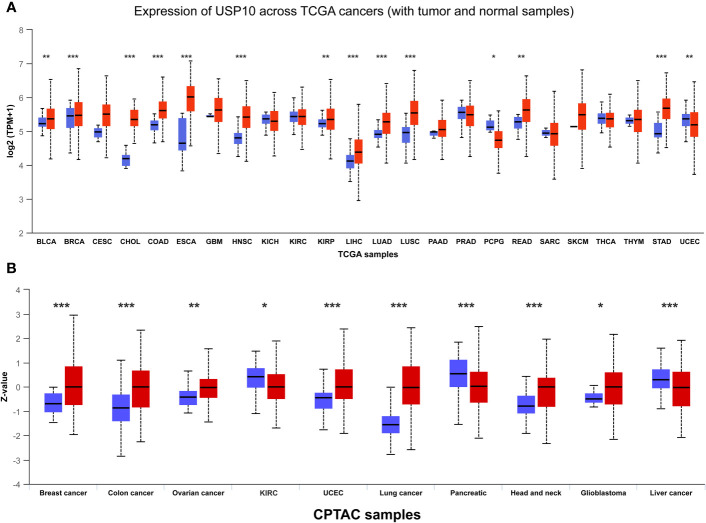
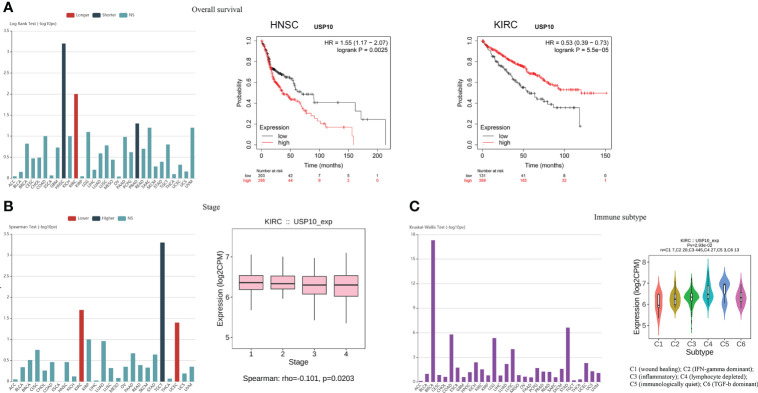
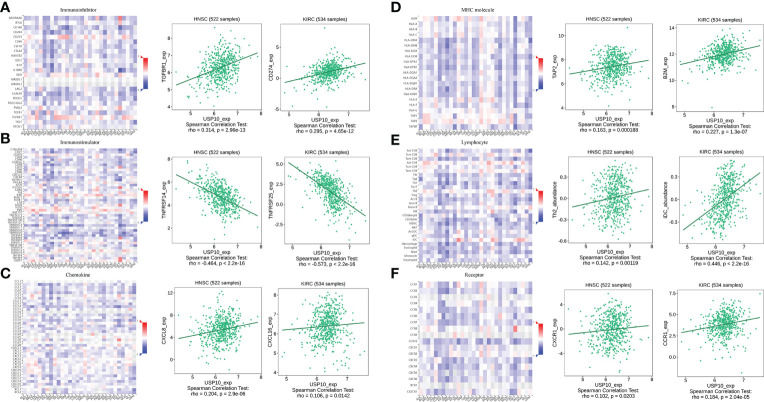
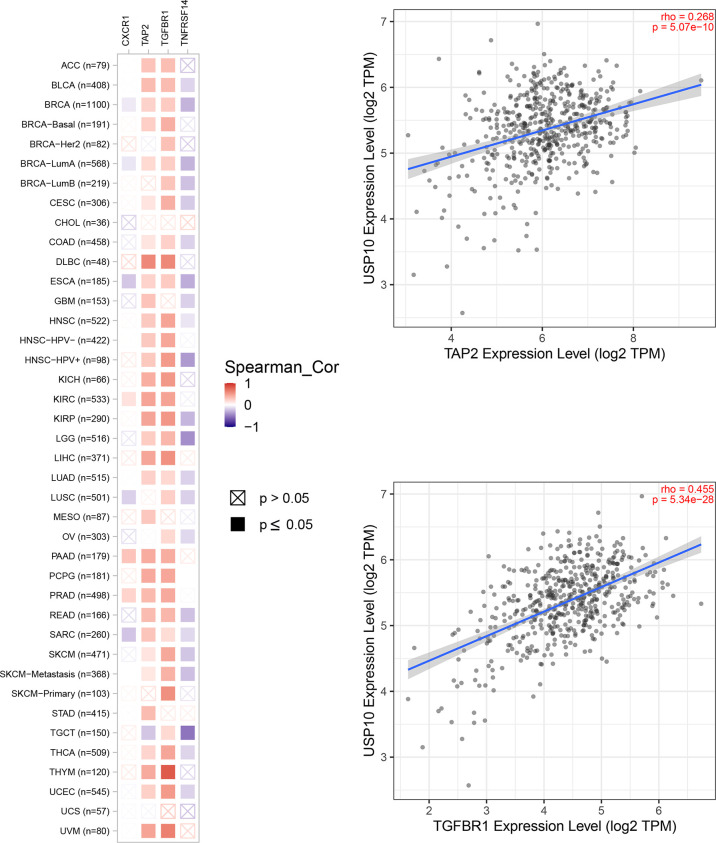
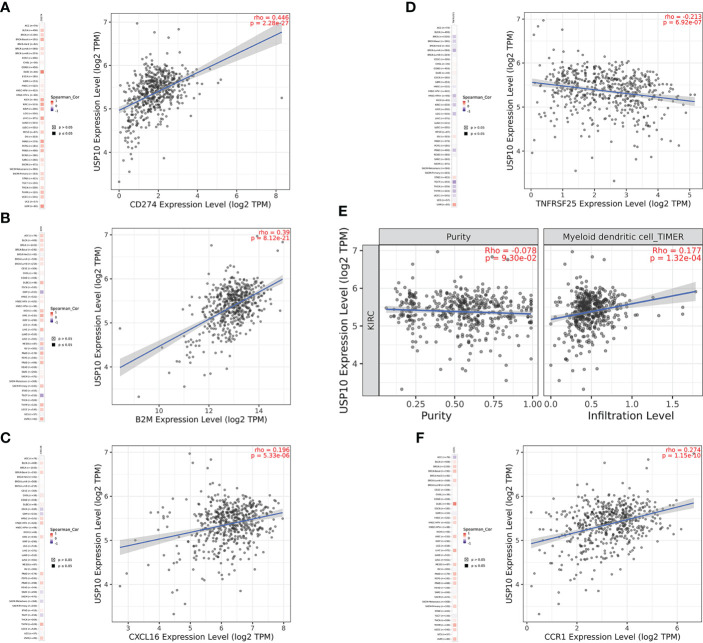
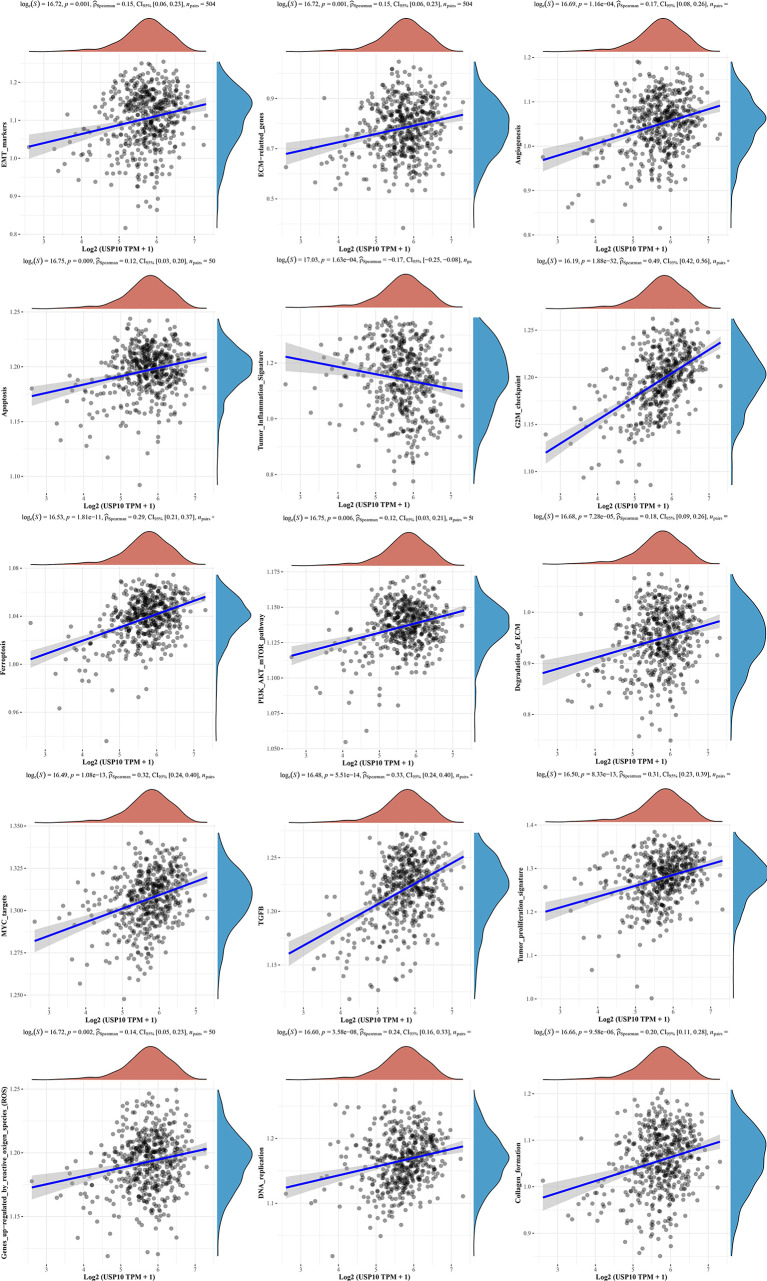
Ubiquitin-specific peptidase 10 (USP10) is a member of the ubiquitin-specific protease family that removes the ubiquitin chain from ubiquitin-conjugated protein substrates. We performed a literature search to evaluate the structure and biological activity of USP10, summarize its role in tumorigenesis and tumor progression, and discuss how USP10 may act as a tumor suppressor or a tumor-promoting gene depending on its mechanism of action. Subsequently, we elaborated further on these results through bioinformatics analysis. We demonstrated that abnormal expression of USP10 is related to tumorigenesis in various types of cancer, including liver, lung, ovarian, breast, prostate, and gastric cancers and acute myeloid leukemia. Meanwhile, in certain cancers, increased USP10 expression is associated with tumor suppression. USP10 was downregulated in kidney renal clear cell carcinoma (KIRC) and associated with reduced overall survival in patients with KIRC. In contrast, USP10 upregulation was associated with poor prognosis in head and neck squamous cell carcinoma (HNSC). In addition, we elucidated the novel role of USP10 in the regulation of tumor immunity in KIRC and HNSC through bioinformatics analysis. We identified several signaling pathways to be significantly associated with USP10 expression, such as ferroptosis, PI3K/AKT/mTOR, TGF-β, and G2/M checkpoint. In summary, this review outlines the role of USP10 in various forms of cancer, discusses the relevance of USP10 inhibitors in anti-tumor therapies, and highlights the potential function of USP10 in regulating the immune responses of tumors.
泛素特异性肽酶10(USP10)是泛素特异性蛋白酶家族的成员,可从泛素结合的蛋白质底物上移除泛素链。我们进行了文献检索,以评估USP10的结构和生物学活性,总结其在肿瘤发生和肿瘤进展中的作用,并讨论USP10如何根据其作用机制作为肿瘤抑制基因或促癌基因发挥作用。随后,我们通过生物信息学分析进一步阐述了这些结果。我们证明,USP10的异常表达与包括肝癌、肺癌、卵巢癌、乳腺癌、前列腺癌、胃癌和急性髓系白血病在内的多种癌症的肿瘤发生有关。同时,在某些癌症中,USP10表达增加与肿瘤抑制有关。USP10在肾透明细胞癌(KIRC)中表达下调,并与KIRC患者的总生存期缩短有关。相反,USP10上调与头颈部鳞状细胞癌(HNSC)的不良预后有关。此外,我们通过生物信息学分析阐明了USP10在KIRC和HNSC肿瘤免疫调节中的新作用。我们确定了几个与USP10表达显著相关的信号通路,如铁死亡、PI3K/AKT/mTOR、TGF-β和G2/M检查点。总之,本综述概述了USP10在各种癌症中的作用,讨论了USP10抑制剂在抗肿瘤治疗中的相关性,并强调了USP10在调节肿瘤免疫反应中的潜在功能。