Faure Conter Cecile, Calaminus Gabriele, Nicholson James, Idbaih Ahmed, Hoang Xuan Khê, Vasiljevic Alexandre, Morana Giovanni, Szathmari Alexandru, Ajithkumar Thankamma, Frappaz Didier
Institute of Pediatric Hematology and Oncology, Lyon, France.
University of Bonn, Bonn, Germany.
Front Oncol. 2022 Sep 29;12:971697. doi: 10.3389/fonc.2022.971697. eCollection 2022.
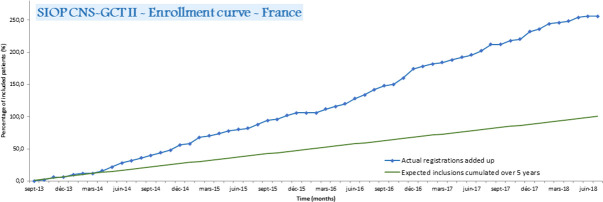
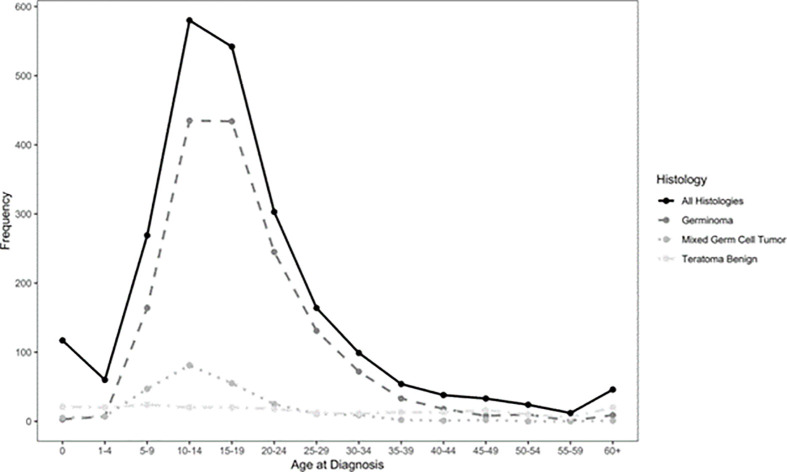
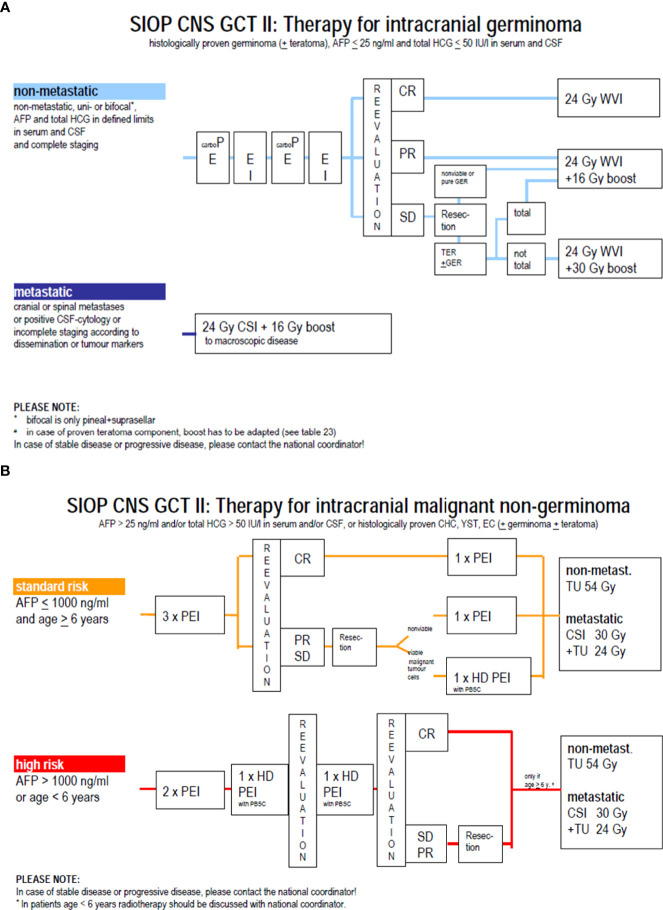
Adolescents and young adults (AYA) with cancer often fall through gaps between children's and adults' cancer services. They are consequently under-represented in clinical trials, and their survival is often inferior to that of children or adults with the same tumor type; in this paper, we use the example of central nervous system germ cell tumors (CNS-GCT), as a model of AYA tumor to illustrate this challenge. We describe how we have built bridges between pediatric and adult oncology, how this can apply to other types of brain tumors, and discuss ways to promote cancer care in the AYA population. Adolescents and young adults (AYA) with cancer are under-represented in clinical trials and have thus not benefited from the same improvement in outcomes as either younger or older patients. Central nervous system germ cell tumors (CNS-GCT) represent an ideal model of AYA tumor as their incidence peaks during adolescence and young adulthood. Since the early 90's, SIOP (International Society of Pediatric Oncology) has launched two successive European trials: SIOP CNS-GCT96 (January 1996 to December 2005) and SIOP CNS-GCTII protocols (October 2011 to July 2018), for CNS-GCTs. With the removal of the upper age limit in the SIOP CNS-GCTII trial, and closer collaboration between pediatric and adult oncologists within AYA multidisciplinary tumor boards, the proportion of adults enrolled in France has dramatically increased over time. The current article will use the example of CNS-GCT to illustrate how to build a bridge between pediatric and adult oncology, how this can apply to other types of brain tumors, and how to promote cancer care in the AYA population.
患有癌症的青少年和青年(AYA)往往处于儿童癌症服务与成人癌症服务之间的空白地带。因此,他们在临床试验中的代表性不足,而且他们的生存率往往低于患有相同肿瘤类型的儿童或成人;在本文中,我们以中枢神经系统生殖细胞肿瘤(CNS - GCT)为例,作为AYA肿瘤的一个模型来说明这一挑战。我们描述了我们是如何在儿科肿瘤学和成人肿瘤学之间架起桥梁的,这如何适用于其他类型的脑肿瘤,并讨论了促进AYA人群癌症护理的方法。患有癌症的青少年和青年(AYA)在临床试验中的代表性不足,因此没有像年轻或年长患者那样从治疗结果的同样改善中受益。中枢神经系统生殖细胞肿瘤(CNS - GCT)是AYA肿瘤的理想模型,因为其发病率在青少年和青年期达到峰值。自90年代初以来,国际儿科肿瘤学会(SIOP)针对CNS - GCT开展了两项连续的欧洲试验:SIOP CNS - GCT96(1996年1月至2005年12月)和SIOP CNS - GCTII方案(2011年10月至2018年7月)。随着SIOP CNS - GCTII试验取消了年龄上限,以及在AYA多学科肿瘤委员会中儿科肿瘤学家和成人肿瘤学家之间更紧密的合作,法国入组的成人比例随时间大幅增加。本文将以CNS - GCT为例,说明如何在儿科肿瘤学和成人肿瘤学之间架起桥梁,这如何适用于其他类型的脑肿瘤,以及如何促进AYA人群的癌症护理。