Xiao Yu, Huang Yuxin, Chen Yulian, Xiao Leike, Zhang Xilu, Yang Chenghongwang, Li Zongjun, Zhu Mingzhi, Liu Zhonghua, Wang Yuanliang
College of Food Science and Technology, Hunan Agricultural University, Changsha, 410128, China.
Key Laboratory of Ministry of Education for Tea Science, College of Horticulture, Hunan Agricultural University, Changsha, 410128, China.
Curr Res Food Sci. 2022 Sep 25;5:1788-1807. doi: 10.1016/j.crfs.2022.09.024. eCollection 2022.
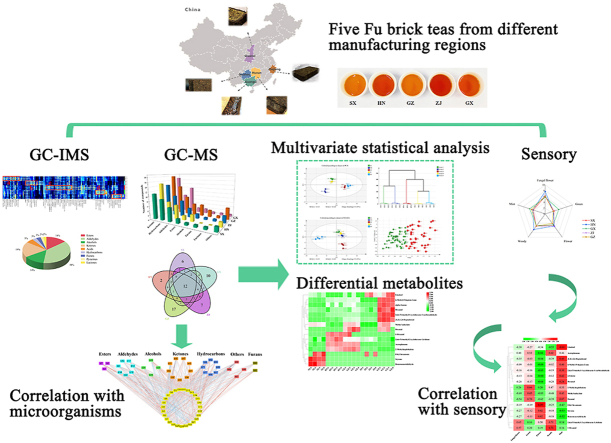
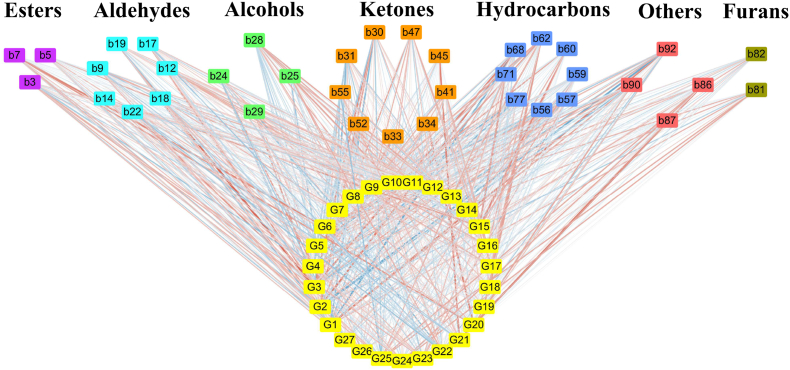
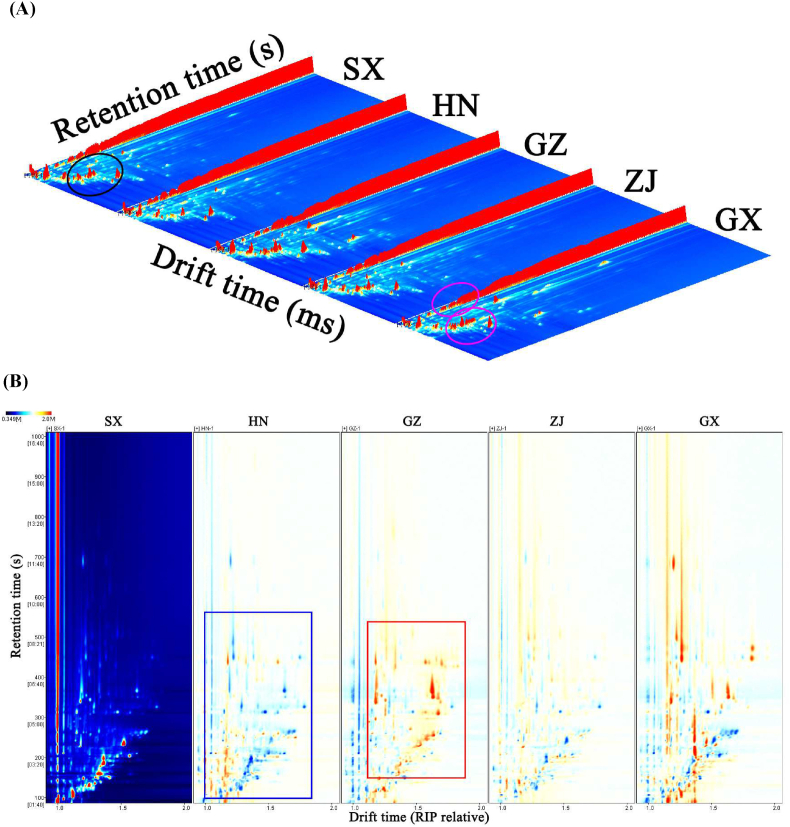
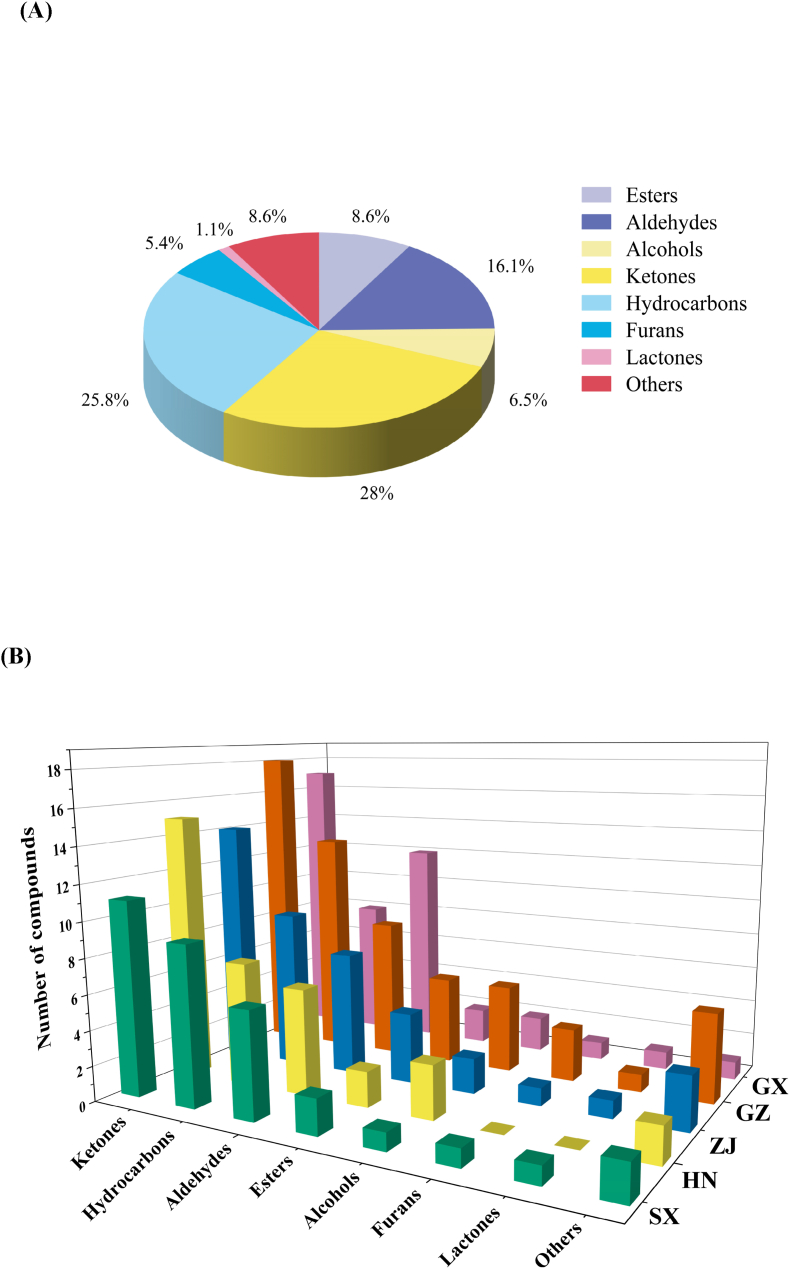
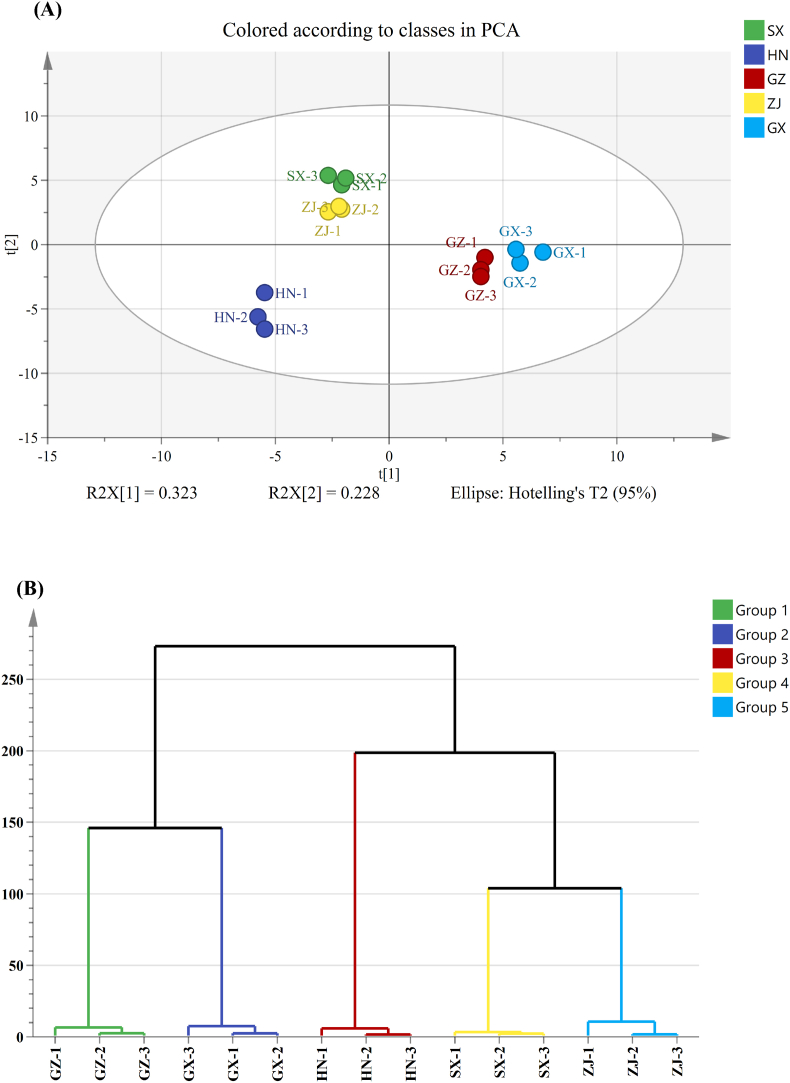
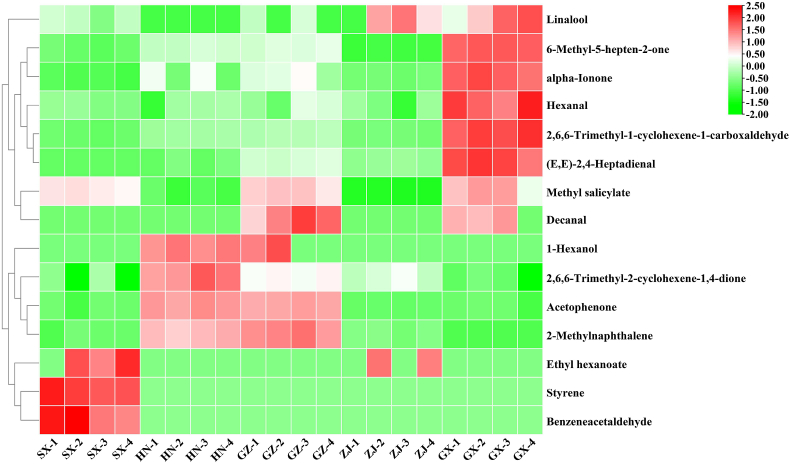
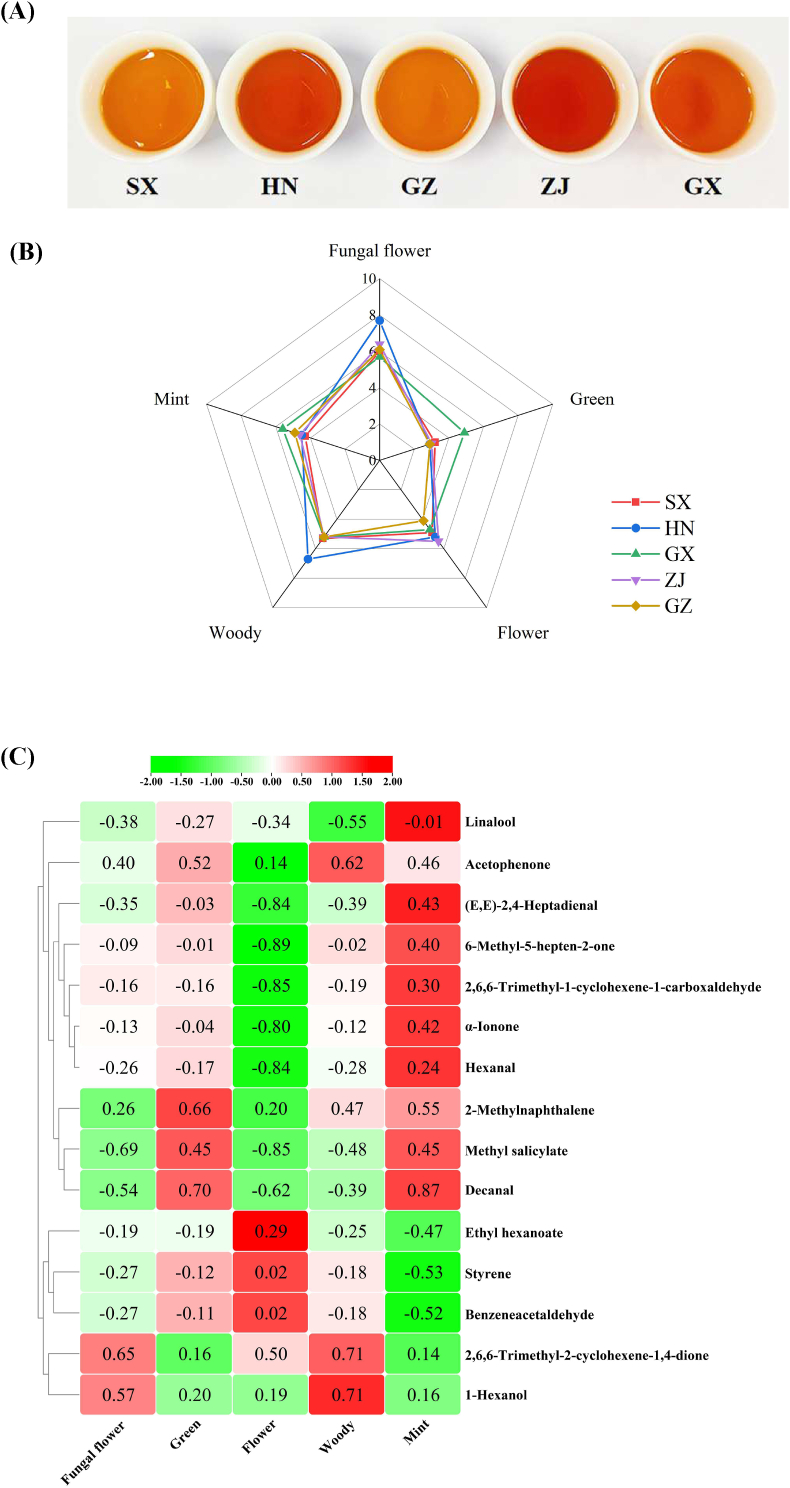
Although aroma is one of the most essential factors determining the quality of Fu brick tea (FBT), the aroma profiles of FBTs from different manufacturing areas are rarely investigated. The aroma profiles of FBTs manufactured in five typical provinces of China were comprehensively analyzed on the basis of headspace gas chromatography-ion mobility spectrometry (HS-GC-IMS), headspace solid-phase microextraction gas chromatography-mass spectrometry (HS-SPME-GC-MS), sensory evaluation, odor activity value (OAV), and relative odor activity value (ROAV). HS-GC-IMS and HS-SPME-GC-MS identified 63 and 93 volatile organic compounds (VOCs), respectively. Multivariate statistical analysis indicated that the FBTs from different production regions had remarkably varied aromas. HS-SPME-GC-MS revealed that 27 VOCs (OAV >1) contributed to the overall aroma of the samples, of which 15 key differential compounds can effectively distinguish the aroma profiles of different FBTs. FBT from Shaanxi manifested a strong floral and fruity aroma; that from Hunan had a floral, grassy, and pine-woody aroma; that from Guizhou presented a grassy and herbal aroma; that from Guangxi exhibited a sweet, floral, and minty aroma; and that from Zhejiang possessed various fruit flavors and floral fragrance. OAV analysis identified the biomarkers responsible for the variation in the aroma characteristics of diverse FBTs. These biomarkers included linalool, 6-methyl-5-hepten-2-one, α-ionone, hexanal, and ethyl hexanoate. Sensory evaluation demonstrated that the infusion color and aroma of FBT samples from different provinces also greatly varied. Network correlation analysis revealed that and were the crucial microorganisms for the metabolism and formation of VOCs. These findings provide new insight into the VOCs and fragrance features of FBTs produced in different regions of China.
尽管香气是决定茯砖茶品质的最重要因素之一,但不同产地茯砖茶的香气特征却鲜有研究。基于顶空气相色谱-离子迁移谱(HS-GC-IMS)、顶空固相微萃取气相色谱-质谱联用(HS-SPME-GC-MS)、感官评价、气味活性值(OAV)和相对气味活性值(ROAV),对中国五个典型省份生产的茯砖茶的香气特征进行了综合分析。HS-GC-IMS和HS-SPME-GC-MS分别鉴定出63种和93种挥发性有机化合物(VOCs)。多元统计分析表明,不同产地的茯砖茶香气差异显著。HS-SPME-GC-MS显示,27种VOCs(OAV>1)对样品的整体香气有贡献,其中15种关键差异化合物可有效区分不同茯砖茶的香气特征。陕西茯砖茶具有浓郁的花香和果香;湖南茯砖茶有花香、草香和松木香气;贵州茯砖茶呈现草香和药草香;广西茯砖茶有甜香、花香和薄荷香;浙江茯砖茶有多种果香和花香。OAV分析确定了导致不同茯砖茶香气特征变化的生物标志物。这些生物标志物包括芳樟醇、6-甲基-5-庚烯-2-酮、α-紫罗兰酮、己醛和己酸乙酯。感官评价表明,不同省份茯砖茶样品的茶汤色泽和香气也有很大差异。网络相关性分析表明,[此处原文缺失相关内容]和[此处原文缺失相关内容]是VOCs代谢和形成的关键微生物。这些发现为中国不同地区生产的茯砖茶的VOCs和香气特征提供了新的见解。