Xuexue Zheng, Xin Hong, Youlan Jin, Chao Wang, Zhonghua Liu, Jianan Huang, Qin Li
Key Laboratory of Tea Science of Ministry of Education, Hunan Agricultural University, Changsha, Hunan 410128, PR China.
Collaborative Innovation Centre of Utilization of Functional Ingredients from Botanicals, Hunan Agricultural University, Changsha, Hunan 410128, PR China.
Food Chem X. 2022 Feb 7;13:100248. doi: 10.1016/j.fochx.2022.100248. eCollection 2022 Mar 30.
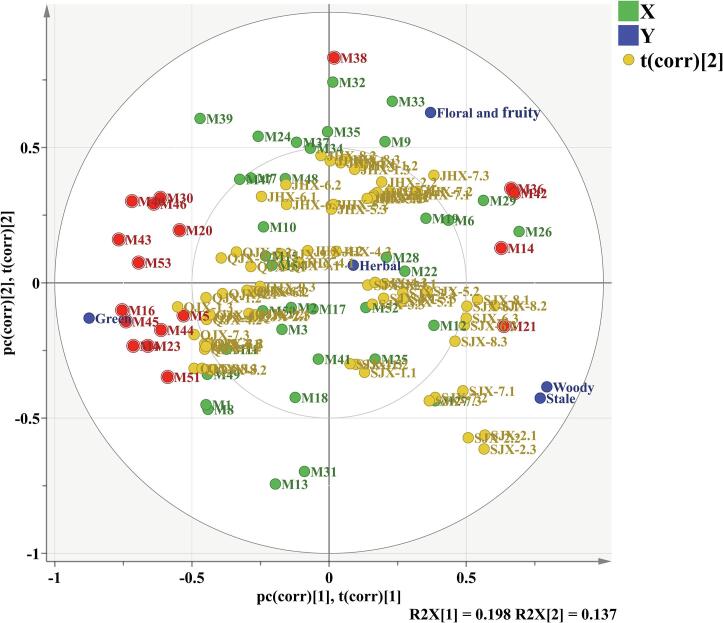
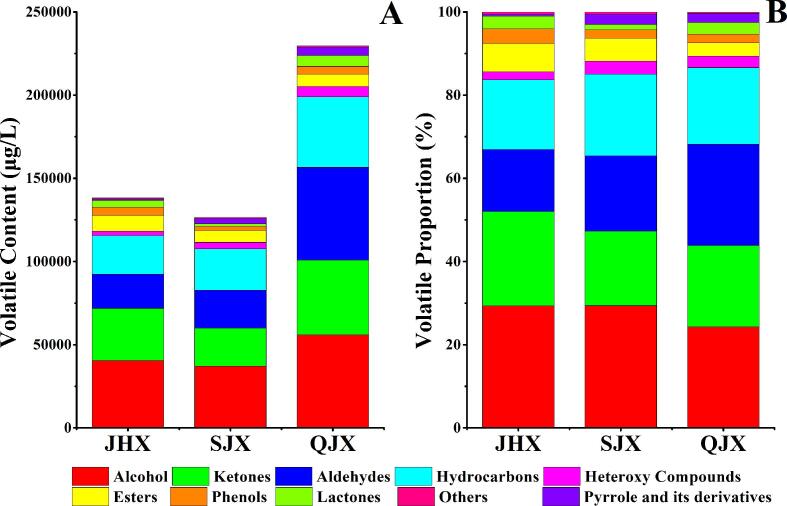
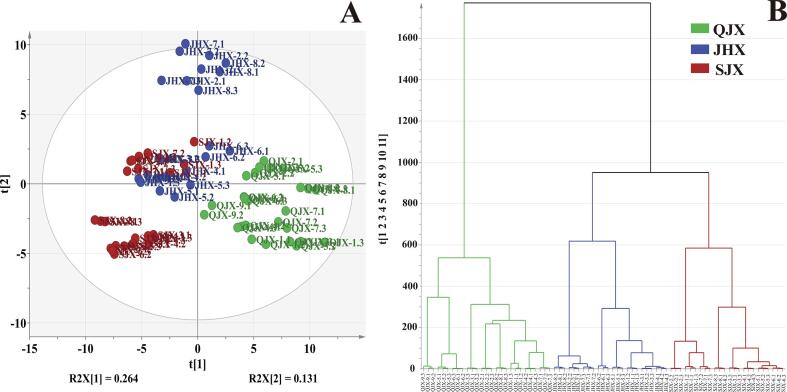
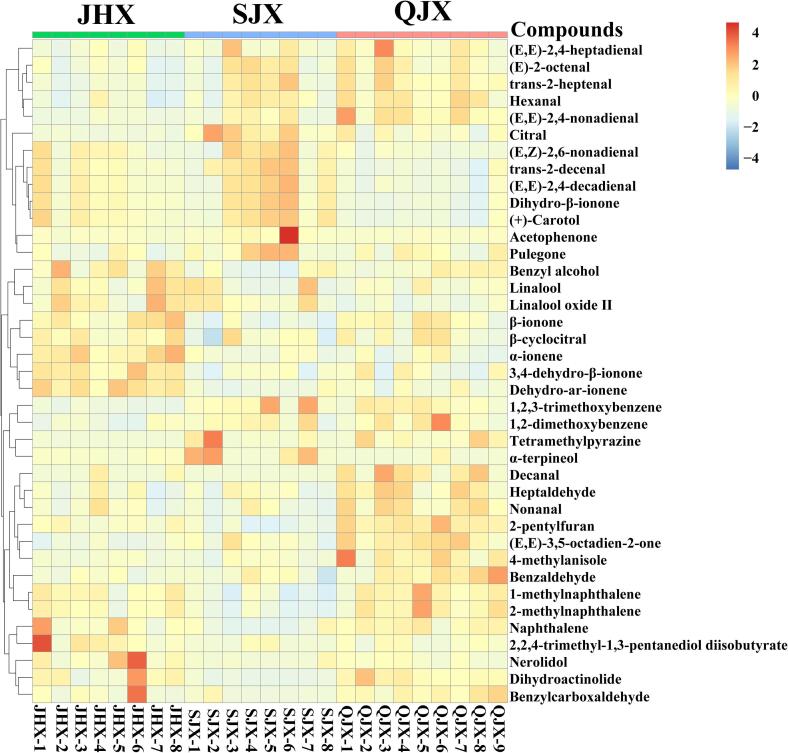
Aroma is one of the most important sensory properties of tea. Floral-fungal aroma type, ripe-fungal aroma type and fresh-fungal aroma type were the main aroma types of Fu brick tea by QDA. A total of 112 volatile compounds were identified and quantified in tea samples by HS-SPME/GC-MS analysis. Ten voaltiles in floral-fungal aroma type, eleven voaltiles in ripe-fungal aroma type, and eighteen voaltiles in fresh-fungal aroma type were identified as key aroma compounds for the aroma characteristics formation in three aroma types of Fu brick tea. In addition, PLS analysis revealed that 3,4-dehydro--ionone, dihydro--ionone, (+)-carotol and linalool oxide were the key contributors to the 'floral and fruity' attribute, -terpineol contributed to 'woody' and 'stale' attributes, and thirteen aroma compounds related to 'green' attribute. Taken together, these findings will provide new insights into the formation mechanism of different aroma characteristics in Fu brick tea.
香气是茶叶最重要的感官特性之一。通过定量描述分析(QDA)可知,花香-菌香型、熟香-菌香型和鲜香-菌香型是茯砖茶的主要香气类型。通过顶空固相微萃取/气相色谱-质谱联用(HS-SPME/GC-MS)分析,在茶叶样品中总共鉴定并定量了112种挥发性化合物。花香-菌香型中的10种挥发性成分、熟香-菌香型中的11种挥发性成分以及鲜香-菌香型中的18种挥发性成分被确定为三种茯砖茶香气特征形成的关键香气化合物。此外,偏最小二乘法(PLS)分析表明,3,4-脱氢-β-紫罗兰酮、二氢-β-紫罗兰酮、(+)-胡萝卜醇和氧化芳樟醇是“花香和果香”属性的关键贡献者,α-松油醇对“木质”和“陈腐”属性有贡献,还有13种香气化合物与“青”属性有关。综上所述,这些发现将为茯砖茶不同香气特征的形成机制提供新的见解。