Matsuda Misako, Saito Nao, Miyawaki Ikuko
Department of Nursing, Graduate School of Health Sciences, Kobe University, 7-10-2 Tomogaoka, Suma-ku, Kobe, Hyogo, 654-0142, Japan.
School of Nursing, Public University Corporation Miyagi University, 1-1 Gakuen, Taiwa-cho, Kurokawa-gun, Miyagi, 981-3298, Japan.
Contemp Clin Trials Commun. 2022 Oct 10;30:101017. doi: 10.1016/j.conctc.2022.101017. eCollection 2022 Dec.
The prevention of recurrent readmission among heart failure (HF) patients requires support for appropriate self-care behaviors to prevent exacerbation of HF and self-monitoring to allow for patients' early perception of physical changes during exacerbations. Such support may enable patients to seek early consultation. This study developed a self-monitoring intervention that aimed at increasing the perception of patient-unique physical sensations caused by HF, based on daily activity records of patients.
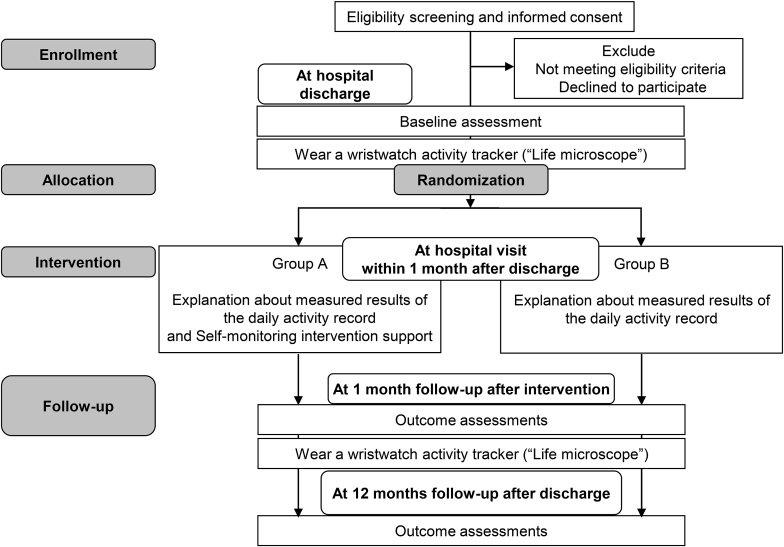
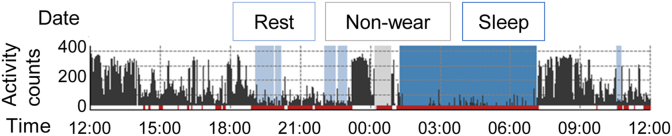
A parallel two-arm randomized controlled trial is being conducted with 68 HF patients early after their discharge. Participants in both groups wear a wristwatch activity tracker from time-of-discharge. Participants in the self-monitoring intervention group receive support to reflect on their actual daily activities and the associated physical sensations they experienced, based on their daily activity records. The primary outcome is participants' "Asking for Help" dimension of self-care behavior, measured using the European Heart Failure Self-Care Behavior Scale at one month follow-up after intervention.
This study is the first trial to use an activity tracker as a tool for symptom perception among HF patients. The problem of delayed consultations during exacerbations may be resolved by assisting patients in improving their perception of their unique physical sensations associated with specific daily activities, based on their daily activity records. If the effect is clarified, it could lead to the construction of new nursing interventions for continuous disease management that aim towards re-hospitalization prevention.
预防心力衰竭(HF)患者再次入院需要支持适当的自我护理行为以防止心力衰竭恶化,并进行自我监测以便患者在病情恶化期间能尽早感知身体变化。这种支持可能使患者能够尽早寻求咨询。本研究基于患者的日常活动记录,开发了一种自我监测干预措施,旨在提高患者对心力衰竭引起的独特身体感觉的感知。
对68名出院早期的HF患者进行平行双臂随机对照试验。两组参与者从出院时起佩戴腕式活动追踪器。自我监测干预组的参与者根据其日常活动记录,获得支持以反思其实际日常活动及所经历的相关身体感觉。主要结局是干预后1个月使用欧洲心力衰竭自我护理行为量表测量的参与者自我护理行为的“寻求帮助”维度。
本研究是首个将活动追踪器用作HF患者症状感知工具的试验。通过基于患者的日常活动记录,帮助患者提高对与特定日常活动相关的独特身体感觉的感知,可能解决病情恶化期间咨询延迟的问题。如果效果得到证实,可能会构建旨在预防再次住院的新的持续疾病管理护理干预措施。