Institut für Mikrobiologie und Biotechnologie, Universität Ulm, Albert-Einstein-Allee 11, 89081, Ulm, Germany.
Department of Biotechnology and Nanomedicine, SINTEF Industry, Richard Birkelands vei 3, 7034, Trondheim, Norway.
Appl Microbiol Biotechnol. 2022 Nov;106(22):7547-7562. doi: 10.1007/s00253-022-12210-8. Epub 2022 Oct 25.
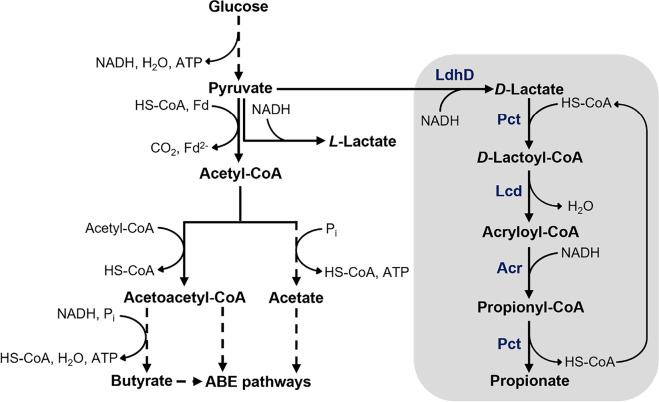
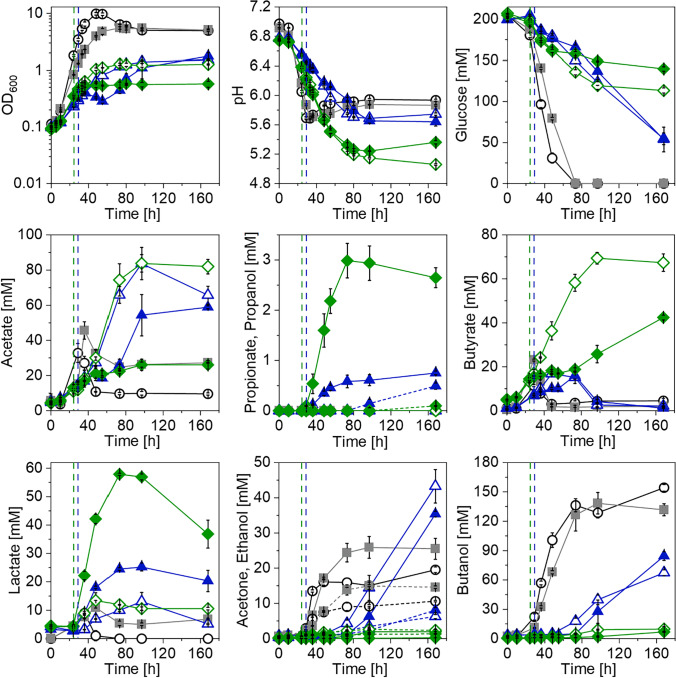
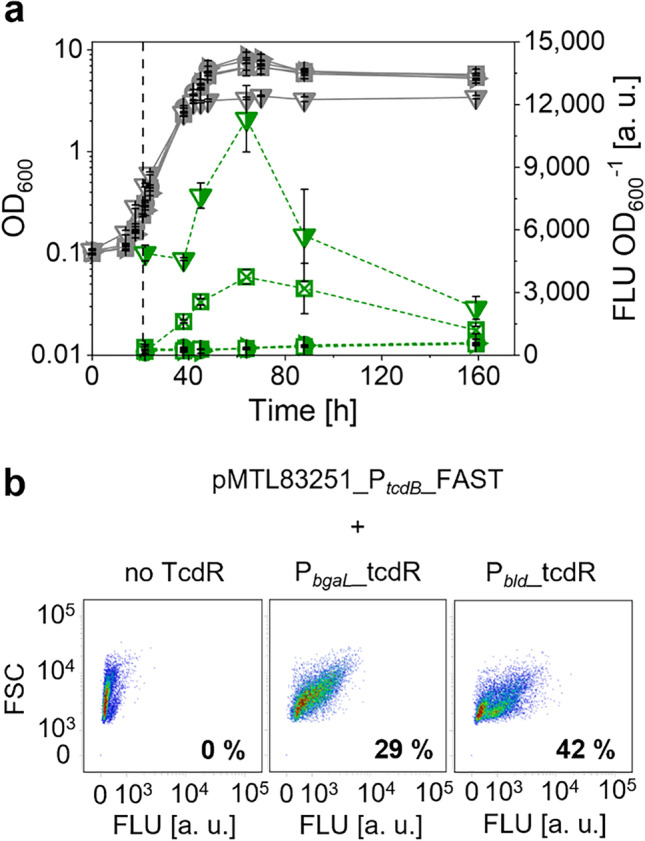
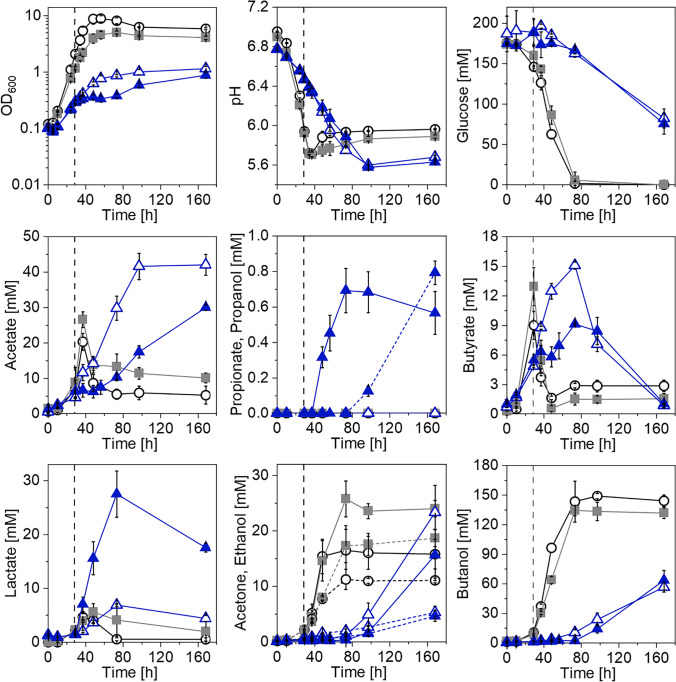
The carboxylic acid propionate is a valuable platform chemical with applications in various fields. The biological production of this acid has become of great interest as it can be considered a sustainable alternative to petrochemical synthesis. In this work, Clostridium saccharoperbutylacetonicum was metabolically engineered to produce propionate via the acrylate pathway. In total, the established synthetic pathway comprised eight genes encoding the enzymes catalyzing the conversion of pyruvate to propionate. These included the propionate CoA-transferase, the lactoyl-CoA dehydratase, and the acryloyl-CoA reductase from Anaerotignum neopropionicum as well as a D-lactate dehydrogenase from Leuconostoc mesenteroides subsp. mesenteroides. Due to difficulties in assembling all genes on one plasmid under the control of standard promoters, the P-tcdR promoter system from Clostridium difficile was integrated into a two-plasmid system carrying the acrylate pathway genes. Several promoters were analyzed for their activity in C. saccharoperbutylacetonicum using the fluorescence-activating and absorption-shifting tag (FAST) as a fluorescent reporter to identify suitable candidates to drive tcdR expression. After selecting the lactose-inducible P promoter, engineered C. saccharoperbutylacetonicum strains produced 0.7 mM propionate upon induction of gene expression. The low productivity was suspected to be a consequence of a metabolic imbalance leading to acryloyl-CoA accumulation in the cells. To even out the proposed imbalance, the propionate-synthesis operons were rearranged, thereby increasing the propionate concentration by almost four-fold. This study is the first one to report recombinant propionate production using a clostridial host strain that has opened a new path towards bio-based propionate to be improved further in subsequent work. KEY POINTS: • Determination of promoter activities in C. saccharoperbutylacetonicum using FAST. • Implementation of propionate production in C. saccharoperbutylacetonicum. • Elevation of propionate production by 375% to a concentration of 3 mM.
丙酸是一种有价值的平台化学品,在各个领域都有应用。由于其被认为是石油化工合成的可持续替代物,因此生物生产这种酸已成为人们极大的兴趣所在。在这项工作中,通过丙烯酸盐途径对产丁醇梭菌进行了代谢工程改造,以生产丙酸。总共,建立的合成途径包括编码将丙酮酸转化为丙酸的酶的 8 个基因。这些酶包括来自 Anaerotignum neopropionicum 的丙酸 CoA-转移酶、乳酰-CoA 脱水酶和丙烯酰-CoA 还原酶,以及来自肠膜明串珠菌亚种。肠膜明串珠菌的 D-乳酸脱氢酶。由于在标准启动子的控制下将所有基因组装到一个质粒上存在困难,因此将艰难梭菌的 P-tcdR 启动子系统整合到携带丙烯酸盐途径基因的双质粒系统中。使用荧光激活和吸收移位标签 (FAST) 作为荧光报告基因,分析了几种启动子在产丁醇梭菌中的活性,以鉴定合适的候选物来驱动 tcdR 表达。选择乳糖诱导型 P 启动子后,经过基因表达诱导,工程化的产丁醇梭菌菌株产生了 0.7mM 的丙酸。怀疑低生产力是由于代谢失衡导致细胞中丙烯酰-CoA 积累所致。为了平衡这种失衡,对丙酸合成操纵子进行了重新排列,从而将丙酸浓度提高了近四倍。这项研究首次报道了使用梭状芽孢杆菌宿主菌株进行重组丙酸生产,为进一步的后续工作开辟了生物基丙酸的新途径。 关键点: • 使用 FAST 确定 C. saccharoperbutylacetonicum 中的启动子活性。 • 在 C. saccharoperbutylacetonicum 中实施丙酸生产。 • 将丙酸产量提高 375%,达到 3mM 的浓度。